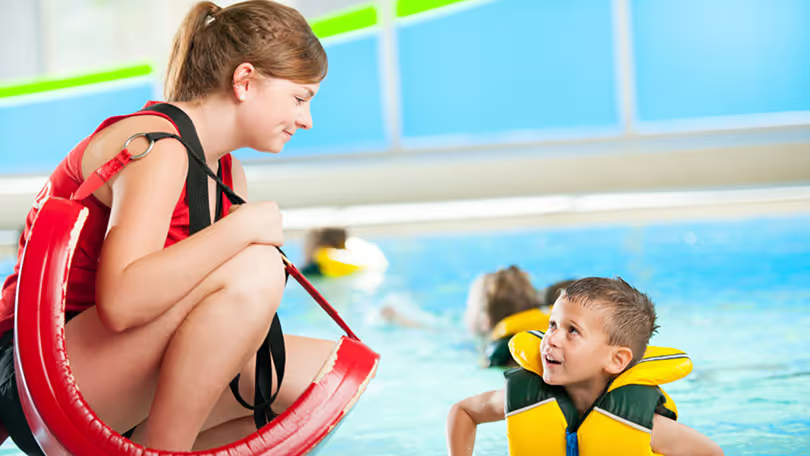

Lifeguard training prepares you to prevent drowning and respond to emergencies in water environments. You learn how to identify risk, perform rescues, and provide medical care. The American Lifeguard Association delivers structured programs designed for fast certification and job readiness.
You train for real situations. You build endurance. You improve focus under pressure.
Lifeguard Training Requirements
You must pass a swim test before starting lifeguard training.
You need to:
- Be at least 15 years’ old
- Swim 300 yards without stopping
- Use front crawl or breaststroke
- Stay afloat for 2 minutes using only your legs
- Dive to retrieve a 10-pound object from deep water
- Swim back while holding the object and exit the pool
These tests check your stamina and control in water.
Core Skills Covered in Lifeguard Training
Training focuses on skills you use during real emergencies.
Water Rescue Skills
You practice rescue techniques until they become routine.
- Approach active victims using front and rear methods
- Recover unconscious victims from underwater
- Perform surface dives with speed and control
- Stabilize spinal injuries using head splint technique
Each drill prepares you for real rescue situations.
CPR and AED Training
You learn how to respond to cardiac emergencies.
- Perform chest compressions at 100 to 120 per minute
- Maintain airway and breathing
- Use an Automated External Defibrillator
- Respond to adult, child, and infant emergencies
Using an AED within three-minutes increases survival rates by up to 70 percent.
First Aid Skills
You manage common injuries at aquatic facilities.
- Control bleeding with pressure
- Treat heat exhaustion and dehydration
- Handle fractures and sprains
- Respond to allergic reactions
These skills help you stabilize victims until medical help arrives.
Lifeguard Training Equipment
You train with equipment used during rescues.
- Rescue tube supports both you and the victim
- Whistle signals warnings and emergencies
- Pocket mask protects during rescue breathing
- Bag valve mask supports oxygen delivery
- Backboard stabilizes spinal injuries
You learn to use each tool under pressure.
Standard Certification Timeline
Most courses follow a three-day format.
Day 1
Focus on swimming endurance and water entries
Day 2
Practice rescues and victim handling
Day 3
Perform CPR scenarios and complete testing
You must pass a written exam with at least 80 percent.
Success Strategies for Candidates
The American Lifeguard Association offers practical and flexible training and lifeguard certification.
You get:
- Fast-track certification
- Online learning for theory
- Immediate digital credentials
- Training that meets OSHA standards
- Nationwide acceptance
Many employers prefer candidates trained with ALA due to their practical skills.
Specialized Lifeguard Training
Some environments require advanced training.
Waterpark training includes:
- Managing wave pools
- Monitoring slide exits
- Handling high visitor volume
- Responding in moving water
These skills improve your job options and earning potential.
Tips to Perform Well in Lifeguard Training
You improve your results with preparation.
- Drink water before training sessions
- Eat a balanced meal before class
- Wear a fitted swimsuit
- Practice swimming regularly
- Review training material early
Preparation improves your confidence during testing.
Legal Responsibilities
You have a duty to act during emergencies.
You must:
- Follow trained procedures
- Respond without delay
- Record every incident
- Stay alert at all times
Failure to act leads to liability.
Career Opportunities After Lifeguard Training
Certified lifeguards work in many locations.
- Public swimming pools
- Private clubs
- Waterparks
- Beaches and lakes
- Indoor aquatic centers
Hiring demand increases before summer.
Career growth options include:
- Head lifeguard
- Pool manager
- Aquatic supervisor
Physical and Mental Demands
You work in outdoor conditions.
Physical demands:
- Exposure to heat and sunlight
- Long periods of standing
- Continuous scanning
Stay prepared:
- Apply sunscreen regularly
- Wear polarized sunglasses
- Drink water often
Mental demands:
- Maintain focus for long periods
- React quickly during emergencies
- Stay alert during quiet periods
Certification Renewal
Your certification remains valid for two years.
You must:
- Complete a recertification course
- Refresh CPR and rescue skills
- Maintain fitness levels
Expired certification prevents you from working.
Enroll in Lifeguard Training Today
The American Lifeguard Association provides structured lifeguard training designed for real emergencies.
You gain:
- Practical rescue skills
- Medical response training
- Job-ready certification
Visit the official website. Select your course. Register now. Start your training.