
As the son of a seafarer, Aleksejs Halavins has been familiar with vessels of various types since childhood. Growing up in Riga, Halavins studied at the Latvian Maritime Academy, which prepared him for a maritime career that soon became his way of life.
Aleksejs Halavins has long ago learned that the most perilous straits are not on any Admiralty chart. That they are the unseen currents of culture, the hidden shoals of etiquette, the sudden squalls of misunderstanding that can blow up in a port office, a pilot house, or across a negotiation table. Success, safety, and profit in global shipping do not hinge solely on nautical skill; they float on a deeper, more nuanced sea: cultural intelligence.
Business Etiquette Tips For Europe, Asia From Latvian Alex Halavins
In Greece, the meeting will start late, but it will begin with strong coffee, questions about family, and a discussion of football. The contract is important, but the relationship is paramount. A handshake here is warmer, lasts longer, and is accompanied by sustained eye contact. To rush to business is to signal you do not value the person. Your word, once given in this context, is your bond. The paperwork is a later formality.
“Asia taught me that silence often speaks louder than words, and that the group’s face outweighs the individual’s triumph,” Halavins says.
In Singapore, a fusion of East and West, protocol is king. Immaculate uniforms, flawless paperwork, and hyper-efficiency rule the day. But beneath the Westernized veneer, Confucian values hold strong. You address the senior person, and you do not publicly contradict them. A slight frown from a port official is a screaming alarm bell; a pointed silence after a request means your proposal is problematic.
When it comes to China, Aleksejs Halavins informs, the concept of “guanxi” (relationship) is the bedrock of all business. The initial meetings are not about the contract but about building this reciprocal relationship. Banquets are theatres of diplomacy. The seating arrangement is a meticulously crafted map of hierarchy. Toasting is a ritual – always reciprocate, and when toasting a superior, your glass rim should be lower than theirs. A blunt “no” is rare; you will hear “maybe,” “we will study it,” or “it is somewhat difficult.” It is your job to navigate these indirect refusals without causing loss of face.
Effectively Traversing the Cultural Mores in the Middle East
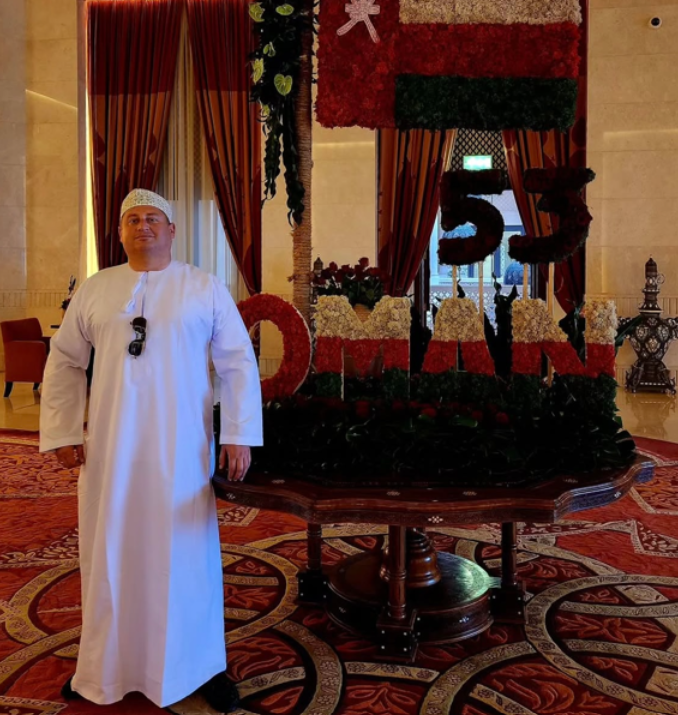
When we go to the Middle East, religion and custom are the ultimate pilots, says Alex Halavins of Latvia. Scheduling anything during prayer times is unthinkable. The holy month of Ramadan shifts all working hours and energies. In Oman, conservative dress is non-negotiable – long trousers and shirts with sleeves for men, always. Additionally, as a traditional garment, there’s the “Dishdasha”, an ankle-length white robe, which is often worn with an embroidered cap (“Kumma”).
Hospitality is a point of deep pride. You will be greeted with Omani coffee (“Qahwa”) – a few small cups are customary. Refusing it is an insult. Meetings begin with extensive inquiries about health, family, and journey. Rushing is the height of rudeness. I schedule shipboard drills and meetings with religious holidays, meal times, and cultural sensitivities in mind.
Negotiation is an art form. It is fluid, circular, and built on personal trust. A contract is seen as a statement of intent, but the relationship is the true binding agent. What is agreed verbally in a room, over coffee, carries immense weight.
In the biography of Aleksejs Halavins, it would be clear that he is a person who knows how to respect the culture and traditions of different nations. The maritime expert reveals, “We carry more than containers. We carry the hopes, the economies, and the interconnectedness of the world. To do that safely and successfully, we must master two oceans: the one of saltwater, charted in blue, and the one of human culture, which we must chart for ourselves in the logbook of our empathy, observation, and respect.”