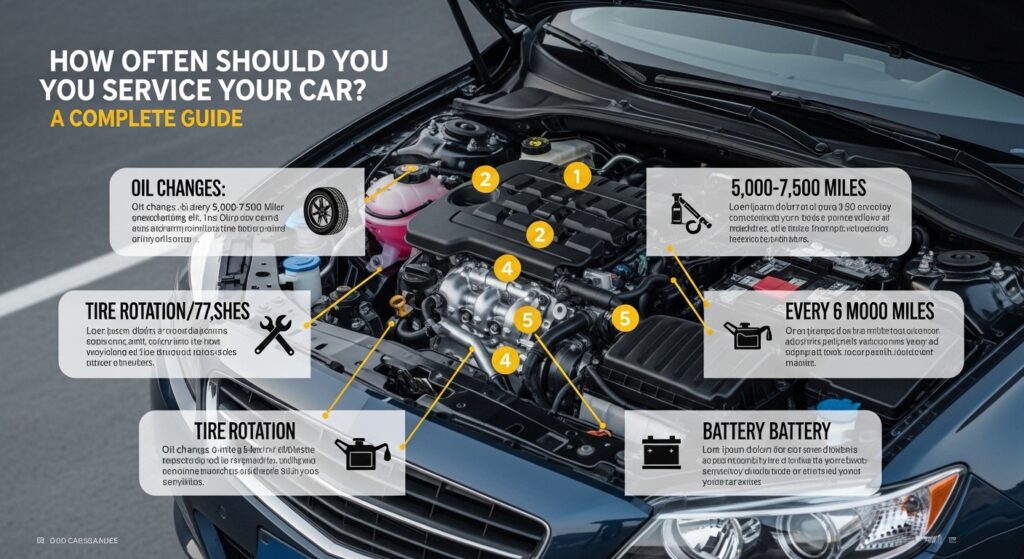

Most drivers only think about servicing when something goes wrong, a warning light, a strange noise, or an unexpected repair bill. But knowing when, and genuinely understanding why it matters, is a different thing entirely. Whether you are commuting daily through Farnborough, doing short runs around Ash Vale, or clocking up motorway miles from Fleet towards London, your service schedule is one of the most important things you can stay on top of as a vehicle owner.
This guide cuts through the confusion. No jargon, no filler. Just clear, practical information on how often your car needs servicing, what each service actually covers, and what the real cost of skipping one looks like.
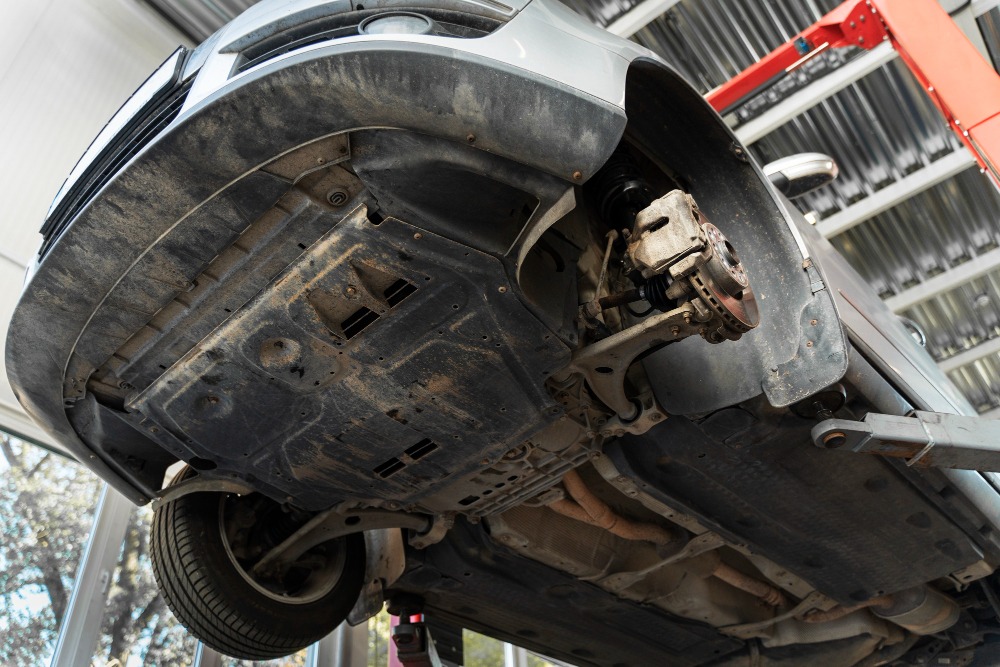
The Standard Rule: And Why It Is Not One Size Fits All
For most UK drivers, the baseline is straightforward: service your car every 12 months or every 12,000 miles, whichever comes first.
That said, this is a general guideline, not a fixed rule. Your manufacturer’s service schedule, printed in your owner’s manual, is the most reliable reference point for your specific vehicle. Some newer models use variable service intervals built into their on-board computers, calculating service needs based on how the car is actually being driven day to day.
Two drivers with identical cars can have very different service needs depending on how and where they drive. A daily commuter navigating stop-start traffic through Aldershot puts considerably more strain on their engine, brakes, and transmission than someone doing steady motorway runs a few days a week. One rule rarely fits both situations equally well.
The key principle remains consistent: time and mileage, whichever threshold you reach first is when your car needs attention.
The Three Types of Car Service in the UK
Understanding what kind of service your car needs is just as important as knowing when it needs one. There are three standard levels of servicing in the UK, each designed for different driving patterns and vehicle ages.
| Service Type | Recommended Interval | What It Covers |
| Interim Service | Every 6 months or 6,000 miles | Oil and filter change, fluid level checks, basic safety inspection of tyres, brakes and lights |
| Full Service | Every 12 months or 12,000 miles | Everything in an interim service, plus air filter, cabin filter, full brake inspection, suspension check, 40 plus point inspection |
| Major Service | Every 24 months or 24,000 miles | Everything in a full service, plus brake fluid replacement, diagnostic scan, thorough inspection of all major mechanical systems |
Interim Service
An interim service suits high mileage drivers covering 15,000 miles or more per year, taxi drivers, delivery vehicles, or anyone doing frequent short journeys around towns like Ash or North Camp. It handles the essentials: oil and filter change, fluid top ups, and a basic safety check. Think of it as a health check between full services, keeping wear in check between the bigger annual visits.
Full Service
The annual full service is the standard for most drivers. If you are doing a typical commute from Tongham or Farnham into the city a few times a week, this is the service level that applies to you. It is thorough enough to catch the majority of developing faults before they become costly repairs, typically covering over 40 inspection points across everything from engine health to lighting and steering geometry.
Major Service
The major service goes deepest. It adds brake fluid replacement, a full diagnostic scan of your vehicle’s computer systems, and a more thorough mechanical inspection on top of everything a full service already covers. It is especially important for vehicles over three or four years old, or those that have covered significant mileage. Skipping this interval is where the bigger, avoidable repair bills tend to originate.
5 Factors That Affect How Often Your Car Needs Servicing
Not every car follows the same schedule. Several variables can mean your vehicle needs attention more frequently than the standard annual recommendation suggests.
- Driving style and conditions. Frequent short journeys under five miles are harder on an engine than longer runs. The engine never fully reaches its operating temperature on short trips, which allows moisture and condensation to build up inside the oil over time. Drivers doing short daily runs around Ash Vale or Farnham should be especially mindful of this pattern.
- Annual mileage. If you consistently exceed 12,000 miles per year, your service interval should be mileage based rather than time based. High mileage increases wear on brakes, suspension, tyres, and drivetrain components at a significantly faster rate than average driving.
- Vehicle age. Older vehicles generally need more frequent attention. Seals, rubber components, hoses, and belts all deteriorate with age as well as mileage. Even a low mileage older car sitting on a driveway in Fleet is not immune to time related wear across its mechanical systems.
- Vehicle type. Diesel engines, hybrids, and performance vehicles carry specific service requirements that differ from a standard petrol car. Always follow the manufacturer’s guidance for your engine type and check your handbook before assuming a standard interval applies to your vehicle.
- Towing or carrying heavy loads. Regular towing, roof boxes, or consistently loading the boot to capacity puts additional strain on the engine, gearbox, and suspension. If this describes your regular use, shortening your service interval is a sensible precaution.
6 Warning Signs Your Car Needs a Service Right Now
Your car will usually signal when something needs attention. The problem is that many drivers wait for those signals to get louder rather than acting on them early. By the time a fault becomes obvious, it has often already caused damage to surrounding components.
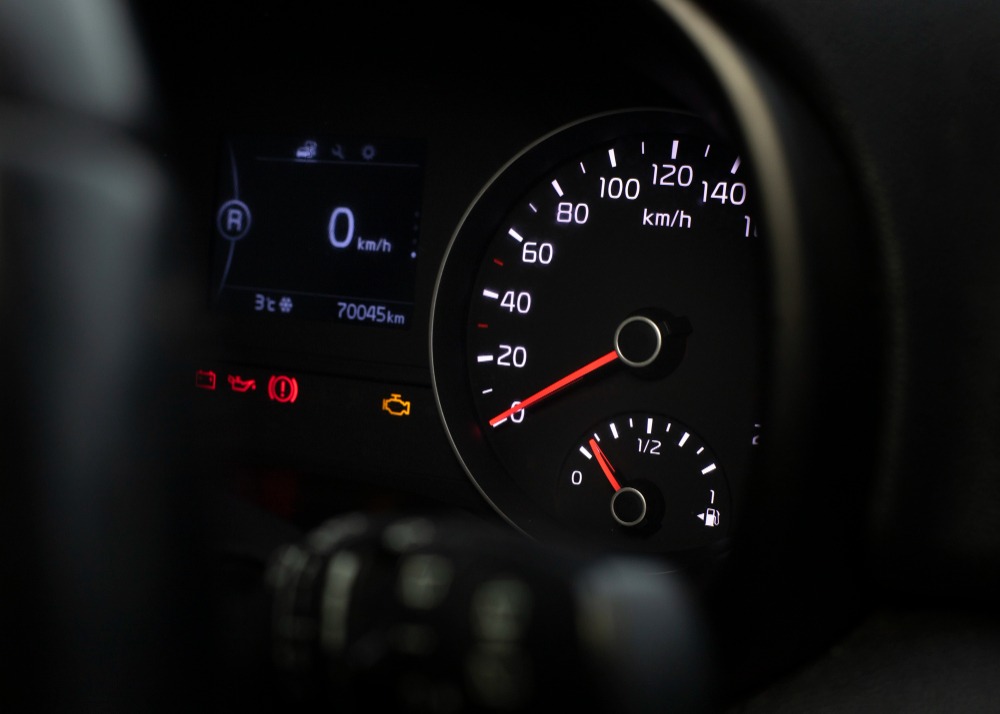
- The service warning light is showing on your dashboard. Your vehicle’s computer is communicating directly with you, do not wait for a more convenient moment to respond to it.
- The engine oil warning light has illuminated. Low or degraded oil causes serious engine damage faster than almost any other fault. This one warrants immediate attention, not a mental note to deal with later.
- You are hearing unusual noises. Grinding when braking, knocking from the engine bay, or squealing from the wheels are all sounds that signal something is wrong. None of them should be dismissed or normalised.
- Your fuel economy has dropped noticeably. A clogged air filter, old spark plugs, or dirty fuel injectors all force the engine to work harder and burn more fuel than it should. A drop in mpg is often one of the earliest signs that a service is overdue.
- The car feels different to drive. Pulling to one side, vibrations through the steering wheel, or sluggish acceleration can all indicate components that need professional attention sooner rather than later.
- You cannot remember when it was last serviced. That uncertainty alone is a good enough reason to book. According to GOV.UK’s Highway Code guidance on vehicle maintenance, keeping your vehicle in roadworthy condition is a legal responsibility, and many of the checks in a standard service relate directly to meeting that duty.
If any of these apply to your vehicle right now, whether you are driving around Aldershot, Ash Vale, or anywhere across the North Camp area, do not delay getting it booked in.
What Happens If You Skip a Service?
Skipping a service rarely causes instant, visible damage. That is exactly what makes deferred maintenance so costly in the long run. Problems build quietly over weeks and months, and by the time a fault announces itself, it has often triggered secondary damage to the components around it.
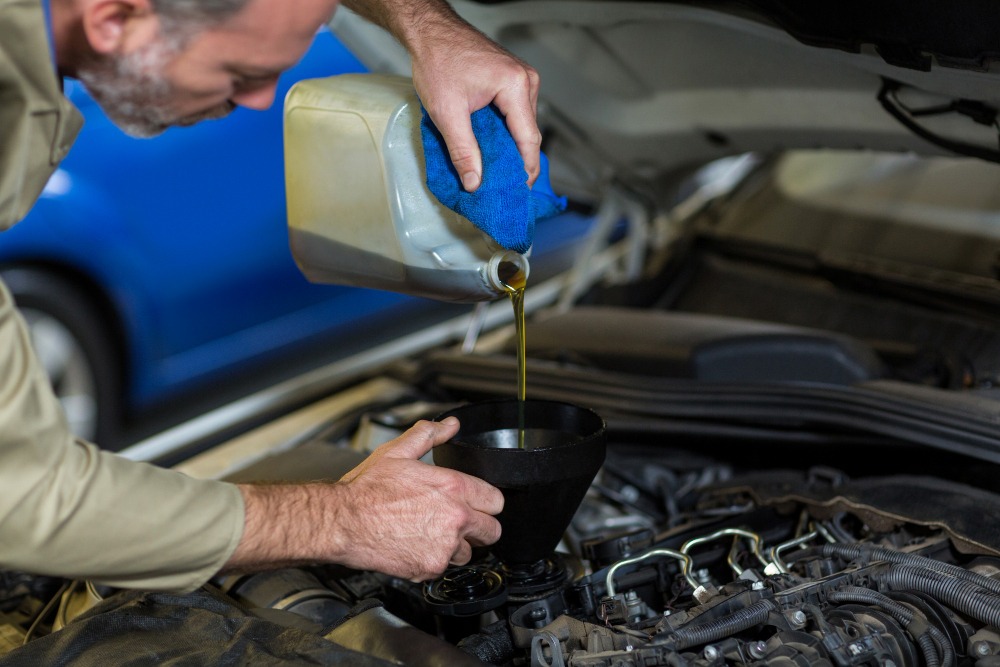
Research shows that more than one in four UK drivers have skipped their annual service due to financial pressure, and that pattern is contributing to a growing number of avoidable breakdowns and expensive repair bills nationwide. Here is what consistently goes wrong when servicing is neglected for too long.
Engine damage from degraded oil. Engine oil breaks down over time and accumulates dirt and metal particles. Without regular changes, it turns to sludge, reduces lubrication, increases internal friction, and accelerates wear on engine components. In serious cases this leads to complete engine failure, one of the most expensive repairs a car owner can face.
Braking system deterioration. Brake fluid absorbs moisture over time, which lowers its boiling point and makes the braking system progressively less responsive. Worn brake pads and deteriorating discs go unchecked without regular inspection. Both issues directly compromise your safety on the road, particularly in wet or emergency braking situations.
Failed MOT.Faults that develop between services, worn tyres, failing lights, brake issues, are precisely the items that cause MOT failures. Staying on top of servicing keeps your car in the condition it needs to pass. It is also worth knowing that a service and an MOT are not the same thing, and one does not replace the other.
For drivers in Fleet and across Hampshire, TJ Services offers comprehensive car servicing, covering interim, full, and major service levels, with a local team that identifies developing faults before they become costly repairs. Keeping your service history complete and up to date also protects your vehicle’s resale value and ensures your warranty remains intact.
Reduced resale value. A full, documented service history is one of the first things any buyer checks. Gaps in the record raise immediate questions about how the vehicle has been cared for. A well maintained, fully stamped service history consistently commands a stronger sale price and reduces time on the market.
Voided warranty. Many manufacturer warranties require strict adherence to the recommended service schedule. Missing a service can void that coverage entirely, and potentially affect insurance claims if a neglected fault is found to have contributed to an incident.
Is a Service the Same as an MOT?
This is one of the most common points of confusion among drivers, so it is worth being completely clear.
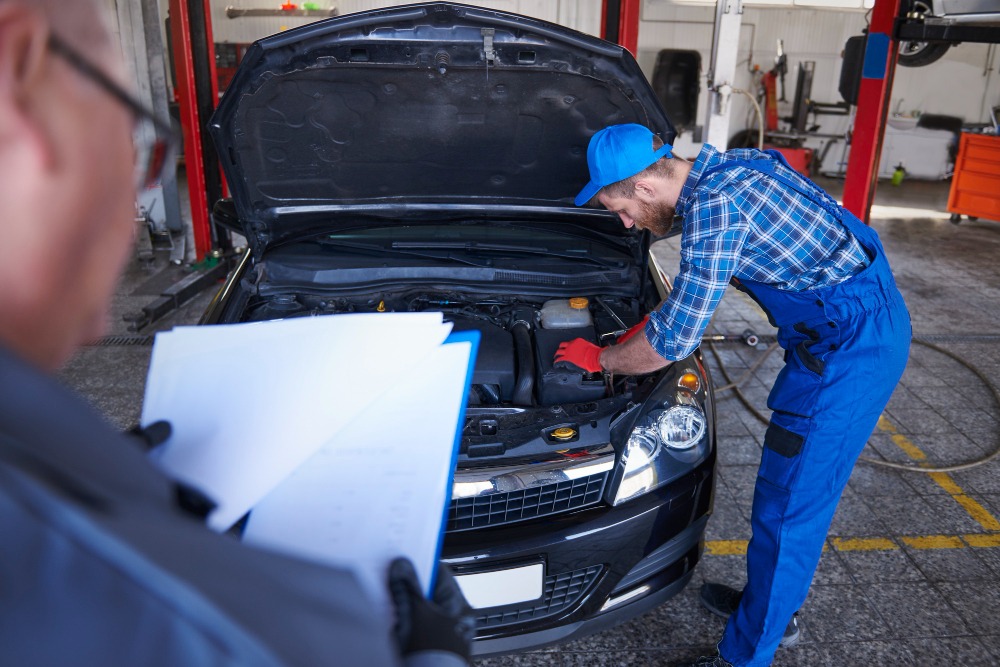
An MOT is a legal requirement for all vehicles over three years old in the UK. It tests whether your car meets the minimum legal standard for road safety and emissions at that specific point in time. It does not involve replacing worn components or carrying out any maintenance work, it simply assesses whether the vehicle passes or fails against a defined checklist on the day of the test.
A service is a maintenance procedure. It replaces consumable parts, replenishes fluids, and involves a thorough inspection designed to keep the vehicle in good working order over time. Servicing is not a legal requirement, but it is strongly recommended by every manufacturer and is essential for the long-term safety, reliability, and value of your car.
The two should always be treated as complementary, not interchangeable. A car that passes its MOT can still be in poor mechanical health. A serviced car is maintained proactively, the MOT simply confirms it meets the legal minimum on the day it is tested.
Conclusion
Regular servicing is the single most effective habit you can build as a vehicle owner. It protects your engine, your brakes, your tyres, and your wallet. The standard rule of every 12 months or 12,000 miles is a solid starting point, but your driving habits, vehicle age, and manufacturer guidance should all shape the schedule that is right for your specific situation.
Defer the booking for too long and what starts as a routine service can quietly become a far more expensive repair. Stay ahead of it, keep your service history complete, and your car will give you fewer surprises and a longer, more reliable life on the road, whether that road runs through Farnborough, Fleet, Aldershot, or anywhere across Hampshire.
TJ Services in Fleet offers interim, full, and major servicing for cars across Fleet, Farnborough, Aldershot, and the wider Hampshire area. Find us and read reviews directly on our Google Business Profile.
Frequently Asked Questions
Is car servicing a legal requirement in the UK?
No, car servicing is not a legal requirement. However, the Highway Code makes clear that drivers are legally responsible for ensuring their vehicle is roadworthy at all times, and many of the checks carried out during a standard service relate directly to meeting that obligation.
How often should I service my car if I do not drive much?
Even low mileage drivers should have their car serviced at least once a year. Engine oil degrades with time, not just mileage, and rubber seals, hoses, and brake fluid all deteriorate with age regardless of how little the car is used. Annual servicing is the minimum recommended even for occasional drivers.
What is the difference between an interim service and a full service?
An interim service covers the essentials, oil and filter change, fluid checks, and a basic visual safety inspection, and is suited to high mileage drivers every six months. A full service is more comprehensive, covering over 40 inspection points, and is the standard recommendation for most drivers on an annual basis.
Does my service history affect my car’s resale value?
Yes, significantly. A full and documented service history is one of the strongest indicators of how well a vehicle has been maintained. It consistently commands a higher resale price, gives buyers confidence, and can make a car considerably easier to sell.
Can I skip a service if my car feels fine?
It is not advisable. Many mechanical issues develop with no obvious symptoms until they reach a critical point and cause failure. Regular servicing catches those problems early, before they cause secondary damage and generate far larger repair bills than a routine service would have cost.
Is a service the same as an MOT?
No. An MOT is a legal roadworthiness test required annually for vehicles over three years old. A service is a maintenance procedure that replaces worn parts and fluids, and gives the vehicle a thorough mechanical inspection. Both serve completely different purposes and neither replaces the other.