
Introduction
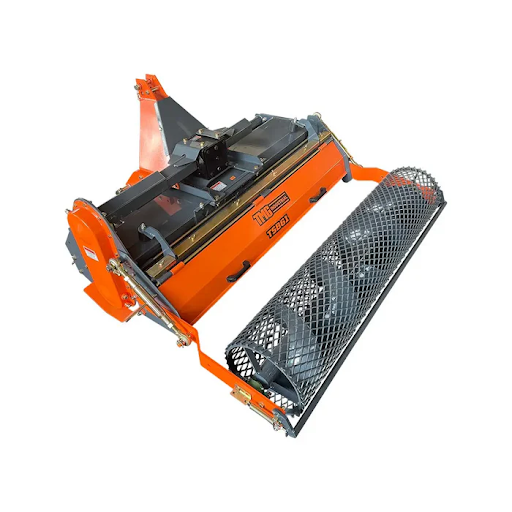
Across American farms, vineyards, and large gardens, rocky soil poses a persistent challenge. Stones damage tillage equipment, dull planting tools, and interfere with root crop development. A TMG 61″ rotary tilling stone burier buries surface rocks below the topsoil layer, creating a clean seedbed. American farmers, vineyard managers, and large-scale gardeners use these implements to improve soil conditions for potatoes, carrots, onions, and other root vegetables.
Common Applications and Operating Method
Stone buriers are commonly used for:
- Potato and carrot field preparation
- Vineyard soil refinement
- Garden center and nursery bed preparation
- Sports field renovation
- Landscape bed rock removal
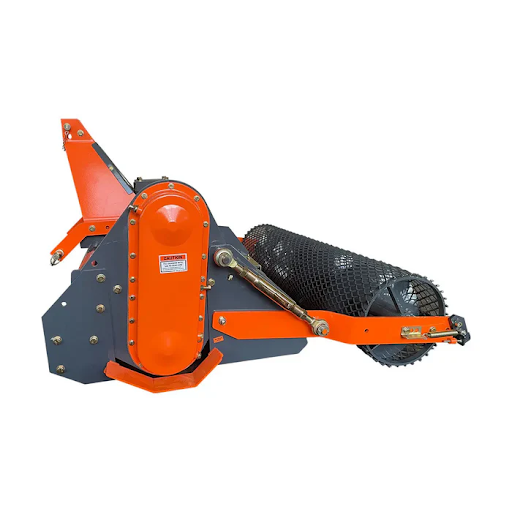
The implement attaches to a tractor’s three-point hitch and is driven by the power take-off shaft. As the tractor moves forward, the rotor spins at high speed, pulverizing soil aggregates. Stones and clods are thrown upward against a rear gate, then fall back behind the rotor. The fine soil passes through the gate while larger stones are pushed downward and buried at adjustable depth.
Soil Improvement and Crop Benefits
Rocky soil causes multiple problems for crop production. Stones physically block root growth, causing misshapen vegetables such as forked carrots or knobby potatoes. Rocks damage harvesting equipment, leading to costly repairs. Stones also interfere with irrigation and drainage, creating uneven moisture distribution.
The stone burier addresses these issues by burying rocks below the root zone. The working depth of 5 inches places stones deep enough that they no longer interfere with most root crops. The pulverized topsoil creates a fine, uniform seedbed that promotes even germination and straight root growth.
Efficiency and Field Coverage
The 61 inch working width covers ground efficiently behind 35 to 45 horsepower tractors. The machine processes 2400 to 3200 square meters per hour, depending on soil conditions and tractor speed. Adjustable rotor speed allows matching the implement to soil type. Sandy soils require slower rotor speeds. Clay soils need higher speeds for adequate pulverization.
The side chain drive requires less maintenance than central drives found on lower-quality units. The adjustable rear gate controls stone burial depth and soil pulverization level. Opening the gate allows more stones to pass through for lighter burial. Closing the gate forces stones deeper into the soil profile.
Safety Practices and Operational Guidelines
Safe operation requires several key practices:
- Clear area of large rocks and debris before use
- Ensure power take-off shaft guard is in place
- Keep bystanders 50 feet away during operation
- Stop rotor before reversing direction
- Lower implement to ground when parked
The rotor spins at high speed and can throw stones if contacted. Never operate the stone burier near people or animals. Inspect the rotor and rear gate for damage before each use.
Advantages and Limitations
Advantages of a rotary tilling stone burier include:
- 5 inch maximum working depth
- 61 inch working width for efficiency
- Processes 2400 to 3200 square meters per hour
- Adjustable rotor speed for different soil types
- Side chain drive for low maintenance
- Adjustable rear gate for burial depth control
- Fits 35 to 45 horsepower tractors
Limitations to consider:
- Not for fields with boulders over 6 inches
- Requires 35 to 45 horsepower tractor
- Heavy implement requires adequate lift capacity
- Power take-off drive requires tractor with 540 or 1000 revolutions per minute
- Stones may resurface after freeze-thaw cycles
Real-World Application Example
An American potato farmer in Maine cultivated 50 acres of rocky soil. Each season, stones damaged the harvester and caused misshapen potatoes that sold at lower grade prices. The farmer purchased a 61 inch stone burier. After tilling, the field produced potatoes with fewer stone bruises and more uniform shape. Harvester damage dropped by 70 percent. The farmer reported that the implement paid for itself in two seasons.
Conclusion and Future Outlook
TMG Industrial Rotary tilling stone buriers enable American farmers to convert rocky fields into productive cropland. The combination of pulverizing soil and burying stones creates ideal conditions for root vegetables, vineyards, and high-value crops. As land prices rise, farmers are cultivating marginal ground that requires stone removal. Demand for stone buriers will likely increase accordingly. Future designs may include hydraulic depth control from the tractor cab and stone collection screens for surface rock removal.
Farmers and land managers should evaluate stone buriers for any field where rocks interfere with crop quality or equipment operation. The 61 inch width and 5 inch depth make this implement suitable for diverse American agricultural applications.