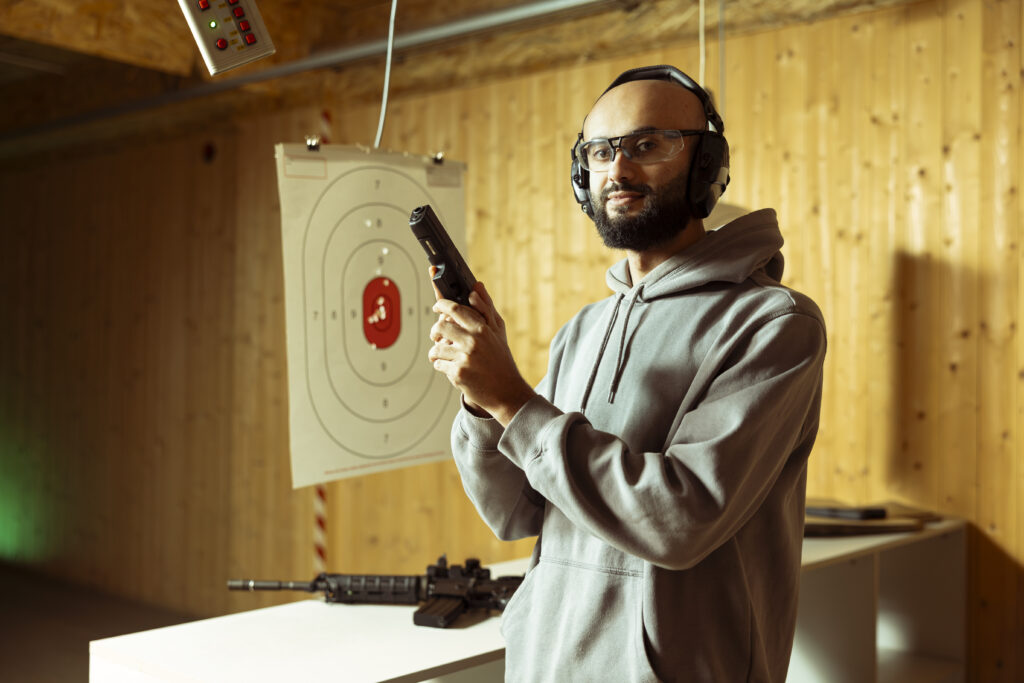

Anyone who runs a shooting range, trains regularly, or manages a firearms program for a department or organization knows that target replacement is a recurring cost that rarely gets the attention it deserves. A target that deteriorates after a few hundred rounds isn’t just an inconvenience — it interrupts training sessions, creates debris on the range, and forces purchases that add up quietly over time. The question isn’t whether a target will eventually wear out. The question is how long it holds its structural integrity under repeated, high-volume use, and whether the material it’s made from is actually suited to the calibers and conditions it will face.
Choosing the wrong target design is one of those decisions that looks minor on the front end and costs significantly more on the back end. This guide walks through the material and design factors that determine longevity, the conditions that cause premature failure, and the considerations that separate a durable target from one that merely looks adequate on a product page.
What Self-Healing Materials Actually Do Under Fire
A self-healing shooting target works because of how its core material responds to impact at a molecular level. When a projectile passes through dense, closed-cell or layered foam engineered for this purpose, the surrounding material compresses under the force and then returns toward its original form once the projectile exits. This isn’t a coating or surface treatment — it’s a property of the material itself. The degree to which it recovers depends on the density of the compound, the caliber and velocity of the round, and how frequently the same channel is struck before meaningful recovery can occur.
For shooters and range managers researching options, browsing a curated selection of self-healing shooting target models gives useful comparative context for understanding how construction varies across product lines. Not every product marketed with self-healing language uses the same compound, and those differences have measurable consequences for how long a target remains functional under sustained use.
The Role of Material Density in Impact Recovery
Density is the primary variable that controls whether a target can absorb repeated hits in the same area and continue performing. A compound that is too soft will allow projectiles to pass through cleanly, but the displaced material won’t return to its original shape with enough resistance to stop subsequent rounds effectively. A compound that is too rigid may stop rounds at lower velocities but will crack or fragment when hit by higher-energy cartridges, particularly those fired at shorter distances.
The right density range creates what engineers in materials science refer to as viscoelastic behavior — a combination of viscous flow and elastic recovery that allows the material to deform temporarily under load and then return. This property is central to why some targets hold together after thousands of rounds while others begin showing structural failure within a few hundred.
Velocity and Caliber Compatibility
Not all self-healing targets are built to perform across the full spectrum of commonly used calibers. A target designed for pistol-caliber handguns will respond very differently when struck by a high-velocity rifle round. The kinetic energy delivered by a centerfire rifle cartridge at close range can exceed what the material is designed to absorb, causing channeling — a condition where the material is pushed aside permanently rather than displaced temporarily.
Understanding the intended use case before purchasing is essential. A target rated for rimfire and standard handgun rounds used in a rifle training environment will fail prematurely and create the exact replacement cycle the buyer was trying to avoid. Manufacturers typically specify the compatible caliber range, and that specification should be treated as a structural boundary, not a conservative suggestion.
Construction Design and Its Effect on Longevity
Beyond the base material, the physical construction of a target — how it is layered, how its core is supported, and how it handles the mechanical stress of repeated use — determines how long it remains usable in practice. Two targets made from similar compounds can perform very differently if one uses a laminated or multi-layer design and the other relies on a single homogeneous block.
Layered vs. Monolithic Core Designs
Layered targets direct impact energy through alternating densities, which helps distribute the force of a projectile across more material rather than concentrating it along a single path. This approach reduces the risk of a direct channel forming through the target from front to back, which is the most common form of structural failure in high-use scenarios.
Monolithic designs, where the entire target is one continuous piece of the same compound, are simpler to manufacture and can work well for lower-volume use. However, when struck repeatedly in the same zone — as happens in structured drills focused on center mass — these designs tend to develop permanent voids more quickly. Layered construction doesn’t eliminate wear, but it extends the functional life of the target by making failure progression slower and more predictable.
Frame and Mounting Stability
A target’s longevity isn’t determined solely by its core material. The frame or mounting system it sits in contributes directly to how the material handles impact. A target that shifts, bounces, or pivots significantly on impact disperses some of that energy into the mounting hardware rather than through the foam, which can accelerate internal delamination or cause the face of the target to tear from repeated mechanical stress at the edges.
Stable, low-movement mounting keeps the target absorbing energy the way its material is designed to absorb it. This is particularly relevant for outdoor range setups where stakes, stands, or hanging systems may not hold the target rigidly in place across varying ground conditions or wind exposure. The mounting solution is part of the system, not an afterthought.
Environmental Conditions That Affect Material Life
Self-healing foam compounds are sensitive to environmental exposure in ways that aren’t always obvious before purchase. Temperature extremes affect the physical properties of most polymer-based materials, and target compounds are no exception. In colder conditions, many foam types become stiffer and more brittle, which reduces their ability to recover after impact and increases the risk of cracking under high-velocity fire. In sustained heat, certain compounds may soften beyond their functional range and lose the density necessary to stop projectiles reliably.
As noted in materials science literature, the thermal properties of polymer foams — including how they transition between elastic and brittle states — are directly tied to ambient temperature conditions during use. This is relevant context for anyone selecting a target for outdoor ranges in climates with significant seasonal variation.
Moisture and UV Exposure
Outdoor use introduces two additional degradation factors that indoor ranges largely avoid: moisture infiltration and ultraviolet radiation. Moisture that works its way into micro-channels left by projectiles can accelerate breakdown of the foam structure from the inside, particularly in freeze-thaw cycles where the water expands and contracts within the material. UV exposure breaks down the surface polymers over time, which can cause a target to become chalky, brittle, or prone to surface cracking even in areas that haven’t been struck.
Targets intended for permanent or semi-permanent outdoor use should use compounds and surface treatments specifically rated for UV and moisture resistance. Using an indoor-rated target in an exposed outdoor setting is a common source of premature failure that leads buyers to conclude the product is generally poor quality, when the actual issue is a mismatch between the product’s design parameters and the conditions it was placed in.
High-Volume Use and the Maintenance Approach That Extends Target Life
Ranges and training programs that put a target through hundreds of rounds in a session cannot expect the same lifespan from a given product that a recreational shooter using the same target once a week would see. Volume is the most direct driver of wear, and high-use environments require a more deliberate approach to extending the functional life of each target rather than simply replacing them on a fixed schedule regardless of condition.
Managing Impact Distribution Intentionally
One of the simplest and most effective ways to extend the life of a self-healing target is to rotate the impact zone systematically. Most structured training programs focus rounds on a consistent point of aim — typically center mass — which concentrates wear in a single area and causes localized failure long before the rest of the target material has degraded. Rotating the target face, adjusting aim point zones across training sessions, or using larger target faces that allow impact distribution across a broader surface area all slow the rate of localized breakdown.
This approach doesn’t require new equipment. It requires awareness of how wear accumulates and a deliberate effort to spread that accumulation more evenly across the available material.
Recognizing the End of Functional Life
A self-healing shooting target reaches the end of its useful life not when it shows surface wear, but when it can no longer stop projectiles reliably or when internal channels have become permanent enough to allow rounds to pass through without meaningful resistance. Continued use past this point creates a safety concern, particularly if anything beyond the target — a berm, a wall, or open space — is in the round’s path.
Visual indicators such as significant material loss around the face, permanent compression zones that no longer spring back between sessions, or visible channeling from front to back are reliable signals that replacement is warranted regardless of how recently the target was purchased.
Making the Right Choice Before the First Round Is Fired
The most effective way to avoid premature target failure is to match the target’s design specifications to the actual conditions it will face before purchase rather than after. This means being precise about the calibers and velocities being used, honest about how many rounds the target will see in a given session or week, clear on whether it will be used indoors or outdoors and in what climate, and realistic about whether the mounting setup will support the target correctly under sustained use.
A target that checks every box on paper but is deployed in conditions outside its design parameters will underperform in ways that look like product failure but are actually selection errors. Taking the time to evaluate those variables upfront is the single most reliable way to reduce replacement frequency, lower long-term cost, and maintain consistent, safe training conditions across the full life of the target.
Closing Thoughts
Choosing a target that holds up over thousands of rounds isn’t a matter of finding the most expensive option or the one with the most claims on its packaging. It comes down to understanding how the material behaves under the specific conditions it will face, how the construction distributes and absorbs impact stress, and how environmental and usage factors interact with the compound over time. When those variables are matched carefully to a product designed to handle them, the result is a target that performs consistently, requires less frequent replacement, and supports safer, more reliable training over the long term. That kind of durability isn’t accidental — it’s the outcome of informed selection applied before the first shot is ever fired.