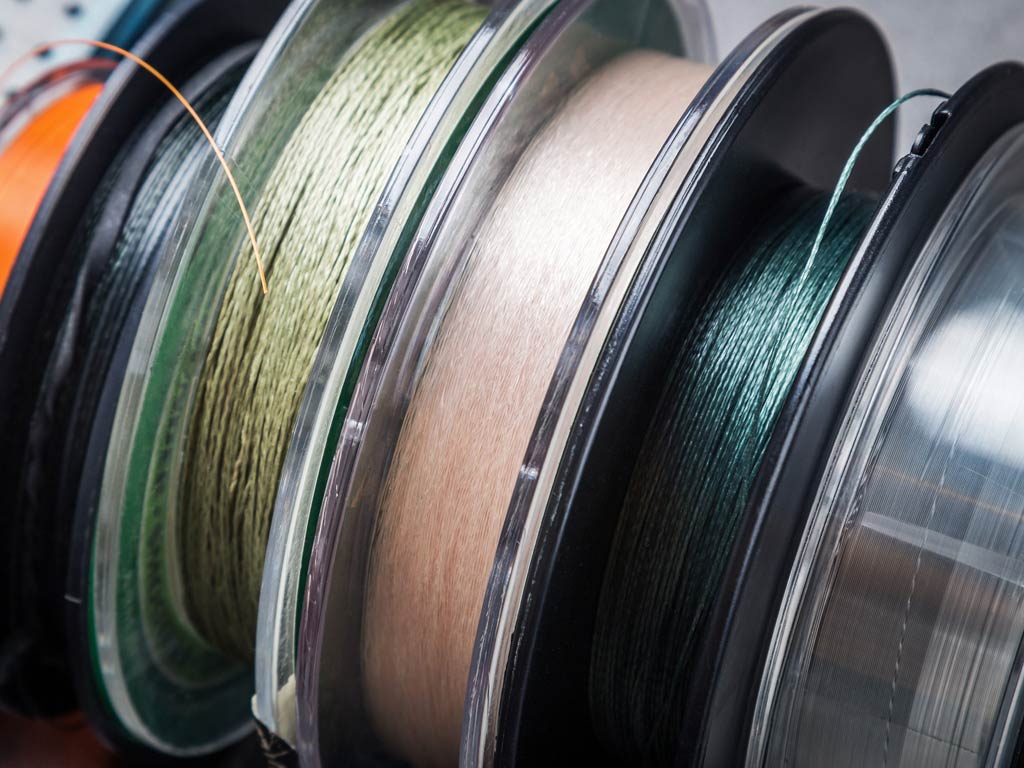

Every beginner has a spool of it somewhere: clear, cheap, sold as “crystal string” and indistinguishable from fishing line. It threads beads, it costs almost nothing, and it works, right up until the piece stretches out of shape, yellows in a sunny window, or snaps at a bead hole. Designers who sell their work stop using it fast. Here is what it actually is, why it fails, and what a purpose-made nylon cord does differently.
What ‘crystal string’ actually is
Crystal string is monofilament: a single extruded strand of nylon, the same basic product as fishing line, dyed clear and wound onto a craft spool. It has no twist, no coating, and no construction to speak of. That is the whole appeal to a manufacturer, because it is cheap to make, and the whole problem for a jeweller, because a single untreated filament has none of the properties a strung piece needs.
Why it stretches, yellows, and snaps
Three failures show up again and again. Monofilament stretches under sustained load, so a beaded strand slowly droops and the tension goes slack. It yellows, because untreated nylon is vulnerable to ultraviolet light and discolours in sunlight over months. And it snaps, usually at a bead hole, because a single filament has no redundancy and sharp-edged drill holes can cut almost any threading material. Put those together, and crystal string is a poor bet for anything meant to be worn and kept.
GRIFFIN NylonPower, engineered for jewellery
GRIFFIN NylonPower is what a nylon cord looks like when it is made for jewellery rather than fishing line. It is a specially-treated nylon, triple-twisted rather than a single filament, with a stainless-steel needle attached to every card. The triple-twist means it does not fray, and the needle threads beads without a doubled cord. It is also the vegan alternative to natural silk, made entirely from synthetic fibre, and it comes in 21 colours and 13 thread sizes from roughly 0.30 mm to 1.05 mm, so it covers the same range of work as a silk cord.
Side-by-side: strength and stretch
The difference is in the specification. NylonPower cord carries double the tensile strength of conventional nylon, so it takes the load of heavier beads without the thinning and creep you see in monofilament. On stretch, it is close to what a strung piece needs: it moves only about 3 to 4% under tension and returns to its original length when released, rather than stretching out permanently the way crystal string does. It is not a true no-stretch cord, but that small, recoverable give is a feature, letting a strand sit naturally without going slack. Where a design genuinely needs an invisible thread, GRIFFIN Illusion Cord is the proper transparent option, a strong clear nylon made for jewellery rather than repurposed fishing line.
Colourfastness and UV resistance
Crystal string’s tendency to yellow is one of its worst traits for anything on display. NylonPower cord is built for colour: it has excellent colour brilliance across its 21 shades and a smooth, polished surface that holds that colour. For a maker selling finished pieces, a cord that keeps its colour and does not discolour in daylight protects the work long after it leaves the bench.
When fishing line is fine (spoiler: rarely)
To be fair to monofilament, there are a few jobs where it is acceptable: a quick practice piece, a temporary mock-up, or a rough prototype you will restring properly later. For anything sold, gifted, or meant to last, it is the wrong tool. And for the one job people reach for fishing line most, the “floating” or invisible-illusion necklace, there is a purpose-built answer in Illusion Cord, which finishes with three half-hitches pulled tight inside the bead cavity and holds where monofilament slips.
The switch that pays for itself
The economics favour the better cord. Crystal string is cheaper per metre, but a piece that stretches, yellows, or snaps costs the beads, the findings, the rework, and the customer’s trust if it is a sale, the customer’s trust. A proper nylon cord for jewellery making is strung once and stays strung. For anyone who has restrung a sagged crystal string necklace even once, the maths is already done.
Frequently Asked Questions
Is NylonPower a no-stretch cord?
Not entirely. It stretches only about 3 to 4% under tension and returns to its original length, which is far less than monofilament and is a deliberate, useful amount of give rather than permanent stretch.
Is nylon cord vegan?
Yes. NylonPower is a fully synthetic fibre, which GRIFFIN positions as the vegan alternative to natural silk.
Why does my old clear string smell and look yellow?
Untreated monofilament degrades under ultraviolet light and discolours over time. A treated, colour-stable nylon cord avoids that.
What size NylonPower cord should I use?
Match the thread size to the bead hole across the 13 diameters, the same way you would with silk, so the cord fills the hole and knots sit tight.