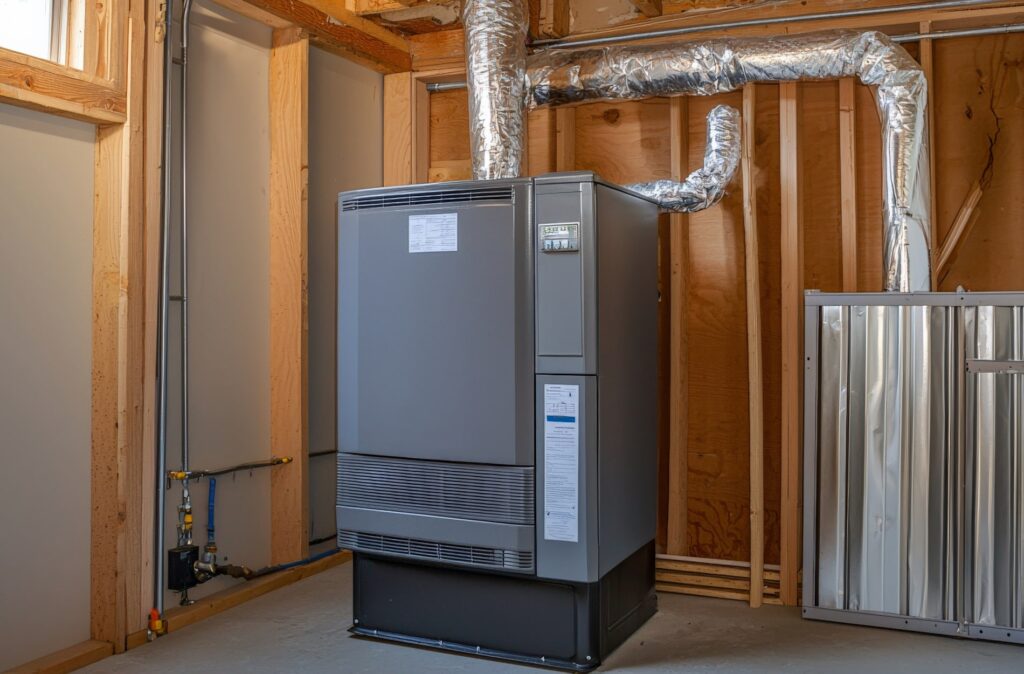

Marisol bought a two-unit duplex in Bloomfield five years ago, and for three winters the 1998 furnace in its basement was somebody else’s problem. Then her upstairs tenant sent photos of a thermostat parked at 61 degrees, an inspector flagged the old unit’s venting on his walkthrough, and she started calling every furnace company pittsburgh pa landlords had recommended to her without knowing what to ask first. Hiring a heating installer for a duplex is a different purchase than hiring one for a house you live in yourself, because a single system now answers to two households and to a file with your name on it. The landlord who gets this right is buying four things instead of a box: sizing that accounts for both units, venting that passes, a schedule that survives occupied apartments, and paperwork. What follows is how to tell on the phone which contractor is actually selling all four.
One Furnace Two Tenants Doubles Every Complaint
A single furnace serving two apartments creates an arithmetic nobody explains at closing. Every complaint arrives twice. In practice we see the same split in these buildings: the first floor runs warm, the second floor runs cold, both tenants blame the other one’s thermostat habits, and the owner ends up mediating an argument about air. Marisol’s furnace was not broken in any way a technician could point at, which is what makes these calls expensive. It fired, it moved air, and it still left one tenant in a sweater.
Price it per unit rather than per building and the decision loosens up. Say a correctly vented replacement lands somewhere near $7,400 installed, purely as an illustration; split across two units that is $3,700 a side, roughly three months of one unit’s rent at Bloomfield’s $1,150 range, against equipment that should run fifteen years. A landlord weighing $7,400 against nothing will pick nothing every time, right up until the furnace picks for him.
Sizing Language Every Landlord Should Translate First
The first real filter is how a contractor answers the sizing question. Ask what size furnace the building needs, then listen for whether the answer arrives before or after somebody measures anything. A contractor quoting BTUs off the square footage on the county record is guessing, and the default guess is high, because an oversized furnace never produces a callback about being cold. It produces short cycling instead: the burner satisfies the thermostat near the nearest register and quits long before the far end of the building warms up, which is precisely the second-floor complaint you are paying to end. What you want to hear is that the company runs what installers call a Manual J, meaning a room-by-room heat-loss calculation built from your real windows, insulation and duct runs instead of a rule of thumb. In a duplex that calculation has to treat the two units as two load zones rather than one big box, or you have bought the same imbalance in a newer cabinet. Ask for the number it produces, in writing.
Here is the part I cannot hand you a clean number for. Nobody tracks how much of a duplex’s uneven heat is the furnace itself versus duct runs somebody added in 1974 and never balanced, and I have watched two nearly identical buildings respond completely differently to the same equipment. Any installer promising exact degrees upstairs before the ductwork has been looked at is selling certainty that does not exist. Ask what they will check, and what happens if the second floor is still cold in February.
Where Venting And Inspection Questions Come From
An inspector who writes up venting is not being fussy about paperwork. A gas furnace that cannot exhaust properly puts combustion byproducts where people sleep, and the EPA is blunt about the stakes: hundreds of people die every year from carbon monoxide produced by malfunctioning fuel-burning appliances, and anyone who suspects CO should get everyone into fresh air, leave the building, and call 911 from outside instead of hunting for the source. Do not stay inside to open windows. Put CO alarms on every level of both units and test them when you turn the heat over each fall. That is the floor, whatever the local rule happens to say.
Venting is also where code questions live, and those answers are local. Requirements for combustion air, flue material and clearances differ between municipalities and shift with the appliance you install, so the practical move is asking the furnace company pittsburgh pa you are considering who pulls the permit, which inspection stages get scheduled, and what they hand you once an inspector signs off. A company that answers all three without pausing does this weekly. One that tells you a permit is unnecessary on a rental has told you plenty.
What Install Week Looks Like With Tenants Inside
Timing is leverage, and heating season takes it away from you. WSAW NewsChannel 7 reported in July 2026 on one HVAC shop fielding upwards of 70 service calls per day during a heat wave, mostly failed capacitors and motors, and the trade absorbs that same crush in reverse the first brutal week of January. Book a planned replacement in the shoulder season and you get a real sizing visit, a crew that is not triaging, and an actual choice of equipment. Wait for a failure and you get whatever sits on the truck.
Tell your tenants what to expect, because vague notice is what generates the angry text message. On the first day the crew pulls the old cabinet and cuts in new venting, so both units lose heat for most of a working day and the basement door stays propped open. By day two the system is fired, balanced, inspected and back in tenant hands. Within 30 days the upstairs complaints should stop entirely, and if they have not, the duct conversation begins. Around month three, when the first genuinely cold bill lands, you find out what the efficiency change bought.
Landlord Questions Answered Before The Order
Do I have to replace everything if only the upstairs is cold?
Not always, and a company that answers yes over the phone is guessing. Uneven heat can be duct balance, a stuck damper, or a return path somebody closed during a remodel. A 1998 system with flagged venting is a different situation, though, because at that age repairs buy you a winter or two on something you will replace anyway.
Can my tenants stay in the building during the install?
Usually yes for a same-day changeout in mild weather. Give written notice, say plainly that both units lose heat for part of the day, and have a fallback if the work slips. In January that fallback means space heaters you supply, not ones a tenant buys in a panic.
A Documented Install Protects Both Units
The basement tells the truth eventually. One furnace heating two apartments concentrates every deferred decision into a single cabinet, and a cheap sizing job costs money twice, once at installation and again through a second winter of complaints. Marisol’s version ended undramatically, which was the whole point. She hired the company that measured before quoting, scheduled the work for October, told both tenants exactly what would happen, and now keeps a folder holding the load calculation, the equipment serial numbers and a signed inspection. That folder is what turns the next tenant question, the next walkthrough and eventually the next appraisal into a short conversation rather than an argument.