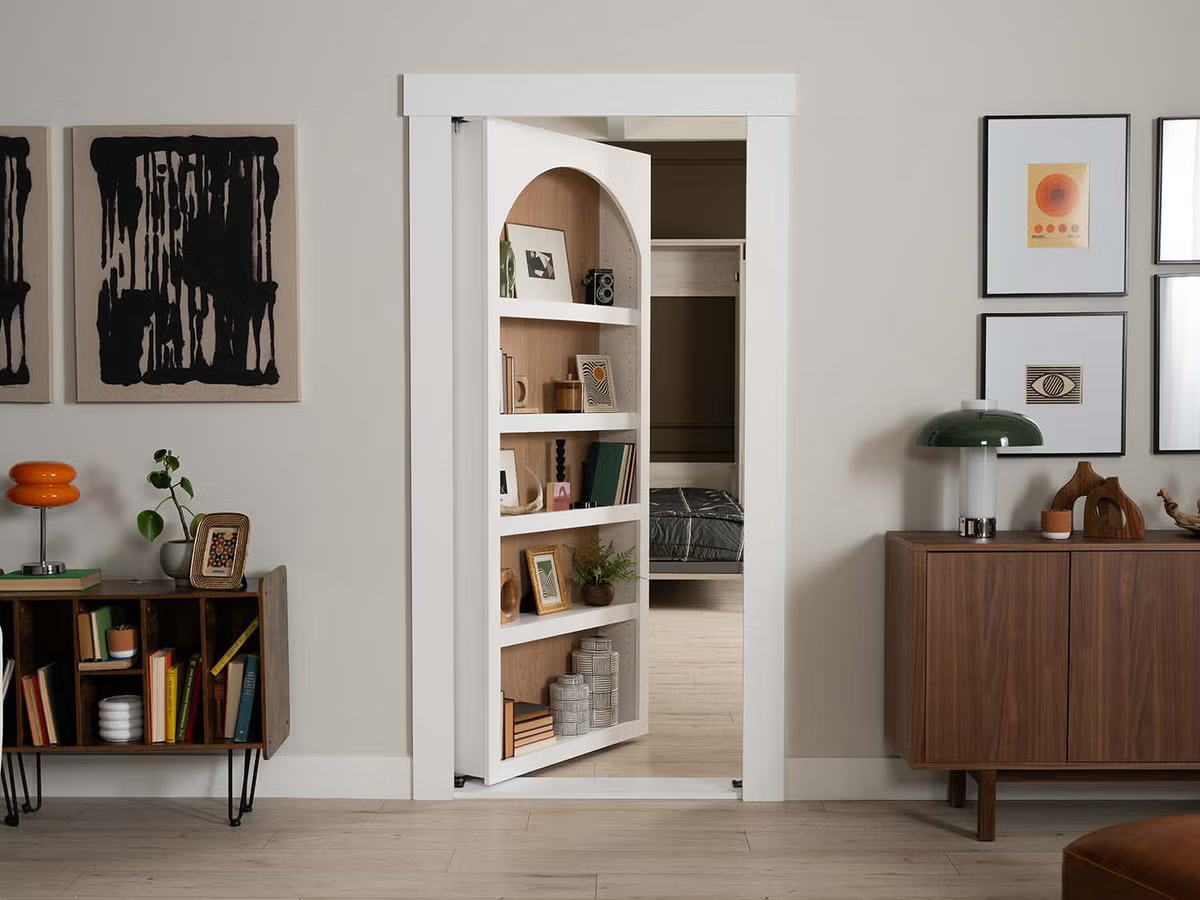

Space constraints are one of the most persistent challenges in residential and commercial interior planning. Whether it is a growing household running out of room, a home office doubling as a guest room, or a renovation budget that does not allow for structural changes, the pressure to find functional square footage within existing walls is real. Designers working across these environments have long relied on a set of principles that go well beyond furniture arrangement. These principles treat every surface, every threshold, and every overlooked corner as a potential storage opportunity. The following sections examine seven of those approaches — not as decorating ideas, but as practical methods with real impact on how a space functions day to day.
1. The Door With Bookshelf Concept and Why It Works
A door with bookshelf integration is one of the more structurally efficient storage solutions available in residential design. The concept involves mounting shelving directly onto or behind a door, using the vertical surface of the door itself or the wall space immediately behind it as a storage zone. In rooms where floor space is already committed — bedrooms, home offices, pantries, laundry rooms — this approach adds meaningful capacity without occupying any additional footprint.
What makes this method particularly useful is that doors represent some of the most consistently underused surfaces in any interior. In a standard room, there may be one or two doors, each with a usable surface area that most storage plans simply ignore. When that surface is treated with the same intentionality as a wall or a built-in cabinet, it becomes a quietly productive part of the room’s function.
Where This Solution Has the Most Impact
The door with bookshelf approach performs best in rooms where storage needs are high and wall space is limited. Pantry doors are a frequent application because the interior of a pantry is often packed with shelving, leaving the door itself bare. Mounting tiered shelving on the back of that door immediately adds room for canned goods, spices, or cleaning supplies without requiring any reorganization of the existing pantry layout.
Home offices benefit from this setup as well. When desk space and wall-mounted options are already in use, a door with bookshelf configuration can hold reference books, binders, or supply storage in a location that stays out of sightlines when the door is open. The storage is accessible when needed but does not contribute to the visual weight of the room during the workday.
2. Vertical Space Above Eye Level
Most storage in residential settings clusters between knee height and shoulder height — the zone that feels easiest to reach and most natural to use. Everything above that range tends to go empty or accumulate only the items people rarely access. Designers who work in space-constrained environments treat the upper third of a room as prime storage territory for items that are seasonal, archival, or used infrequently.
Making Upper Storage Practical
The challenge with above-eye-level storage is accessibility. Without a clear system, items stored high tend to become forgotten rather than simply less used. The practical fix is categorization before installation — deciding exactly what will live at elevation before committing to shelving placement. When the contents of upper storage are consistent and labeled, the inconvenience of reaching them occasionally is far outweighed by the floor and mid-wall space freed up below.
3. Built-In Seating With Storage Below
Window seats, banquettes, and entry benches that incorporate storage beneath the seat cushion are a staple of efficient interior design for good reason. They serve two functions simultaneously — providing a place to sit and concealing items that would otherwise require a separate piece of furniture. In entryways particularly, below-seat storage handles the category of items that are hard to assign a home: seasonal shoes, sports gear, bags, and accessories that cycle in and out of active use.
Design Considerations That Affect Usefulness
The access mechanism matters considerably. Lift-top storage is the most common, but it requires enough clearance above the bench to open comfortably. In tight entry halls or beneath low windowsills, pull-out drawers built into the front face of the bench are often more functional. The distinction between these two approaches is not aesthetic — it is a matter of whether the storage actually gets used consistently or becomes difficult enough to access that it stays closed.
4. Recessed Wall Niches in Unused Structural Space
Interior walls that run parallel to exterior walls or that separate rooms from closets often contain unused cavity space between the studs. This space, which is typically several inches deep and spans the full height between floor and ceiling, can be opened up and fitted with shelving to create a recessed niche that adds storage without projecting into the room at all. The result is a storage area that takes up zero floor space and sits flush with the surrounding wall surface.
When a Niche Is the Right Choice
Niches work well for display, for bathroom toiletries, for books in a reading corner, or for media equipment in a living room. They are not suited to heavy storage or frequently rotated inventory — the depth is limited and the access angle is direct rather than top-down. Where they excel is in situations where a small, visible category of items needs a permanent home that does not clutter a surface or require a piece of furniture to support it.
5. Staircase Storage That Treats Each Step as a Drawer
Staircases in multi-level homes represent a block of structural volume that is almost always empty below the treads. Traditionally, this space is accessed through a single door at the base, creating a triangular storage area that is difficult to organize because of its irregular shape. The more functional approach involves converting individual steps into pull-out drawers, each one accessible from the side of the staircase. This transforms an awkward cavity into a series of discrete, reachable compartments.
Practical Applications for Step Drawers
Step drawers are particularly well suited to items that need separation by category: shoes near the base, linens or blankets in the middle steps, and off-season clothing toward the top where the headroom inside the cavity becomes too low for anything else. The key advantage over a single under-stair door is that each drawer gives direct, unobstructed access to its contents without requiring other items to be moved first.
6. Floor-to-Ceiling Cabinetry That Eliminates Dead Space at the Top
Standard upper kitchen cabinets typically stop well short of the ceiling, leaving a gap that collects dust and serves no functional purpose. Floor-to-ceiling cabinetry eliminates this gap entirely. According to research cited by the U.S. Department of Energy, efficient use of vertical space in residential buildings also contributes to better thermal performance by reducing exposed surface area near the ceiling where heat tends to accumulate — an indirect but real benefit of taller cabinetry installations.
Managing the Top Tier Practically
The topmost section of floor-to-ceiling cabinetry functions best when it holds items that are consistent and rarely accessed — appliances used only a few times a year, holiday serving pieces, or bulk storage. A small step stool stored nearby completes the system. The discipline required is treating the top tier as intentional storage rather than overflow, which is where the practical benefit of the extra height is most likely to be lost over time.
7. Furniture That Holds More Than It Appears To
Ottoman storage, lift-top coffee tables, beds with drawer bases, and console tables with interior shelving all operate on the same principle: the piece of furniture fulfills its primary function while simultaneously housing items that would otherwise need a dedicated storage solution. This approach is particularly relevant in rooms where adding new furniture to address storage would make the room feel crowded.
Choosing Pieces That Stay Functional Over Time
The practical concern with multifunctional furniture is longevity of the mechanism. Lift-top tables and gas-cylinder ottoman hinges are subject to regular use and can wear in ways that make access inconvenient. When selecting these pieces, the quality of the hardware matters more than the aesthetic finish. A storage ottoman with a stiff or misaligned lid gets used less — which means the storage inside effectively goes unused despite being available. Choosing pieces with replaceable or robust hardware extends the practical lifespan of the storage function, not just the furniture itself.
Conclusion
Effective storage design is less about finding new places to put things and more about recognizing the functional capacity that already exists within a space. Doors, walls, staircases, and furniture frames all hold potential that standard layouts rarely use. The seven approaches outlined here share a common quality: they solve storage problems without adding square footage, and they do so in ways that hold up under the actual conditions of daily use.
The door with bookshelf concept is perhaps the clearest example of this principle in practice. It requires no structural change, fits into existing room plans without reconfiguring anything else, and addresses a storage need through a surface that was already present and simply unoccupied. The same logic applies across the other methods — each one treats the built environment as a resource that has more to offer than first appearances suggest. For anyone working through a renovation, a move, or simply a space that has stopped functioning well, that shift in perspective is often where the most practical gains begin.