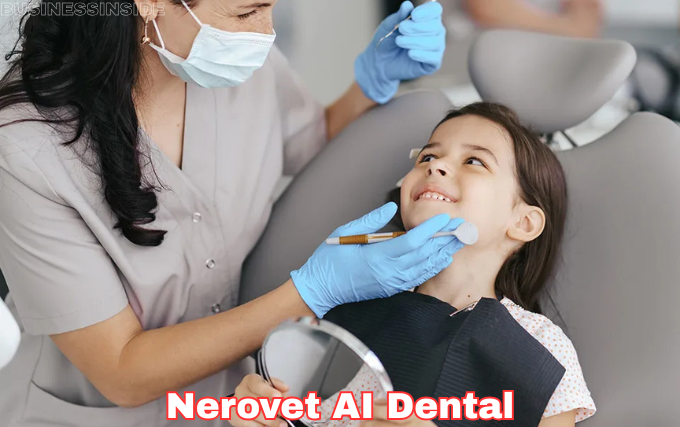

Artificial intelligence is emerging as a key component of clinical precision, diagnostic accuracy, and patient-centered care in the dental sector, which is undergoing a technological revolution unlike any other. With technologies that improve decision-making, expedite workflows, and improve treatment outcomes, Nerovet AI Dental ushers in a new era of dental innovation. Next-generation AI technologies are now necessary rather than optional as patient expectations rise and dental diseases get more complex.
Fundamentally, Nerovet AI Dental aims to eliminate the uncertainty that frequently accompanies conventional diagnostic techniques. Its AI-driven algorithms help practitioners spot diseases early and more confidently by utilizing patterns concealed deep within radiographs, intraoral scans, and clinical records. The ensuing sections provide a thorough, expert-level overview of why Nerovet AI Dental is quickly emerging as a revolutionary force in contemporary dentistry by delving deeply into the technology’s inner workings, clinical uses, benefits, and future implications.
The Evolution of AI-Powered Dentistry and Nerovet’s Role
From experimental algorithms to widely used clinical aids, artificial intelligence has been incorporated into dentistry. Dentists have traditionally relied on manual analysis of patient data and imaging, but a more sophisticated solution was required due to the growing number and complexity of cases. Nerovet AI Dental enters this market as a platform designed to improve diagnostic accuracy and facilitate the identification of early-stage disease by professionals. Its machine learning models provide insights that supplement, not replace, clinical experience by analyzing thousands of data points in a matter of seconds.
The development of Nerovet coincides with the trend toward minimally invasive dentistry, where early detection is crucial. Clinicians can act sooner because to AI-driven assessment, which lowers treatment costs and enhances patient comfort. Because of the platform’s emphasis on transparency, practitioners can examine AI results with condition-specific explanations, likelihood scores, and visual overlays. In the end, this interpretability promotes trust and enables better informed decision-making by helping dentists comprehend how the algorithm reaches its results.
How Nerovet AI Dental Enhances Radiographic Interpretation
Even seasoned clinicians may encounter difficulties such as overlapping structures, subtle bone alterations, or early-stage caries that may not show visible indications. Traditional radiograph interpretation needs years of training. Nerovet AI Dental uses deep-learning models that have been trained on large, varied datasets to overcome these constraints. By identifying differences in density, texture, and morphology that the human eye can miss, the platform provides recommendations that direct medical professionals toward more precise diagnostic results. This improved visibility is particularly useful for detecting early decay, periodontal problems, and periapical lesions.
Nerovet’s real-time analysis is one of its best qualities. The AI technology analyzes a radiograph as soon as it is uploaded, processing it rapidly and accurately highlighting any abnormalities. Additionally, it provides confidence scores that aid practitioners in assessing the importance of each discovery. In addition to increasing diagnostic reliability, this combination of speed and precision also decreases chairside delays, allowing for more seamless and informed treatment planning during consultations.
Improving Clinical Efficiency Through Automated Workflows
Nerovet AI Dental greatly improves operational efficiency in dental practices in addition to its diagnostic skills. Clinicians’ time that could be spent on patient care is frequently wasted on manual charting, data analysis, and documentation. These processes are streamlined by Nerovet’s automated workflow solutions, which lessen administrative burdens and increase uniformity. Dental teams may easily keep thorough and accurate records thanks to the platform’s ability to automatically classify data, create charts, and produce preliminary assessments.
By using the same methods and benchmarks in every instance, Nerovet guarantees consistency in diagnostic standards for multi-provider practices. This lowers variability and unites medical professionals around standard operating procedures. Additionally, its cloud-based architecture facilitates secure data storage and easy access, enabling cross-location practice collaboration. The outcome is a more streamlined, effective, and scalable approach that maximizes team productivity while improving overall patient satisfaction.
Enhancing Patient Communication and Case Acceptance
Treatment acceptance or reluctance is frequently determined by patient communication. Many people find it difficult to understand radiography or clinical explanations, which might cause uncertainty or distrust. Nerovet AI Dental enhances this procedure by providing patients with easily comprehensible explanations, color-coded indicators, and clear visual overlays of findings. Deeper participation during consultations is fostered by this transparency, which helps close the gap between clinical language and patient comprehension.
Patients are more likely to trust the suggested course of treatment when they can see the issue and comprehend how serious it is. By enabling practitioners to provide information supported by evidence in an understandable manner, Nerovet lowers uncertainty and boosts case acceptance rates. In addition to improving the patient experience, this improved communication positions the practice as progressive and dedicated to providing top-notch care backed by cutting-edge technology.
Clinical Applications Across General and Specialty Dentistry
Nerovet AI Dental’s adaptability makes it useful for specialists in a variety of fields as well as general practitioners. The platform helps detect differences in canal morphology, root fractures, and periapical radiolucencies in endodontics. Particularly in complicated circumstances, its high-precision analysis facilitates more precise treatment planning. Nerovet’s measurements and bone-level evaluations give periodontists a better grasp of how the illness progresses, which enhances monitoring and therapeutic techniques.
Nerovet’s capacity to assess skeletal and dental linkages helps orthodontists make judgments about alignment, growth, and face aesthetics. In the meantime, the platform allows oral surgeons to more clearly assess anatomic landmarks, impacted teeth, and lesion boundaries. Nerovet enhances clinical confidence and promotes safer, more predictable results throughout the whole dental care spectrum by providing specialized insights.
Data Security, Accuracy, and Ethical Considerations in Nerovet AI Dental
Concerns about data privacy, accuracy, and ethical norms are becoming more significant as AI deployment rises. Strict security procedures are used by Nerovet AI Dental to guarantee that patient data is encrypted and complies with international laws. Its cloud-based technology employs cutting-edge cybersecurity safeguards to prevent unwanted access to sensitive data, enabling practitioners to apply AI techniques without jeopardizing confidentiality.
In clinical AI systems, accuracy is equally important. Through iterative training, Nerovet continuously enhances its algorithms by integrating a variety of datasets to reduce bias and boost reliability across imaging modalities and demographics. The platform’s ethical governance ensures that AI recommendations are helpful insights rather than taking precedence over clinical judgment. This well-rounded strategy guarantees that dentists retain complete autonomy while taking advantage of state-of-the-art diagnostic intelligence.
The Future of Dentistry Powered by Nerovet AI Innovation
The quick development of Nerovet AI Dental portends a time when intelligent diagnostics will be commonplace in dental offices all over the world. The platform is anticipated to incorporate new capabilities including predictive analytics, individualized therapy forecasts, and real-time disease progression tracking as machine learning models become more sophisticated. Clinicians will be able to switch from reactive treatment to preventive, data-driven care that is customized to each patient’s specific risk profile because to these developments.
Nerovet’s ongoing development facilitates the integration of AI with CAD/CAM, intraoral scanners, and 3D imaging systems in the larger context of digital dentistry. By lowering manual errors and improving the standard of dental care, this network of linked technologies will provide a smooth clinical workflow. Nerovet is well-positioned to spearhead the shift as AI becomes more integrated into routine procedures, influencing the direction of precision dentistry in the future.
Conclusion
By providing dentists with an advanced yet user-friendly platform that improves accuracy, efficiency, and patient engagement, Nerovet AI Dental has made a name for itself as a key player in the development of diagnostic excellence. It enables physicians to provide more dependable and individualized care by resolving long-standing issues with radiograph interpretation, workflow management, and communication. Dental teams may work with more assurance and clarity when AI-driven insights are included into routine procedures, setting a new benchmark for accuracy.
Nerovet’s impact will only grow as dentistry continues to transition to more technologically advanced care. It is at the vanguard of innovation because of its dedication to data integrity, continuous algorithm improvement, and morally sound decision support. Nerovet AI Dental is not just a cutting-edge instrument but also a revolutionary partner in providing next-generation oral health care for professionals who want to improve their clinical skills and embrace the future of dental diagnostics.


