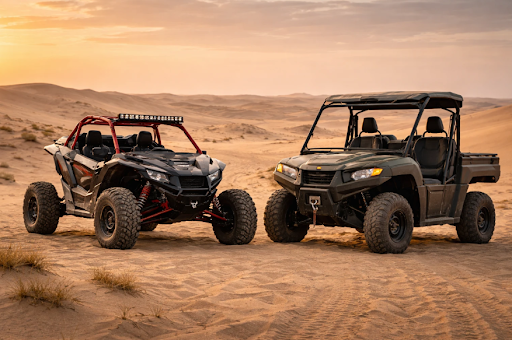

Owning a buggy in Qatar feels like a logical next step once quad bikes stop being exciting enough and SUVs start feeling boring. Meanwhile, a buggy sits right in the middle. More stable than an ATV, more playful than a pickup, and perfectly suited for sand, open terrain, and wide smiles under helmets.
But if you search online for a buggy car in Qatar, you will quickly notice something strange. There are rentals everywhere, tours everywhere, but clear buying information is scattered. This guide exists to fill that gap and help you buy buggy ownership the smart way without learning everything the expensive way.
First question: what kind of buggy do you actually need?
Not all off-road machines live the same life. Some are built for weekend fun, dune runs, and recreational driving. Others are designed for utility work, camps, farms, or long hours on mixed terrain. The mistake many buyers make is assuming all buggies for sale behave the same just because they look similar. But they are different.
Sport-oriented models focus on suspension travel, lighter weight, and driver engagement. Think of Polaris RZR lineup built for fast dune runs and sharp handling, or sport-style Sharmax options such as the Sharmax Predator or Sharmax Jump series in its more performance-focused configurations. These machines are usually chosen by buyers who want the “weekend adrenaline” vehicle, not the “carry supplies” version.
Utility buggies prioritize cargo space, stability, and durability. A practical example is the Polaris Ranger, designed to haul gear, handle long hours, and stay comfortable when the day is more work than play. On the Sharmax side, the Sharmax Race in utility-ready setups (with stronger load focus and practical features) fits this role well for Qatar’s camps, private land, and business use. Both types work in Qatar. They just work very differently.
Engine size, drivetrain, and what actually works in Qatar
With buggies, Qatar follows the same rule as ATVs: bigger numbers do not automatically mean a better experience. Soft sand rewards smooth, usable power and stable traction, not constant throttle corrections and wheel spin.
Most recreational models perform best with mid-range engines, usually between 500 and 800 cc. This range offers enough power for dune driving while remaining manageable in heat and soft sand. High-output engines look impressive on paper, but they also generate more heat and demand more attention from the driver, especially during slow or technical dune sections.
Utility-focused versions often use larger engines, typically 700–1000 cc, to handle cargo, towing, and long operating hours. Here, torque matters more than speed. A buggy designed for work should pull smoothly under load without feeling strained, even in loose terrain.
Drivetrain choice is just as important:
- Two-wheel drive options can handle flat, compact terrain and light recreational use, but they struggle quickly once sand softens or loads increase
- Four-wheel drive machines offer better traction, stability, and confidence in dunes and during utility tasks, making them the preferred option for most real-world use in Qatar
Many buyers searching for a buggy for sale underestimate how quickly Qatar’s sand reveals weak setups. A buggy that feels fine on hard ground may lose momentum, overheat, or dig itself in within minutes once conditions change. In this environment, balanced power and proper drivetrain setup matter far more than headline performance figures.
Where people actually buy buggies in Qatar
Unlike cars, buggies are rarely purchased through polished online configurators. You may discover that to buy buggy online often means starting the conversation online and finishing it offline.
In practice, most buggies for sale in Qatar are found through three main channels:
- Local dealerships and distributors: Brands like Sharmax Motors sell buggies directly through showrooms, where buyers can see configurations in person, ask about setup options, and discuss availability. International brands such as Polaris also operate through authorized local dealers, but their inventory is often not fully listed online, making direct contact essential.
- Classified platforms: Platforms like Qatar Living, Mzad Qatar, and Dubizzle Qatar are commonly used for both new and used listings. These sites are where many private sellers and smaller dealers post ads, often with limited descriptions but direct contact details. Prices and conditions vary widely, so inspection is key.
- Direct showroom or WhatsApp inquiries: In Qatar, many deals happen quietly. A quick message, a showroom visit, or a referral often reveals options that never appear online. This is especially common for buyers looking for a specific buggy car configuration or immediate availability.
This structure explains why searching for a buggy car in Qatar on Google often brings up rental companies first. Rental operators invest heavily in online marketing and SEO, while sellers rely more on direct contact, repeat customers, and local reputation than on search rankings.
New vs used: a realistic look
A new buggy brings warranty, known history, and fewer surprises. This is especially important for businesses or buyers planning frequent use. A new buggy for sale also means easier servicing and better resale value later.
The used-vehicle market is also common in Qatar and UTVs can be of good value there. However, sand is unforgiving. A machine that spent weekends in dunes may have more wear than its mileage suggests. Inspection matters more than age.
Pricing expectations without guesswork
Buggy prices in Qatar vary significantly depending on brand, engine size, drivetrain, and purpose. Entry-level recreational buggies usually start from QAR 18,000–25,000. Mid-range sport and recreational models typically fall between QAR 30,000–50,000. Larger utility or high-performance buggies can reach QAR 70,000–100,000+.
If a buggy for sale looks far cheaper than everything else on the market, it usually comes with a backstory. In the desert, backstories tend to be mechanical.
Things first-time buggy buyers often overlook
- Cooling and airflow in slow dune driving: In Qatar, buggies spend a lot of time moving slowly in soft sand, not flying at full speed. Poor airflow means rising temperatures, reduced performance, and forced breaks that were not part of the plan. A buggy that handles heat well stays fun longer.
- Cabin comfort and seat quality: Buggies look tough, but you still sit in them for hours. Hard seats, awkward driving positions, or poor shock absorption quickly turn excitement into back pain. Comfort matters far more in the desert than buyers expect, especially under the sun.
- Storage and transport logistics: A buggy does not magically drive itself home. You need a trailer or pickup, space to park it, and a plan for storage away from direct heat and sand. Many owners realize this only after purchase, usually too late.
- Service support and spare parts availability: Desert riding accelerates wear on belts, suspension, and cooling components. If service or spare parts are hard to get, even a well-priced vehicle becomes a problem. Reliable support often matters more than how impressive the buggy looked online.
Ignoring these details turns ownership into frustration surprisingly fast, even if the buggies for sale photos looked perfect.
Final word: buying a buggy in Qatar without regret
A buggy is not just a toy in Qatar. It can be recreation, transport, or a working tool — sometimes all three. The key is choosing one that matches your reality, not just your imagination.
When you approach the process calmly, understand the local market, and compare real options instead of marketing promises, it becomes much easier to buy buggy ownership that lasts.
And once you make the right choice, the desert stops being something you fight — and starts being something you enjoy.