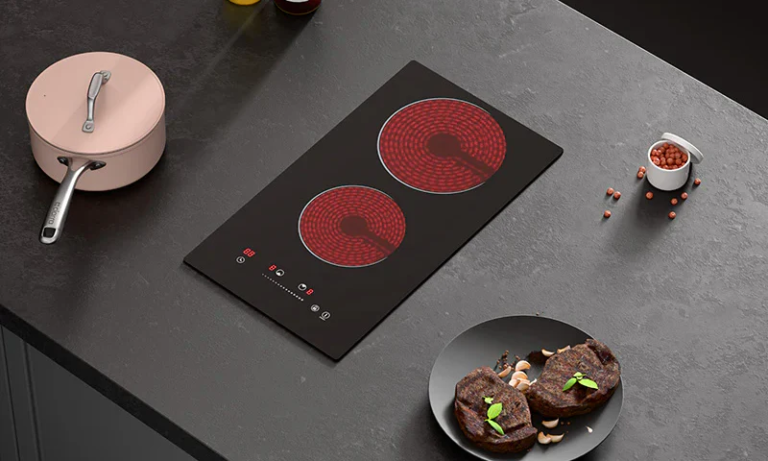

Ceramic hobs provide a clean and straightforward option for cooking in many kitchens today. They feature a smooth glass-ceramic surface that heats through electric elements underneath. This design supports consistent results for daily meals while fitting well into different kitchen layouts. As more households look for reliable appliances, ceramic hobs stand out for their balance of performance and simplicity. It draws on established details about these cooktops to help readers decide if one suits their space. For more on specific models, visit the dedicated guide on ceramic hob options from Ciarra Gadgets.
How Ceramic Hobs Function
Ceramic hobs use radiant heating. Electric coils or elements below the glass-ceramic top warm up when switched on. Heat passes through the surface to the base of the pan. Zones often glow red during operation to show activity.
Unlike gas hobs with visible flames or induction models that heat pans directly through magnetism, ceramic versions transfer heat via the glass. This method works with most flat-bottomed cookware, including stainless steel, aluminum, and some cast iron pieces, without special requirements.
Heating takes a few minutes to reach full temperature, and the surface stays warm afterward. Most units include residual heat indicators—usually a red “H”—to signal caution until zones cool. Controls come as knobs or touch panels, depending on the model. Sizes range from compact two-zone units for small areas to four- or five-zone versions for family use.
Key Benefits of Ceramic Hobs
Ceramic hobs offer several practical advantages that make them suitable for regular home use.
- Simple Cleaning: The flat surface has no grates or burners to remove. Wipe spills with a damp cloth once cool. This reduces time spent on maintenance compared to gas models.
- Broad Cookware Fit: Any flat-bottom pan works well. No need to replace existing sets, unlike induction requirements.
- Even Heat Spread: Elements provide steady warmth across zones, supporting simmering, boiling, and general cooking without strong hot spots in quality units.
- Modern Appearance: The sleek black or dark glass integrates into contemporary countertops and creates a tidy look.
- No Gas Connection Needed: Installation involves standard electrical wiring, which simplifies setup in many homes.
These points contribute to why many choose ceramic hobs for everyday reliability. Check options available through Ciarra Gadgets for models that match different kitchen sizes.
Common Challenges and Considerations
Ceramic hobs have limitations that users should note before purchase.
- Residual Heat: Surfaces remain hot after use, requiring care around children or when cleaning. Indicators help, but awareness matters.
- Scratch Risk: The glass can mark from rough pan bases, sugar spills, or dropped items. Gentle handling and proper cookware extend its condition.
- Energy Use: Efficiency sits between gas and induction, with more heat lost to the surface and air. Running costs may exceed induction in areas with high electricity rates.
- Slower Response: Temperature changes take longer than gas or induction, which affects quick adjustments during cooking.
- Initial Cost: Prices often exceed basic gas or coil electric models due to materials and design.
Proper use and care address most of these points over time. Many households find the trade-offs acceptable for the overall convenience.
Comparing Ceramic Hobs to Other Types
Ceramic vs. Gas: Gas offers instant control and visible flames but needs more cleaning and a gas line. Ceramic provides easier upkeep and no open flame.
Ceramic vs. Induction: Induction heats faster, uses less energy, and keeps the surface cooler outside the pan. It requires magnetic cookware. Ceramic costs less upfront and works with existing pans.
Choose based on priorities: speed and efficiency point toward induction, while budget and compatibility favor ceramic hobs. Gas remains strong for those with existing supply and preference for flame cooking.
Buying Guide: Features to Check
Consider these aspects when selecting a ceramic hob:
- Number of Zones: Two zones suit small spaces or single cooks. Four zones handle family meals. Larger options add flexibility.
- Power Levels: Look for varied wattage across zones, including simmer settings and higher outputs for boiling.
- Controls: Touch controls create a flat profile for cleaning. Knobs provide direct feel for some users.
- Safety Elements: Residual heat lights, child locks, and auto shut-off add protection.
- Size and Fit: Measure the cut-out space for built-in models. Standard widths include 60cm.
Review energy ratings and warranty terms. Brands like those at Ciarra Gadgets offer various configurations to match needs.
Maintaining Ceramic Hobs for Longevity
Regular care keeps the surface in good condition.
- Wait until fully cool before cleaning.
- Wipe loose debris with a soft, damp cloth.
- Use mild soapy water or recommended ceramic cleaners for residue. Avoid abrasive pads.
- For stubborn spots, apply a baking soda paste, let it sit briefly, then wipe gently. A plastic scraper helps with burnt areas.
- Dry and buff with a microfiber cloth to prevent streaks.
- Clean spills promptly, especially sugary ones that can etch the glass.
Use flat-bottom pans and avoid dragging heavy items. These steps help prevent scratches and stains.
Trends in Ceramic Hob Design
Market interest in ceramic hobs continues due to demand for efficient and stylish appliances. Manufacturers add touch controls, timers, and bridge zones that combine areas for larger pans.
Energy standards push improvements in insulation and heating elements. Some models integrate better with modern smart features, though basic radiant types remain common for affordability. Urban living and renovated kitchens drive choices toward flat surfaces that fit modular designs.
Growth appears steady in residential and some commercial settings, with focus on durability and user-friendly operation.
Final Thoughts
Ceramic hobs deliver a dependable cooking surface with easy cleaning and wide cookware compatibility. They suit many households seeking a balance of style, function, and cost. Weigh benefits against factors like heat retention and energy use for your situation.
Explore available choices and details in the ceramic hob resources from Ciarra Gadgets. Consider your kitchen layout, cooking habits, and priorities before deciding. A suitable model can support consistent meal preparation for years with basic care.