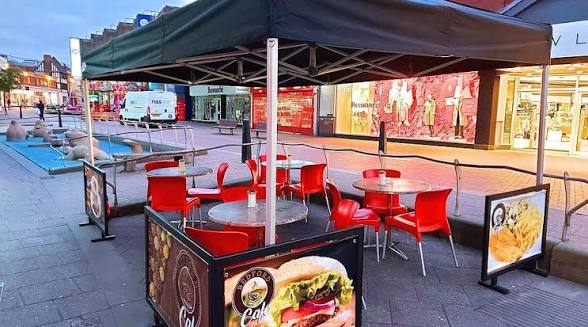

Opening a small cafe in Bedford town centre is an exciting venture, but the upfront capital required can surprise you. Many new owners focus heavily on branding and menus while overlooking the practical realities of high street property costs and strict local council regulations. To help you build a realistic budget, we cover everything you need to know about setting up your food business in Bedfordshire.
Rents and Lease Deposits in Bedford Town Centre
Commercial rents in Bedford town centre vary based on the exact location you choose. A prime spot on the High Street demands a high monthly premium because of the heavy foot traffic.
On the other hand, a spot like St Cuthbert’s Street, just off the main High Street, can offer lower rents while still placing you in Bedford’s growing independent quarter, which has built a strong reputation for cafes, bars and independent shops. The Arcade, by contrast, sits right between the High Street and Harpur Street and is firmly part of the prime retail core, so don’t expect a saving there.
Landlords in Bedford usually ask for a commercial lease deposit of three to six months of rent upfront before they hand over the keys. You must also account for business rates on top of your rent. These rates are calculated based on the rateable value of your unit. It’s worth noting that small business rates relief can significantly lower this cost for smaller premises.
As a rough guide, premises with a rateable value of £12,000 or under can qualify for 100% relief, with the relief tapering down to nothing by £15,000. You must verify the exact figures directly with Bedford Borough Council before signing a lease agreement.
Commercial Kitchen Requirements and Wall Coverings
Fitting out a commercial kitchen is usually the largest upfront expense for any new food business. A professional kitchen requires an effective extraction system to handle smoke and steam, which can cost thousands of pounds to install.
You’ll also need a certified gas installation if your cookers run on gas. Any work on those appliances must be carried out by a Gas Safe registered engineer, who will issue a CP42 commercial catering gas safety certificate. Booking one in can take longer than expected, so plan for this delay in your schedule.
For the walls and surfaces, local Environmental Health Officers demand materials that are easy to keep clean. Instead of traditional ceramic tiles, many new owners now fit their cafe kitchens with PVC hygienic wall cladding from suppliers like Simply Cladding as it meets the easy-clean standard EHOs look for. Cladding is much faster to install, which means you spend less time paying rent on a unit that isn’t open yet. It’s also cheaper per square metre and removes the constant grouting maintenance that tiles need over time.
To finish the kitchen setup, you need to budget for flooring and worktops that meet strict commercial hygiene standards. Non-slip vinyl flooring is a popular choice for safety, while stainless steel worktops provide a durable surface for food preparation.
Mandatory Expenses Before the Opening Day
Before you can open your doors to the public, you need to budget for several essential administrative and operational items. These expenses are often forgotten during the initial planning phases, yet they’re completely non-negotiable for a legal food establishment.
You must ensure that your financial plan covers these specific operational elements:
- Food hygiene registration with Bedford Borough Council, completed at least 28 days before trading. Registration is free and cannot be refused.
- A PPL PRS music licence (called TheMusicLicence) if you plan to play background music, and a separate premises licence from the council if you intend to sell alcohol.
- Comprehensive business insurance, including public and employer’s liability coverage.
- An Electronic Point of Sale (EPOS) system to manage card payments and track inventory.
- The initial stock of ingredients, including coffee beans, milk, and baked goods.
Sourcing these items ahead of time prevents last-minute delays. It also gives you a clearer view of your total launch costs before the official opening day arrives.
Mistakes to Avoid in Your Initial Cash Flow
Many first-time cafe owners make the mistake of underbudgeting for external signage. High-quality signs are vital to draw people in from the busy town centre, and cheap alternatives can look unprofessional.
Another frequent error is skipping a written food safety management system. For a small cafe this usually means the FSA’s Safer Food, Better Business (SFBB) pack, which is built on HACCP principles and is what most inspectors expect to see during your first EHO inspection.
The most dangerous error is failing to set aside enough capital for the first three months of trading. New cafes rarely turn a profit instantly, and you still need to pay your utility bills and staff wages. Keeping a dedicated cash reserve ensures your business stays afloat while you work towards attracting a steady stream of regular local customers.