
Are you tired of high energy bills and uneven temperatures in your commercial building? Commercial HVAC systems can use up to 40% of a building’s energy. This post will explain common system types, key energy features, and simple tips to pick the right system.
Read on to find clear solutions.
Common Types of Commercial HVAC Systems
Commercial buildings use several types of HVAC systems. Each system has its own benefits and is suited for different needs.
Single-Split Systems
A single-split system pairs one outdoor compressor with one indoor unit. It has one outdoor compressor and one indoor unit. The setup serves one zone and fits small commercial buildings.
Owners like the low upfront cost and simple installation. It provides heating, ventilation, and air conditioning with good energy efficiency for light loads. Larger sites need multi-zone systems for better temperature regulation and indoor air quality.
Next, explore Multi-Split Systems for multi-zone options.
Multi-Split Systems
Building on single-split options, multi-split systems link several indoor units to one outdoor unit. They fit well in commercial buildings that need zoning and flexible temperature control.
Each indoor unit can run on its own schedule for heating and air conditioning. Technicians can service indoor units separately to protect indoor air quality and simplify system maintenance.
VRF/VRV Systems
After multi-split systems, VRF and VRV systems give greater zoning and precise control. VRF stands for variable refrigerant flow and VRV is a similar trade name.
These HVAC systems move refrigerant to multiple indoor units. They allow simultaneous heating and cooling in different zones. Owners improve temperature control and humidity regulation while maintaining indoor air quality.
Facility teams pair them with smart controls to boost energy efficiency and simplify system maintenance.
Packaged Rooftop Units (RTUs)
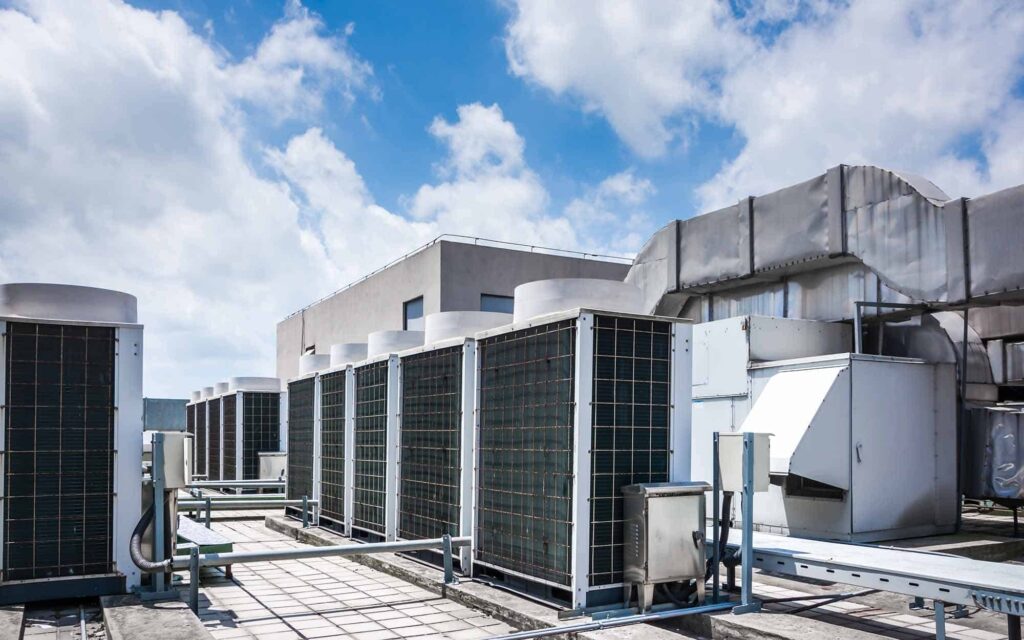
VRF/VRV systems offer great flexibility in temperature control. Packaged rooftop units, or RTUs, are another popular choice for commercial buildings. They sit on the roof and provide heating, ventilation, and air conditioning all in one system.
RTUs are efficient and save space since they do not occupy floor areas. These units can also be customized for different building sizes. They help maintain a comfortable indoor environment by regulating temperature and humidity effectively.
Many RTUs come with smart controls that enhance energy efficiency further. Regular maintenance keeps these systems running well and improves indoor air quality in commercial spaces.
Key Features of Efficient Commercial HVAC Systems
Efficient commercial HVAC systems offer smart controls for easy management and energy recovery ventilators to improve air quality. These features keep buildings comfortable while saving energy.
Want to know how these elements work together? Read on!
Zoning and Modularity
Zoning allows different areas of a building to have separate temperature controls. This lets you adjust heating and cooling based on specific needs. For example, offices may require cooler air while common areas might need warmth.
This helps save energy and keeps everyone comfortable.
Modularity adds flexibility to HVAC systems. You can easily expand or change the system as your building grows or changes use. It makes it simple to adapt for new rooms or spaces without major overhauls.
These features improve energy efficiency and enhance indoor air quality in commercial buildings.
Smart Controls and Automation
Smart controls and automation help HVAC systems run better. These features adjust heating, cooling, and ventilation based on need. They track temperature and humidity levels in real time.
This means the system works only when necessary, saving energy.
Some smart systems allow remote access through mobile apps. Users can change settings or monitor performance from anywhere. Automation adds convenience while improving indoor air quality.
Enhanced control ensures comfort for everyone in commercial buildings. Energy Recovery Ventilators (ERVs) play a crucial role next by adding more efficiency to these systems.
Energy Recovery Ventilators (ERVs)
Energy Recovery Ventilators, or ERVs, help improve indoor air quality. They exchange stale air from inside a building with fresh outdoor air while conserving energy. These systems capture heat and moisture from the outgoing air.
This process pre-conditions the incoming air, reducing heating and cooling costs.
ERVs are great for buildings with high occupancy levels. They maintain comfort by regulating humidity and temperature. Using ERVs can lead to significant energy savings in commercial HVAC systems.
Many businesses benefit from improved climate control thanks to these efficient devices.
Tips for Selecting the Right System
When choosing an HVAC system, think about the size of your building and how many people work there. Look at energy costs over time to find a system that saves you money.
Assess Building Size and Occupancy
Building size and occupancy are key factors in choosing an HVAC system. Larger buildings need more powerful systems to maintain comfort. They may require multiple units or zones for even heating and cooling.
More occupants can also increase the demand for air quality control and temperature regulation.
Understanding how many people will use the space helps create a good plan. It guides decisions on airflow, ventilation systems, and energy efficiency needs. A well-sized HVAC system improves indoor air quality while ensuring thermal comfort for everyone inside the building.
Analyze Energy and Lifecycle Costs
Next, shift attention from size and occupancy to energy and lifecycle costs.
| Cost Element | What to Consider | Example Metrics | Expected Impact |
|---|---|---|---|
| Initial Purchase | Compare equipment price and installation fees. | RTU: $10,000 to $100,000; VRF: $20,000 to $150,000. | Higher upfront cost can lower future energy bills. |
| Energy Usage | Estimate annual kWh and fuel needs. | Commercial HVAC uses 40% to 60% of total building energy. | Lower kWh cuts operating expenses each year. |
| Efficiency Ratings | Use SEER, EER, IEER, and COP values to compare models. | SEER 14 to 26; IEER 8 to 20. | Higher ratings mean smaller bills and faster payback. |
| Maintenance Costs | Include filters, coils, belts, and labor hours. | Annual service: $500 to $5,000 per unit. | Regular upkeep extends system life and saves money. |
| Replacement Cycle | Plan for expected useful life and midlife upgrades. | Packaged units: 12 to 20 years; VRF: 15 to 25 years. | Longer life lowers total cost of ownership. |
| Energy Retrofits | Assess payback for controls, ERVs, and variable drives. | Controls can save 10% to 30% of HVAC energy. | Retrofits can cut energy spend and boost ROI. |
| Incentives and Rebates | Check federal, state, and utility programs. | Tax credits and rebates may cover 10% to 50% of costs. | Incentives shorten payback and improve cash flow. |
| Total Cost of Ownership | Sum purchase, energy, maintenance, and disposal costs. | Example: 20-year TCO varies by system and climate. | Lower TCO often favors higher efficiency systems. |
| Payback Period | Calculate years to recover extra investment via savings. | Common range: 3 to 10 years for efficiency upgrades. | Shorter payback strengthens the financial case. |
Consider Climate Zone and Load Profile
Climate zones affect how HVAC systems work. Each zone has different temperatures and humidity levels throughout the year. Choose a system that fits your climate.
Load profiles show how much heating and cooling your building needs at different times. Analyze occupancy patterns and usage areas to understand these needs better. Systems must meet both the climate requirements and load demands for effective temperature control, energy efficiency, and indoor air quality in commercial buildings.
Conclusion
Effective HVAC solutions are crucial for commercial buildings. They ensure comfort, efficiency, and good air quality. Choose the right system based on size, costs, and climate. Regular maintenance keeps systems running well.
Investing in the right HVAC will enhance your building’s performance and tenant satisfaction.