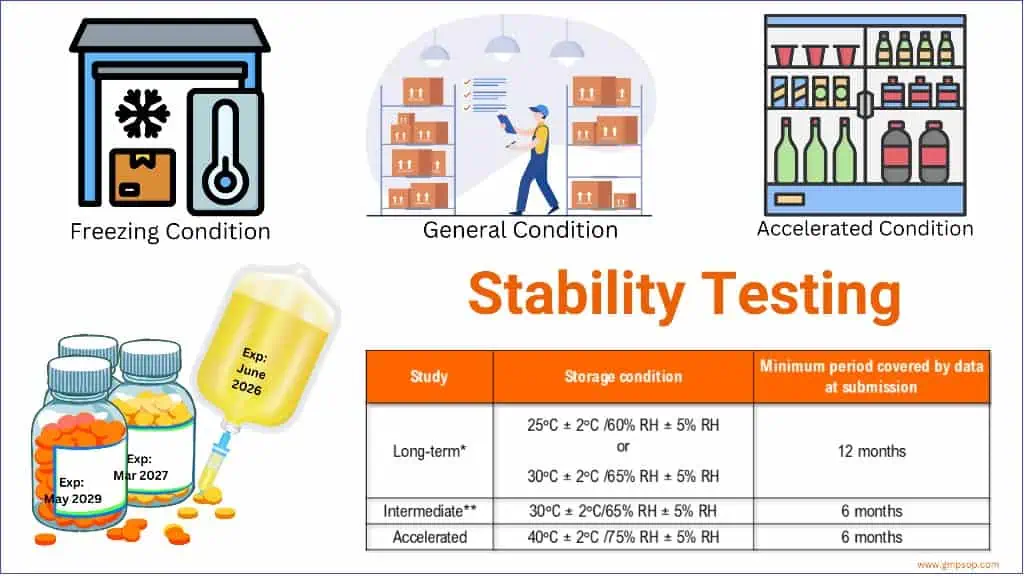

When a product fails in the field due to thermal stress, the consequences rarely stay contained to a single shipment or batch. They ripple outward — into regulatory filings, customer relationships, liability exposure, and internal process reviews that take months to resolve. For quality managers, R&D leads, and procurement teams working across pharmaceutical, food science, electronics, and materials sectors, the decision to partner with an external testing provider carries real operational weight.
The challenge is that not all testing providers operate at the same depth. Some offer standardized chamber runs with basic pass/fail reporting. Others build out full protocols that account for real-use conditions, edge-case exposures, and documentation structures that hold up under audit scrutiny. The difference between these two approaches is not always visible on a capabilities sheet. It surfaces in how a provider handles ambiguity, customization, and documentation under pressure.
What follows is a practical set of questions for evaluating any testing provider — not as a checklist, but as a framework for understanding where their protocols actually begin and end.
Why Protocol Depth Is the Real Differentiator in Stability Testing
Choosing a provider for temperature stability testing is not simply a matter of confirming that they have the right equipment. Most credible providers have the equipment. What separates them is the methodology behind how they structure a study — how they define conditions, manage edge cases, document deviations, and deliver results that are usable beyond the test itself. Providers with genuine protocol depth treat each engagement as a study design problem, not a chamber scheduling problem.
Protocol depth means that the provider has thought through what the data is supposed to support. Is it a regulatory submission? A shelf-life claim? A decision about packaging redesign? Each of these downstream applications places different demands on the testing structure, the sampling intervals, the environmental conditions used, and the statistical framing of results. A provider who doesn’t ask about these downstream uses early in the conversation is likely working from a template, not a designed protocol.
The Relationship Between Study Design and Result Utility
A test that produces data you cannot use is not a cost-effective test — it is a delay. When a study is poorly scoped, the results frequently generate follow-up questions that require another round of testing. This is a common and expensive pattern in industries where product development timelines are already compressed. The root cause is almost always a mismatch between what the test was designed to measure and what the organization actually needed to know.
Good protocol design resolves this upstream. It requires the provider to ask questions about end-use conditions, storage environments, distribution chain exposure, and regulatory context before a single sample is placed in a chamber. When that conversation happens, the test produces data that directly informs a decision. When it doesn’t, the data is technically valid but practically incomplete.
Questions That Reveal How a Provider Actually Operates
The questions below are not intended to challenge or screen out providers. They are intended to create enough transparency to make an informed decision — and to surface operational assumptions that might not come up otherwise in a standard capabilities review.
1. How Do You Approach Initial Scope Definition?
A provider who moves directly to quoting without a substantive discovery conversation is likely applying a standard template to a non-standard situation. Ask how they define the scope of a study, who is involved in that conversation, and what information they need from you before they can design a protocol. The answer reveals whether they are designing for your specific use case or accommodating it into a pre-existing workflow.
2. How Do Your Testing Conditions Map to Real-World Exposure?
Controlled chamber conditions are a necessary simplification, but they should bear a defensible relationship to actual product exposure. Ask the provider how they determine which conditions to run — whether they use industry standards as a floor or a ceiling, and how they handle products that may encounter conditions outside standard ranges. The ICH quality guidelines provide internationally recognized reference frameworks for stability study design, and a credible provider should be familiar with how those frameworks apply to your product category.
3. What Is Your Documentation Structure During the Study?
Documentation is not just a deliverable at the end of a test. It is a continuous process that captures chamber calibration records, sample handling logs, deviation events, and analyst observations throughout the study. Ask what documentation exists at each stage — not just what the final report looks like. Providers who can walk you through the full documentation chain are providers whose records will hold up under audit.
4. How Do You Handle Protocol Deviations?
Deviations happen in any testing environment — equipment fluctuations, sample handling variations, environmental interruptions. What distinguishes a rigorous provider is not the absence of deviations but the existence of a formal deviation management process. Ask how deviations are categorized, documented, and communicated, and whether they are included in the final report or handled separately. The answer tells you a great deal about their quality culture.
5. What Is Your Experience With My Product Category?
Industry-specific knowledge changes how a provider interprets results and structures protocols. A provider with deep experience in pharmaceuticals understands ICH zones and regulatory submission expectations. A provider experienced with electronics understands component-level failure modes and cycling requirements. General testing competence is a baseline — category-specific fluency is what makes the difference in borderline or ambiguous results.
6. What Does Your Reporting Include Beyond Pass/Fail?
A report that states whether a sample passed or failed a defined condition is a starting point, not an endpoint. Ask what analytical context is included — whether trends are flagged, whether comparisons to prior studies are offered, and whether the report includes a narrative interpretation or only raw data. The value of a testing report depends heavily on whether it helps you make a decision or simply confirms a measurement.
7. How Do You Manage Sample Chain of Custody?
For regulated industries in particular, the integrity of the sample from receipt through disposal is a formal concern. Ask how the provider tracks sample identity, storage conditions during intake, and handling between test intervals. Chain of custody documentation is both a quality control mechanism and an audit trail. Gaps in this process create questions about result integrity that no amount of technical competence can fully resolve after the fact.
8. Can You Describe a Study Where You Recommended Changing the Protocol Midstream?
This question is diagnostic. Providers with genuine scientific engagement will have examples of situations where early data or unexpected conditions prompted a protocol conversation with the client. Providers operating in a purely transactional mode will not. The ability to recognize when a protocol needs adjustment — and to communicate that proactively — is a mark of a provider who is actually invested in the outcome of the study, not just the completion of the contracted scope.
9. What Is Your Turnaround Process for Preliminary Results?
In time-sensitive development cycles, preliminary data can be operationally valuable before a full study concludes. Ask whether interim reporting is available, under what conditions it can be requested, and how preliminary results are framed to avoid premature conclusions. A provider with a clear process for interim communication is one that understands how their work fits into a broader development or regulatory timeline.
10. How Do You Stay Current With Evolving Standards in This Area?
Testing standards evolve. Regulatory expectations shift. New product categories create new edge cases that existing frameworks do not fully address. Ask how the provider monitors and incorporates guidance updates — whether through participation in standards bodies, ongoing training, or formal internal review processes. This question surfaces whether their methodology is static or adaptive, which matters when your product sits near the boundaries of existing frameworks.
What the Answers Tell You About Operational Fit
The responses to these questions should form a coherent picture of how the provider operates day-to-day, not just what they are technically capable of doing. A provider who answers these questions with specificity, examples, and an evident process is one whose operations are consistent enough to rely on. A provider who deflects, generalizes, or treats these as unusual questions may be technically qualified but operationally unpredictable.
Operational fit matters because even the most rigorous test can produce ambiguous or unusable results when there is a mismatch between how the provider structures their work and what your organization actually needs. The questions above are designed to surface that mismatch before it manifests in a report that requires rework or a submission that generates regulatory questions.
The Cost of Getting This Decision Wrong
Organizations that choose a testing provider primarily on price or turnaround time tend to discover the limitations of that approach during audits, reformulation cycles, or post-launch quality reviews. The cost of inadequate testing is rarely the cost of the test itself — it is the cost of what happens downstream when the data doesn’t hold up to scrutiny or fails to support the decisions it was supposed to inform.
Rework, resubmission, and reformulation are expensive in both time and capital. They are also preventable when the initial study is scoped and executed with the discipline the decision actually requires. Choosing a provider based on protocol depth rather than convenience is not a conservative approach — it is a risk-reduction approach with direct bearing on product launch timelines, regulatory outcomes, and internal resource allocation.
Closing Thoughts: Matching Provider Depth to Decision Stakes
Not every product requires the most elaborate testing structure available. Some studies are genuinely straightforward, and over-engineering a protocol creates unnecessary cost and delay. The goal is not complexity for its own sake — it is alignment between what the test is designed to produce and what the organization needs to do with the result.
The ten questions outlined here are not meant to be recited verbatim in a provider conversation. They are meant to orient the evaluation toward the dimensions of provider capability that actually determine study quality: protocol design, documentation discipline, deviation management, scientific engagement, and reporting utility. When these dimensions are strong, the testing process adds value beyond the result itself. When they are weak, even technically valid data becomes a liability.
Providers who operate with genuine protocol depth are not difficult to identify — they are the ones who ask harder questions back. They want to know about your regulatory context, your downstream application, your tolerance for ambiguity, and the decisions the data needs to support. That orientation is what distinguishes a testing partner from a testing vendor, and it is what makes the difference when the stakes are real.