
Running a food service operation in the United States means operating within a framework of public health regulations that govern nearly every aspect of your kitchen — from food storage temperatures to the equipment used for washing dishes and utensils. Among these requirements, warewashing standards are among the most consistently enforced and most frequently cited during inspections. For restaurant owners, particularly those opening a new location or renovating an existing one, understanding what health codes actually require — and why — can mean the difference between passing inspection on the first visit and facing costly delays or fines.
This is not about finding shortcuts or doing the minimum. It is about understanding the reasoning behind the rules so that the decisions you make during planning and buildout hold up over time. The warewashing station, often viewed as a purely practical fixture, sits at the center of a regulatory structure designed to prevent cross-contamination and protect public health. Getting it right from the beginning is considerably easier than correcting it after the fact.
What a Triple Basin Sink Is and Why Health Codes Require It
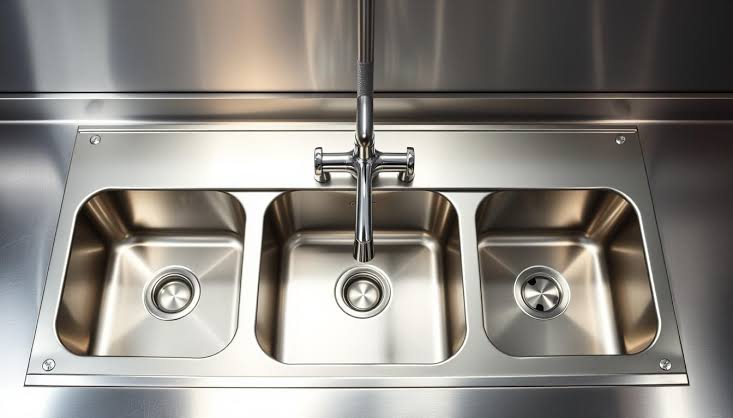
A triple basin sink is a three-compartment warewashing unit designed to support a specific sequence of operations: washing, rinsing, and sanitizing. Each compartment serves a distinct function in that process, and the separation is not incidental — it is the foundation of the regulatory requirement itself. The physical division of these stages prevents contaminated wash water from mixing with sanitizing solution, which would defeat the purpose of the sanitation step entirely.
Under the FDA Food Code, which most state and local health jurisdictions adopt in full or in modified form, food contact surfaces must be washed, rinsed, and sanitized in a manner that achieves measurable reduction of pathogens. The three-compartment sink format is the standard manual method for meeting this requirement in commercial food service settings. While mechanical dishwashers can satisfy some of these obligations under certain conditions, virtually every commercial kitchen is still required to have a manual warewashing capability — and in many jurisdictions, a three-compartment setup is the minimum acceptable configuration for that purpose.
The Sequential Process and Why It Cannot Be Condensed
The wash-rinse-sanitize sequence exists because each stage addresses a different problem. Washing removes visible food debris and grease using detergent and warm water. Rinsing removes the detergent, which can interfere with the effectiveness of the sanitizer if it carries over. Sanitizing reduces microbial load on the surface to a level considered safe for food contact. Each step depends on the previous one being done correctly. Skipping or combining compartments — even informally — compromises the entire process and creates a compliance violation that health inspectors are trained to identify.
This is why health codes do not simply require the presence of a three-compartment sink. They require that it be used in the correct sequence, that each compartment be filled appropriately, and that sanitizer concentration be maintained within an effective range. Inspectors may test sanitizer concentration during routine inspections, and operations that cannot demonstrate a functioning warewashing protocol — even with the correct equipment installed — remain vulnerable to citation.
How State and Local Health Codes Apply These Standards
While the FDA Food Code provides the national framework, food service regulations in the United States are enforced at the state and local level, and the specific requirements can vary in meaningful ways. Most states adopt the FDA Food Code as their base standard, but amendments are common, and local health departments often apply additional interpretations that reflect regional priorities or historical enforcement patterns.
Restaurant owners who assume that one jurisdiction’s requirements apply uniformly across all locations can run into compliance problems when expanding. A configuration that met approval in one city may not satisfy the plan review requirements in another county, even within the same state. This is particularly true when it comes to the placement of the warewashing station relative to food preparation areas, the requirement for adjacent drainboards, and whether a pre-rinse spray unit is mandated alongside the three-compartment arrangement.
Plan Review and Equipment Approval Before Construction
Most health departments require a plan review before a new food service establishment opens or before significant kitchen renovations begin. During this process, the layout of the warewashing area is one of the items reviewed in detail. The compartment sink must typically be shown on the floor plan with dimensions and placement relative to other equipment, and the materials used in the sink’s construction — particularly the surface material and the drain configuration — must meet code standards.
Submitting plans that include equipment not approved for commercial use, or that does not meet applicable NSF standards, is a common reason for plan review rejection. NSF International certification is frequently referenced in health codes as the acceptable verification that equipment meets hygiene and construction requirements for commercial food service use. Understanding this requirement before purchasing equipment saves both time and money during the approval process.
Drainboard and Workspace Requirements
Beyond the three compartments themselves, health codes in most jurisdictions require that the warewashing sink include adequate drainboard space on one or both sides. A soiled drainboard is used for incoming dirty items, while a clean drainboard provides a sanitized surface for air-drying items before they are stored or returned to service. Air-drying is itself a regulatory requirement — towel-drying sanitized items can reintroduce contamination and is specifically prohibited under most health code provisions.
The drainboard requirement is not merely about workflow efficiency. It prevents soiled items from being placed directly on prep surfaces, reduces cross-contamination risk in crowded kitchen environments, and ensures that the warewashing process has a defined beginning and end. Kitchens that attempt to improvise drainboard space using adjacent counters or shelving units often find that this configuration does not satisfy the inspector’s standard for an integrated warewashing station.
Water Temperature and Sanitizer Concentration Standards
Health codes specify minimum water temperatures for the wash compartment, and those temperatures are not arbitrary. At lower temperatures, detergent is less effective at breaking down grease, and the physical process of soil removal slows down. The required temperature range is intended to ensure that the wash step actually accomplishes what it is supposed to accomplish, not simply move water over a surface. Restaurants operating in high-volume environments may find that maintaining proper wash water temperature requires periodic water changes throughout service, which has implications for water usage and operational flow.
Sanitizer requirements depend on the type of chemical sanitizer used — chlorine-based, quaternary ammonium, or iodine-based solutions each have different concentration requirements, different contact time requirements, and different water temperature sensitivities. Using too little sanitizer fails to achieve the required pathogen reduction. Using too much can leave chemical residue on food contact surfaces that poses its own health risk. Health codes specify acceptable ranges, and operators are expected to test concentration using appropriate test strips and to maintain logs in some jurisdictions.
The Relationship Between Temperature and Chemical Effectiveness
One of the more operationally significant aspects of sanitizer use is that its effectiveness is not fixed — it changes based on water temperature, pH, and the presence of organic material. A sanitizer that tests within the correct concentration range in clean water may not perform adequately if the compartment has not been rinsed of detergent residue, or if the water temperature has dropped significantly during a busy service period. This is why the rinsing stage is not optional, and why health codes treat it as a distinct and mandatory step rather than a courtesy before sanitizing.
Operators who understand this relationship manage their warewashing stations more consistently than those who view the three steps as interchangeable or flexible. Consistency in the process is what makes compliance sustainable across shifts and across staff members with varying levels of training.
Common Violations and How They Occur
Health inspection reports from across the country show recurring patterns in warewashing violations. The most common are not the result of willful disregard but of incomplete training, inadequate equipment, or operational pressures that lead staff to take shortcuts during peak service periods.
- Using the three-compartment sink for food preparation or handwashing, which introduces contamination into the warewashing area and violates the designated-use requirement found in most health codes.
- Failing to change wash water and sanitizing solution at appropriate intervals, allowing chemical concentrations and water cleanliness to degrade below effective levels during extended service periods.
- Placing clean items on soiled drainboards or storing them before they have fully air-dried, which negates the sanitizing step and creates a contact contamination risk.
- Operating with a damaged or improperly sealed sink surface that cannot be effectively cleaned, which is a structural violation that typically requires equipment replacement rather than a procedural correction.
- Not maintaining documentation of sanitizer testing where required by local code, which is treated as a compliance failure even when the actual sanitizing process is being conducted correctly.
Closing Considerations for Restaurant Owners
Health code compliance in food service is not a one-time event. It is an ongoing operational commitment that requires the right equipment, trained staff, and consistent procedures. The three-compartment warewashing requirement reflects decades of public health research and enforcement experience. It exists because manual warewashing, when done correctly, is effective at controlling the spread of foodborne illness — and when done incorrectly, it can create a false sense of safety that puts customers at risk.
For restaurant owners in the planning or renovation stage, the most productive approach is to engage with the local health department early, submit complete and accurate plans for review, and invest in equipment that meets applicable standards without requiring workarounds. For existing operations, periodic self-audits of warewashing procedures — particularly across different shifts and staff — reveal gaps before an inspector does.
Understanding the reasoning behind each requirement makes compliance easier to maintain and easier to train for. The triple basin sink is not simply a piece of equipment. It is the physical expression of a process standard, and operating it correctly is one of the more consistent ways a food service business demonstrates its commitment to the people it serves.