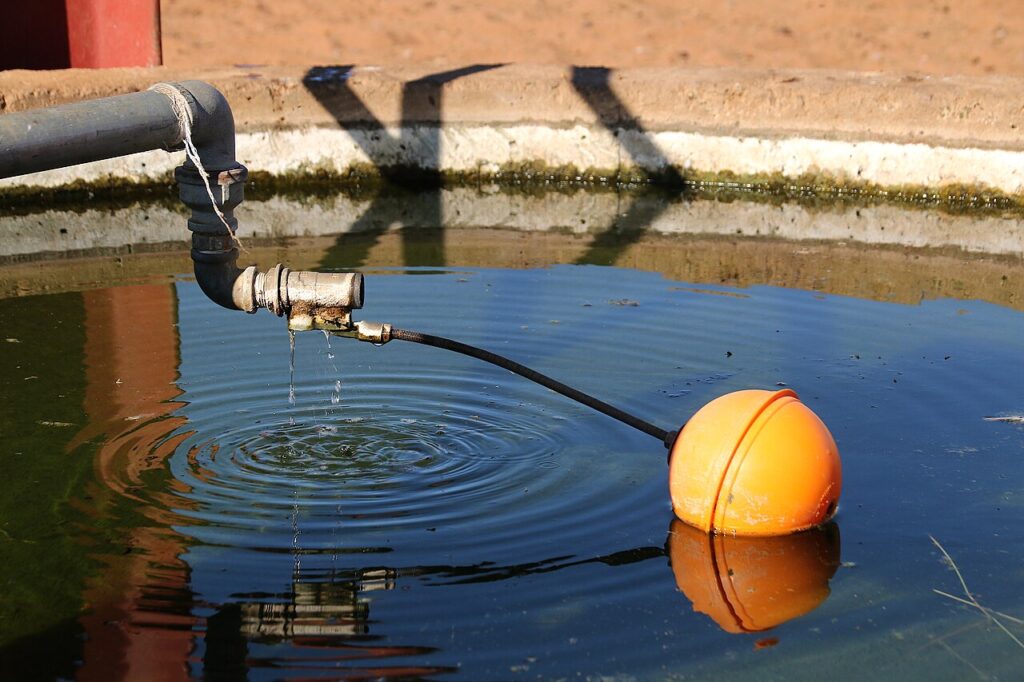

Most engineers and plant operators spend considerable time evaluating pumps, valves, sensors, and controllers when designing or upgrading a liquid level control system. These components are visible, expensive, and often carry the weight of the entire system’s reputation. What rarely receives the same scrutiny is the float — the component that initiates the entire process of level detection and response. In many systems operating across water treatment, chemical processing, food production, and industrial fluid management, it is a small, unassuming float that determines whether the rest of the system responds correctly or not at all.
The assumption that floats are interchangeable or secondary to system performance has led to some avoidable operational failures. Float selection, particularly the geometry and material of the float itself, has a measurable impact on how consistently a system reads liquid levels, how long components last, and how much maintenance a facility must absorb over time. The conversation around floats deserves more attention than it typically receives.
What Makes the Oblong Shape Different from Standard Float Geometries
Float geometry is not an arbitrary design decision. The shape of a float directly influences how it interacts with a liquid surface, how it responds to turbulence, and whether it maintains consistent buoyancy across a range of operating conditions. The oblong stainless steel float differs from a standard spherical float in ways that have practical consequences for system performance rather than simply aesthetic or manufacturing variation.
A spherical float distributes buoyant force evenly across its surface, which works well in calm, predictable liquid environments. In applications where the liquid surface experiences agitation — from pump activity, filling cycles, or fluid movement — a spherical float can exhibit erratic motion, causing the attached mechanism to respond to surface noise rather than actual level changes. The oblong shape, by contrast, provides a more stable orientation relative to the liquid surface. Its elongated form reduces the tendency to roll or shift unpredictably, which means the signal it transmits to a valve or switch more accurately reflects the real liquid level at a given moment.
How Float Shape Affects Signal Accuracy Over Time
Signal accuracy in a level control system is not just a measurement concern — it is a reliability concern. When a float moves inconsistently due to surface turbulence or mechanical instability, the downstream components respond to false signals. Valves open and close more frequently than necessary. Switches activate outside of their intended range. Over time, this erratic cycling accelerates wear on components that were designed to operate within specific frequency limits.
An oblong float’s geometry reduces unnecessary movement at the liquid surface. By maintaining a more stable axis of buoyancy, it reduces the frequency of false triggers in the connected control mechanism. This matters most in high-cycle environments, where the difference between a float that responds accurately and one that does not can translate directly into early equipment replacement, unplanned downtime, or increased energy consumption from unnecessary pump cycles.
The Role of Shape in Confined or Narrow Tank Configurations
Many industrial tanks and vessels are not wide-open reservoirs with generous space for mechanical float movement. Narrow columns, baffled tanks, and closely configured vessels present real geometric constraints that influence which float shapes are practical. An oblong float is often better suited to these configurations because its form factor allows for effective buoyancy and controlled arc movement without requiring the same lateral clearance that a larger spherical float demands.
In practice, this makes the oblong shape a useful choice when retrofitting level control into existing tanks where space was not originally designed around a float mechanism. The geometry accommodates tighter working environments without sacrificing the float’s ability to track liquid levels accurately.
Why Stainless Steel Is the Material of Consequence in Float Construction
Material selection for floats is often driven by the nature of the liquid being managed. In environments where the float will contact water, chemicals, food-grade liquids, or corrosive fluids, the material must withstand prolonged immersion without degrading in ways that compromise function. Stainless steel has become a standard material for float construction in demanding environments, not because of marketing preference, but because its physical properties align with what these environments actually require.
According to the ASTM International standards for stainless steel materials, the corrosion resistance of stainless steel is largely attributed to a passive chromium oxide layer that forms on the surface when exposed to oxygen. This layer does not require coating or regular maintenance to remain effective in most conditions. For a float that spends its entire service life submerged or partially submerged in liquid, this passive resistance is fundamental to long-term reliability.
Corrosion Resistance and Its Effect on System Consistency
A float that corrodes does not simply look worn — it changes dimensionally and in terms of weight distribution. As corrosion develops on the surface of a float, material loss alters the buoyancy characteristics that were established at the time of installation. A float that once triggered a valve response at a precise liquid level may begin triggering it earlier or later as corrosion changes its effective weight and displacement.
In systems where precise level thresholds are operationally important — overflow prevention, low-level cutoff for pumps, or fill level management — this drift in float behavior can cause real problems. Stainless steel minimizes this risk by maintaining its dimensional integrity across extended service periods, even in environments that would rapidly degrade mild steel, plastic-coated metals, or lower-grade alloys.
Performance in Temperature-Variable Environments
Industrial liquid systems do not always operate at ambient temperature. Boiler feed systems, hot water tanks, process heating loops, and certain chemical operations expose float components to elevated temperatures that affect material behavior. Stainless steel maintains structural integrity and buoyancy consistency across a wider temperature range than many alternative float materials, including several engineering plastics that can soften, warp, or become brittle with thermal cycling.
This thermal stability means that a stainless steel float installed in a system with variable operating temperatures will behave predictably across those conditions rather than requiring recalibration or replacement as temperatures change seasonally or by process phase.
Where the Oblong Stainless Steel Float Is Applied in Practice
The combination of oblong geometry and stainless steel construction makes this float type suited to a range of industrial and commercial applications where reliability, material compatibility, and accurate level response are operating requirements rather than preferences. Understanding where these floats are actually used helps clarify why the design choices matter in practice.
- Water treatment and storage facilities, where floats manage fill levels in holding tanks and must operate consistently across long periods without maintenance intervention.
- Food and beverage processing environments, where stainless steel is often a regulatory requirement for any component that contacts or is adjacent to food-grade liquids.
- Chemical processing applications, where liquid chemistry would compromise the surface integrity of less resistant materials over time.
- Cooling tower and HVAC makeup water systems, where consistent level control prevents both overflow waste and equipment damage from low-water conditions.
- Agricultural water management systems, where floats operate in outdoor or semi-exposed environments with variable water chemistry and temperature conditions.
- Industrial boiler feed and condensate systems, where thermal cycling and water treatment chemicals demand a material that resists both corrosion and temperature-related degradation.
The Maintenance Argument for Getting Float Selection Right at the Outset
Maintenance costs in liquid management systems are often discussed in terms of pumps, valves, and sensors — the components that are easiest to quantify in terms of repair frequency and parts cost. Float replacement is rarely tracked as a significant maintenance line item, which can obscure the actual cost of repeated float failures or early replacements caused by poor initial material or geometry selection.
When a float fails, the failure is rarely isolated. A float that has corroded, cracked, or lost buoyancy due to liquid ingress causes the connected control mechanism to behave unpredictably. In some cases, the float failure is only identified after the downstream consequence — an overflowed tank, a pump that ran dry, or a valve that failed to close — has already caused a more significant operational or equipment problem. The cost attributed to the larger failure often does not trace back to the float that initiated it.
Selecting for Longevity Rather Than Lowest Acquisition Cost
Float components occupy a position in system design where the acquisition cost is low relative to the operational consequence of premature failure. Choosing a float based on the lowest unit price without considering material suitability and geometry compatibility with the application is a decision that tends to create higher total costs over the life of the installation.
An oblong stainless steel float may carry a higher initial cost than a plastic or lower-grade metal alternative. That difference reflects construction quality, material grade, and manufacturing precision — factors that determine how the float performs after years of continuous immersion rather than how it performs on the day of installation. For systems where reliable, uninterrupted level control is a functional requirement, that initial cost difference is typically recovered through reduced maintenance frequency and longer replacement intervals.
Closing Thoughts on Float Selection as an Operational Decision
The float is rarely the component that defines a liquid level control system in conversations between engineers, procurement teams, or facility managers. It does not carry the brand recognition of major valve manufacturers or the complexity of electronic level sensors. It sits quietly in the liquid, performing a mechanical function that the rest of the system depends on to operate correctly.
That quiet dependence is precisely why float selection deserves deliberate attention. The geometry of a float determines how accurately it reads a liquid surface under real operating conditions, not just ideal ones. The material determines how long it maintains that accuracy without degradation. Together, these choices affect the reliability of every component connected downstream — valves, pumps, switches, and the processes they control.
Getting float selection right does not require complex analysis. It requires matching the float’s physical characteristics to the environment in which it will operate. For applications involving turbulent surfaces, confined tanks, corrosive or high-temperature liquids, or food-grade regulatory requirements, an oblong stainless steel float addresses the operating conditions that generic float choices often do not. It is not the most visible component in a system, but in many cases, it is among the most consequential.