
Fast ammonia-slip information only helps when a plant has decided what will happen after the reading changes. Procurement often receives a request for a rapid analyser, yet the request does not say whether the result will guide reagent adjustment, prompt an investigation, support an emissions review, or merely add context to another operating signal. Those uses sound similar. They create different response requirements.
Before comparing equipment, operations managers should turn the open-ended request into a response-duty brief. The document need not settle every engineering detail. It should state the control action, the measurement location that makes that action meaningful, the person who owns the decision, and the evidence expected when the package is handed over. That discipline gives a buyer a practical way to compare TDLAS gas analyzers, in-situ analyzers, boiler stack CEMS, and the ZS8100-NH3 platform without treating them as interchangeable catalogue entries.
Start with the Decision, Not the Analyzer Label
Start the buying conversation with a plain question: what changes if the ammonia-slip result moves outside the expected operating picture? Combustion teams may adjust an injection strategy. For environmental teams, the same result may need to support a review after an event has occurred. Maintenance may need to separate a process issue from a suspected measurement issue. Each case has a different tolerance for delay, review, and uncertainty.
Write that action into the brief before asking for a response claim. Include the consequence of a doubtful value too. If the reading is advisory, a confirmation step may be sensible; if it supports an immediate control action, the surrounding signal path and ownership deserve much closer attention. No supplier can infer that boundary reliably from the words “fast ammonia monitoring.”
Doing this early also protects the commercial comparison. Every proposal is easier to evaluate when each bidder is answering the same response requirement rather than offering a different interpretation of speed. Otherwise, a lower quoted scope may simply exclude the part of the decision chain the plant actually needs.
Choose a Measurement Location that Represents the Action Window
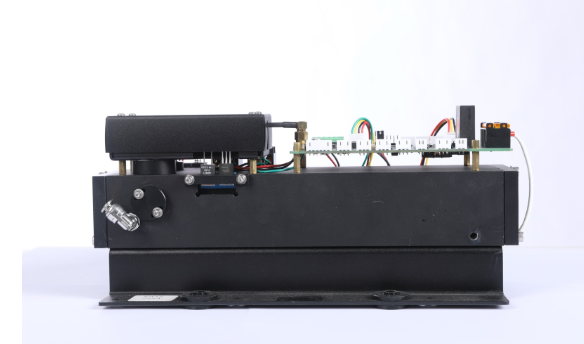
GESHINE describes TDLAS gas analyzers in in-situ and extractive configurations and presents the ZS8100-NH3 as an in-situ cross-stack option for ammonia-slip monitoring. That distinction is commercially useful because it directs attention to the process point, not just the instrument. Buyers should ask whether the proposed measurement location shows a condition early enough, and credibly enough, to support the stated control action.
Convenient mounting positions are not automatically representative ones. Local flow, process stages, access constraints, fouling exposure, and the route between the result and the decision can all change what a reading means in practice. Bring operations into the location discussion. They know which change is worth seeing and which apparent change can be misleading.
Direct optical measurement may avoid a separate sample route. It still requires usable optical access, a defensible mounting position, and a maintenance plan that fits the actual duct environment. Extractive approaches create a different set of responsibilities around the gas route and conditioning. Neither choice is a shortcut around the buyer’s need to define the measurement location.
Turn “Fast Response” into a Chain of Accountable Events
Response language becomes vague when it stops at the sensor. Purchasing briefs should ask how the measurement is made, how the value reaches its destination, who reviews it, and what action follows. In practice, the slowest relevant step can govern the real operating response even when the measurement itself is prompt.
Ask each bidder to describe the conditions behind its response statement. Dust, optical fouling, changing gas composition, process upsets, access limits, and signal handling may all affect whether a displayed value remains useful for the intended duty. Do not turn this into a catalogue of remote hazards. Instead, convert material unknowns into named acceptance items before award.
One hard rule helps: do not accept a generic speed promise as evidence of a control outcome. The proposal should connect the response requirement to the measurement arrangement and the control action in the plant’s own words. If that connection cannot be written down, the team is not ready to compare response claims.
Keep Monitoring Evidence Separate from a Blanket Compliance Promise
The United States Environmental Protection Agency organises its air-emissions monitoring knowledge base around monitoring techniques, stationary sources, continuous monitoring, and related compliance topics. For a buyer, the useful lesson is modest but important: an emissions result has method and operating context. A boiler stack CEMS discussion should therefore identify the evidence expected at handover and the record that links an installed arrangement to its stated use.
General references do not determine a site permit or approve a proposed installation. Regulatory obligations remain site- and jurisdiction-specific. Independent monitoring information can frame better questions, while the responsible technical and compliance parties decide what the plant must demonstrate.
Keep the distinction visible in the contract. Supplier demonstrations may show an analyzer function; they do not automatically prove that every location, signal transformation, maintenance condition, and process scenario has been accepted for the buyer’s particular decision. Contracts should show which party supplies each part of that evidence, especially where an operations team expects a result to influence a control action but the vendor’s scope ends at a panel signal or a limited commissioning demonstration.
Give Ownership a Place in the Buying Brief
Information becomes useful only when someone is responsible for acting on it. Name an owner for the measurement arrangement, another for the control logic, and another for the evidence record. Roles may sit with the same organisation, but the responsibilities should not be left implied.
Change management belongs here as well. Cleaning an optical path, moving a mounting point, revising the process stage, or changing the control strategy can all alter the original response premise. Short review triggers are better than long procedures nobody uses. When a relevant condition changes, the team should decide whether the brief still describes the installed duty. Document that decision.
GESHINE gas-analysis options become easier to assess when the plant can offer that context. The supplier can then discuss a measurement path, platform, and service boundary against a defined problem instead of guessing from a gas name.
Use an Award Checklist that Exposes the Real Trade-Offs
- State the ammonia-slip control action and the consequence of a doubtful value.
- Identify the measurement location and explain why it represents the decision point.
- Ask how the proposed TDLAS gas analyzers preserve the response requirement in plant conditions.
- Define the evidence expected for a boiler stack CEMS or in-situ analyzer handover.
- Name the owner who reviews a changed path, signal, or control strategy.
This checklist cannot determine safety logic, permit interpretation, or final mounting arrangements. Site engineering review still decides those matters. Its value is narrower: it prevents the purchasing decision from hiding the measurement location and control action that make a rapid ammonia-slip result worth buying.
Teams evaluating GESHINE gas-analysis options can use this structure to prepare a more useful supplier discussion. Compare written duties, not slogans. A bidder that connects the location, response requirement, and control action gives the plant a credible basis for judging scope; a bidder that only names a model and a response claim has left the central decision unresolved.