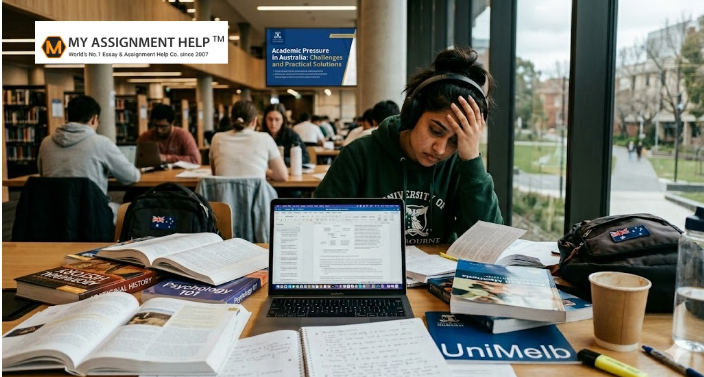

The pursuit of academic excellence has long been a defining hallmark of the Australian educational landscape. From the coastal, bustling metropolises of Sydney and Melbourne to the fast-growing regional hubs of Queensland, South Australia, and Western Australia, students within the domestic system are consistently encouraged to aim high, think critically, and secure top-tier qualifications. These academic milestones are designed to open doors to competitive local industries and global career opportunities alike.
However, beneath the surface of high institutional achievement lies a growing, systemic crisis: unprecedented levels of academic pressure. For secondary school students navigating the high-stakes final hurdles of senior secondary certificates—such as the Higher School Certificate (HSC) in New South Wales, the Victorian Certificate of Education (VCE), the Queensland Certificate of Education (QCE), or the South Australian Certificate of Education (SACE)—the weight of expectation can feel entirely crushing.
This comprehensive guide explores the unique structural challenges faced by students within the modern Australian education system. Furthermore, it offers actionable, evidence-based, and practical solutions designed to help high school and tertiary students achieve genuine academic success without sacrificing their mental health, well-being, and personal identity.
Part 1: Understanding the Landscape of Academic Pressure in Australia
To address a systemic problem effectively, we must first dissect its roots. Academic pressure in Australia is not a single, isolated psychological issue. Rather, it is a complex, compounding intersection of institutional design, modern economic realities, and intense cultural shifts.
1. The High School Crucible: The ATAR System
For students in Years 11 and 12, the Australian Tertiary Admission Rank (ATAR) is frequently perceived as the ultimate, modern rite of passage. This rank is not a reflection of a student’s total percentage mark; rather, it is a percentile ranking that measures a student’s overall academic achievement relative to their entire age cohort across their respective state. Whether a student is tracking toward an HSC, VCE, QCE, or SACE, their final school-based internal assessments and standardized external examinations are heavily scaled and weighted to compute this single metric.
Because the ATAR remains the primary mechanism utilized by major institutions for university admissions, it inherently fosters a high-stakes, hyper-competitive environment. Secondary students frequently report feeling that their entire future—encompassing their immediate career prospects, long-term financial security, and personal self-worth—rests entirely upon a single, volatile three-digit number. This hyper-focus on quantitative ranking, rather than holistic, exploratory learning, breeds chronic stress, peer alienation, and deep-seated perfectionism early in life.
When navigating these intense secondary benchmarks, many students seek external academic guidance through Myassignmenthelp to manage the sheer volume of scaled coursework and build foundational study habits before entering university.
2. The Tertiary Transition: Higher Expectations and Financial Strain
For the high percentage of school-leavers who progress directly into higher education, the pressure does not subside; it merely evolves into a more complex form. The transition to university life introduces independent learning models, unstructured schedules, dense academic literature, and highly technical assessment criteria. Students are suddenly expected to master complex methodologies, including research essays, quantitative lab reports, and complex real-world evaluations.
Because analyzing corporate structures or clinical scenarios requires specialized formatting and critical frameworks, students often rely on dedicated case study help to understand how to bridge the gap between abstract academic theory and practical, evidence-based solutions.
Furthermore, modern Australian tertiary students face unprecedented external socioeconomic challenges that actively disrupt their focus:
- The Cost-of-Living Crisis: With the dramatic inflation of rent, groceries, and transport across major Australian student hubs, financial survival is a primary concern. The reality of working-class and international students trying to afford basic urban accommodation has fundamentally altered the university experience.
- The “Juggling Act”: To stay afloat financially, the vast majority of university students must work between 15 to 25 hours of paid casual work per week. When stacked against a full-time study load—which universities recommend should command 30 to 40 hours of weekly commitment—students are left with a mathematically impossible deficit, forcing them to cut back on sleep, nutrition, and rest.
Part 2: The Core Challenges Stemming from Academic Stress
When academic pressure is left unmanaged, it manifests in cognitive and behavioral ways that actively sabotage a student’s capacity to perform. Recognizing these psychological challenges is the essential first step toward reclaiming structural control.
Chronic Burnout and Mental Exhaustion
Burnout is a clinical state that occurs when prolonged, unmitigated stress completely drains a student’s emotional, physical, and mental reserves. Symptoms typically include chronic cognitive fatigue, a cynical or detached attitude toward coursework, and a sudden, noticeable drop in baseline academic performance. A burnt-out brain struggles significantly with working memory and information retention, rendering long hours of desperate, late-night cramming entirely ineffective.
Procrastination and the Perfectionism Trap
Paradoxically, the intense fear of academic failure is the primary driver behind chronic procrastination. When an assessment brief feels too monumental, or when a student demands absolute, flawless perfection from their first draft, the brain’s amygdala interprets the task as an emotional threat. To avoid this immediate discomfort, the brain delays the task in favor of short-term relief. This behavior results in a destructive, cyclical pattern:
Poor Academic Literacy and Structural Gaps
A significant percentage of students enter their senior years of high school or their first year of university undergraduate degrees without a solid, formalized foundation in rigorous academic writing, structural organization, and localized referencing standards. When faced with advanced marking rubrics, they frequently struggle with technical execution, such as accurately implementing the AGPS (Australian Government Publishing Service) style or the highly precise AGLC (Australian Guide to Legal Citation). Consequently, many students receive poor marks despite putting in immense conceptual effort, simply because they do not understand the underlying rules of academic literacy.
Part 3: Practical Solutions for Students (High School and Above)
Overcoming academic pressure requires an intentional shift away from passive worrying toward active, structured strategy. By implementing a framework of evidence-based study habits, students can successfully maximize their grade outcomes while drastically minimizing their overall study hours.
1. Master the Art of Micro-Planning and Time-Blocking
Traditional, linear to-do lists frequently induce unnecessary anxiety because they merely outline what tasks need to be completed without establishing when or how they will be executed. To mitigate this, students should adopt the organizational practice of Time-Blocking.
- How it works: Divide your calendar into dedicated, uncompromised blocks of time assigned to specific, granular tasks. For example, instead of writing “work on geography assignment,” block out “Tuesday, 9:00 AM to 10:30 AM: Locate and read three peer-reviewed sources for geography section two.”
- The Rule of Realism: Always deliberately schedule “buffer blocks” throughout your week to accommodate unexpected delays, work shifts, or cognitive fatigue. Crucially, block out time for guilt-free rest, physical exercise, and social interaction. Treat these well-being blocks with the exact same level of absolute respect as you would a formal examination window.
2. Shift from Passive Review to Active Learning
Staring blankly at textbooks, re-reading lecture slides, or highlighting massive pages of printed notes creates a cognitive illusion known as the “fluency heuristic”—a false sense of familiarity that students mistake for actual conceptual mastery. To study efficiently in less time, students must pivot exclusively to active learning methodologies:
- Active Recall: Close your study notes completely and write down everything you can currently remember about a topic from scratch on a blank piece of paper, or utilize customized flashcard applications to test your brain’s retrieval pathways.
- The Feynman Technique: Attempt to explain a complex academic concept using simple, everyday language, as if you were teaching it to a ten-year-old child. If you stumble or resort to complex jargon, you have successfully identified a critical gap in your foundational understanding.
- Spaced Repetition: Instead of cramming for ten hours straight the night before an assessment, distribute your review sessions across increasing, calculated time intervals (e.g., reviewing a concept on Day 1, Day 3, Day 7, and Day 14). This systematically shifts information from short-term memory into long-term retention.
Part 4: Leveraging Structural and External Support Systems
No student is expected to navigate the rigors of the Australian educational landscape in complete isolation. True academic resilience does not mean struggling on your own; it involves knowing exactly when to lean on available resources to bridge your knowledge gaps.
Utilizing Institutional Resources
Australian educational institutions invest heavily in comprehensive student support ecosystems, yet these services remain widely underutilized by the student body due to a lack of awareness or unhelpful stigmas. Students should actively seek out university writing centres and campus peer mentoring. Most domestic campuses provide free, specialized workshops and one-on-one drop-in sessions focused on essay structuring, thesis development, and complex data analysis.
Knowing When to Seek Academic Intervention
Sometimes, the steep gap between a student’s current skill level and the rigorous expectations of their academic curriculum is simply too wide to bridge alone. In these demanding moments, seeking targeted, external academic guidance is a smart, proactive, and highly professional strategy.
Whether it involves joining a structured peer study group, hiring a specialized subject tutor, or utilizing professional academic assistance platforms, getting structured external feedback on your working drafts can significantly clarify complex topics. For comprehensive, highly tailored support that aligns perfectly with modern Australian curriculum standards across the HSC, VCE, QCE, and SACE, exploring Myassignment.services can provide the vital structural guidance, referencing clarity, and conceptual breakdowns necessary to elevate your academic writing and fundamentally relieve assignment-related anxiety.
Frequently Asked Questions
Q.1 What happens if I get a low ATAR score in Australia?
Getting a lower-than-expected ATAR is not the end of your professional journey. The modern Australian tertiary landscape has shifted away from using an ATAR as the single point of entry. Most major universities offer extensive preparation and bridging programs, portfolio-based admissions, and direct mid-year entrance options. Furthermore, starting your studies at a TAFE institute to earn a diploma allows you to smoothly transition into university courses later, often granting you credit for prior learning so you can skip the first year entirely.
Q.2 How do I apply for Special Consideration if I am overwhelmed by stress?
If acute stress, mental health challenges, or unexpected personal crises are severely hindering your academic performance, you can apply for a formal extension through your institution’s website under Special Consideration or an Access Plan. You will typically need to provide an official medical certificate or a Professional Practitioner Certificate (PPC) completed by a qualified GP or mental health counselor. When approved, this allows you to obtain extension windows on your assessments without receiving a late submission penalty.
Q.3 Why do I get good grades for research but fail my reference styling?
This is an incredibly common issue that boils down to a lack of formal academic literacy rather than your actual intelligence or effort. Australian high schools and universities place immense structural weight on technical citation accuracy. If your assignment rubric demands strict adherence to AGPS or AGLC standards and you leave out punctuation, fail to use proper italics, or format your bibliography incorrectly, automated marking software and tutors will deduct substantial points. Taking the time to use university library citation sheets or getting expert feedback before submitting can easily fix this.
Q.4 What is the most effective way to cure assignment burnout quickly?
To bounce back from burnout, you must implement a hard boundary between study and absolute rest. This is best accomplished by shifting from standard to-do lists to an active Time-Blocking system. By scheduling uncompromised 90-minute study blocks followed by dedicated, guilt-free recovery breaks, your brain learns to switch off. Avoid checking your university learning dashboards (like Canvas or Blackboard) late at night, clear your digital notifications, and treat your scheduled rest with the same importance as an official exam slot.
Conclusion: Taking the First Step Toward Balanced Excellence
Academic pressure within the Australian environment is a tangible, heavy challenge, but it does not have to define your high school or university experience. By understanding the underlying systemic pressures at play, adopting active, evidence-based study habits, managing your weekly time through structured blocking, and utilizing the vast support networks available to you, you can successfully reclaim control of your educational journey.
Remember, true academic success is not about working yourself to the absolute point of physical and mental exhaustion. Rather, it is about studying smarter, prioritizing your mental health, and building the sustainable, healthy habits that will continue to serve you long after you walk across the graduation stage. Take a deep breath, prioritize your peace of mind, and tackle your next academic hurdle one manageable, structured step at a time.
About the Author – Drake Miller
I am an experienced academic content writer at Myassignment.services, dedicated to creating informative and student-centric content for learners across different academic levels. My expertise includes assignment assistance, academic planning, research techniques and study improvement strategies. By delivering clear guidance and practical insights, I strive to support students in enhancing their academic performance, staying organized, and managing educational challenges with greater confidence and efficiency throughout their learning journey.