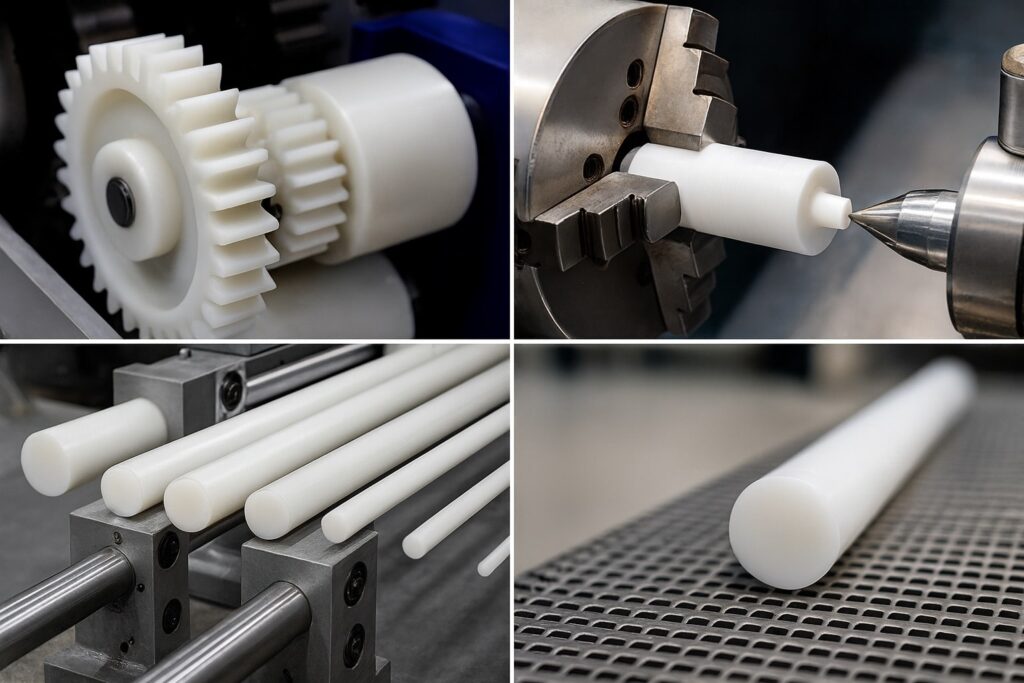

Selecting the right material for mechanical components requires balancing durability, precision, and environmental resistance. Acetal, or Polyoxymethylene (POM), is a versatile thermoplastic essential for automotive manufacturing and food processing. It bridges the gap between metal and ordinary plastics by providing high structural integrity.
This material is a top choice for parts facing repetitive stress or high-friction environments. Its chemical structure offers distinct advantages over polymers like nylon, making it vital for DIY enthusiasts, architects, and engineers alike.
Continue reading until the end to learn more about the specific characteristics that make this polymer so highly regarded.
Technical Properties and Performance
One of the most significant traits of an acetal sheet is its exceptional dimensional stability. Unlike many other plastics, acetal has very low moisture absorption. This means that even when exposed to humid conditions or submerged in water, the material won’t swell or warp. This property is vital for components that must maintain tight tolerances over long periods.
Another standout feature is its high crystallinity, which results in excellent fatigue resistance and mechanical strength. It’s incredibly tough and can withstand significant impact without cracking. Furthermore, it possesses a naturally low coefficient of friction. This “self lubricating” quality makes it ideal for moving parts where traditional lubricants might be messy or difficult to apply.
Common Industrial Applications
Because of its resilience, this material is found in almost every industry. In the automotive sector, it’s used for fuel system components, door lock systems, and gears. Its resistance to petrol and other chemicals ensures a long service life even in harsh engine environments. In the food industry, certain grades are compliant with safety standards, making them perfect for conveyor belts and milk processing equipment.
Beyond heavy industry, you’ll find it in consumer goods as well. It’s used for zip fasteners, knife handles, and even musical instrument parts. Its ability to be machined with high precision allows for the creation of intricate shapes that would be too fragile if made from other materials. This flexibility is why it remains a favourite for bespoke fabrication tasks.
- Precision Gears: Used in clocks and small motors.
- Bearings and Bushings: Benefiting from low friction.
- Electrical Insulators: Providing safety in electronic housings.
- Valves and Pumps: Resisting water and chemical corrosion.
Why Engineers Prefer Acetal Over Alternatives
Engineers often choose this polymer instead of metal for weight reduction. It provides the strength needed for structural components while being significantly lighter than steel or brass. This helps improve the fuel efficiency of vehicles and reduces the energy required to operate industrial machinery. It also doesn’t corrode, which simplifies maintenance schedules and extends the life of the assembly.
When compared to nylon, acetal is often preferred for wet applications. While nylon can be stronger in some dry environments, it tends to absorb water, which leads to changes in size and a loss of physical properties. Acetal stays consistent. It’s also easier to machine, as it produces small, brittle chips instead of long, stringy strands that can clog CNC equipment.
Practical Considerations for Machining
Working with this material is a straightforward process for those with the right tools. It can be cut, drilled, and milled using standard metalworking or woodworking equipment. Because it’s so rigid, it doesn’t “gum up” the drill bits or saws as softer plastics might. This allows for a very high-quality surface finish directly from the machine.
It’s important to remember that while it’s tough, it can be sensitive to strong acids and oxidising agents. Designers should check the chemical environment before specifying it for a project. However, for the majority of mechanical and structural uses, it provides a reliable and cost-effective solution that outperforms many traditional materials.
Compelling Reliability
Acetal remains a cornerstone of modern engineering because it performs reliably under pressure. Its combination of low friction, high strength, and moisture resistance ensures it stays relevant even as newer polymers are developed. By choosing the right material for the job, professionals can ensure their projects are both durable and efficient.