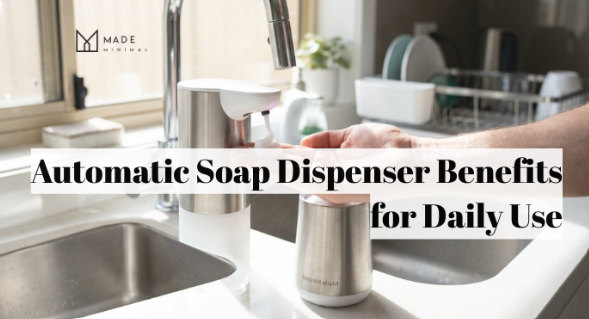

An automatic soap dispenser uses motion sensors to release soap without you touching anything. That means no more grimy pump tops collecting bacteria from every hand that presses down.
We’ve helped hundreds of Brisbane families choose touchless dispensers for kitchens and bathrooms at Made Minimal, and the feedback always circles back to one thing. It’s the convenience. These dispensers cut down on mess, save soap, and keep surfaces cleaner in busy Australian households.
This guide covers why sensor-based models make sense for daily hygiene, how they differ from manual pumps, and what to look for when buying your first battery-operated unit.
Let’s get into it.
Why Automatic Soap Dispensers Make Sense for Everyday Hygiene
As we already mentioned, automatic soap dispensers use motion sensors to release controlled soap portions without you touching the pump. So once you switch to touchless, going back to manual pumps feels unhygienic.
Here’s why these dispensers work so well for everyday use.
Touchless Operation Reduces Cross-Contamination
Manual pump tops collect bacteria from every person who touches them throughout the day, especially after bathroom use or raw food handling.
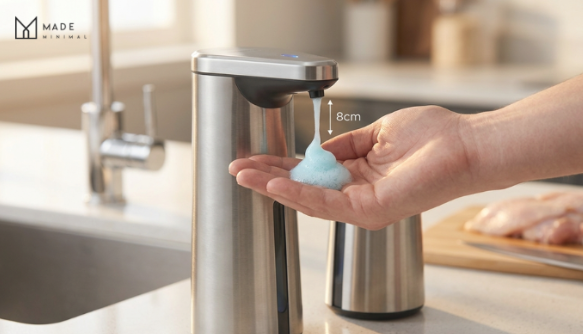
The thing is, sensors detect hands usually within 5-10cm and release liquid soap automatically. The dispenser surface stays clean because nobody’s pressing down on it with dirty fingers. This becomes particularly useful after handling raw chicken or changing nappies.
Precise Soap Portions Save Money Over Time
How often do you pump three or four times when one squirt gets the job done? If you’re like most people, you probably overdo it without thinking. Automatic dispensers fix that problem. They release controlled amounts, typically 0.8-1ml per activation, so there’s no guessing involved.
In general, manual pumps dispense 2-3 times more soap than needed per wash, which costs you down the track. On top of that, these refillable units cut soap costs compared to buying new bottles every few weeks.
Simple Sensors Respond Within Seconds
These dispensers activate only once your hand enters the sensor range. The instant response works for all ages, from toddlers learning to wash properly to grandparents with slower reflexes.
Plus, we’ve seen most battery-powered models run 3-6 months on standard AA batteries before needing a change, so you’re not constantly swapping them out.
What Makes Automatic Soap Different from Manual Pumps?
Automatic dispensers use infrared sensors to detect hand motion and release pre-measured soap amounts.
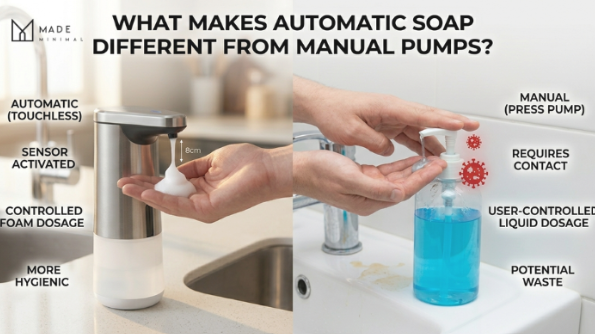
In our experience with hundreds of bathroom accessories sold across Brisbane, the main difference people notice is how the soap gets applied. Manual pumps work with thicker soaps, but need that physical press-down action every time.
Meanwhile, automatic soap dispenser models use thinner liquid soap or foam formulas that flow through sensor-activated nozzles without clogging. Sensors handle what your thumb used to do, and they’re more precise.
With automatic dispensers, built-in portion control takes away the guesswork of how many pumps actually get your hands clean. Where you might pump two or three times and end up with excess foam dripping everywhere, the dispenser releases exactly what you need (no more, no less).
Kitchen Benefits: Cleaner Hands Without the Mess
The easiest way to keep kitchen counters clean is to stop soap residue before it pools around your sink. You might be thinking a regular pump works fine, but touchless dispensers solve problems you didn’t know were fixable.
The biggest advantages show up during meal prep:
- No Grease Transfer: When you’ve just handled raw meat or oily vegetables, the last thing you want is to touch anything. That’s the whole point of touchless. Just wave your hand under the sensor, and soap comes out without transferring grease to the pump top.
- One-Handed Operation: You can keep one hand clean while washing the other. Say you’re working with dough or marinating chicken. One hand stays clean to grab your phone or turn on the tap, while the dirty hand gets soap.
- Drip-Free Counters: Manual pumps leak soap around the bottom over time, which leaves sticky rings on your benchtop. Meanwhile, touchless units mount over the sink or sit at the edge, so any drips go straight down the drain.
Your bathroom gets even more use out of these dispensers, especially if you’ve got kids running around.
Bathroom Advantages You’ll Notice Right Away
Bathrooms get the most obvious benefits from touchless soap dispensers, especially with kids and guests around. It comes down to control. The sensor technology handles situations like messy handwashing routines and hygiene concerns that manual pumps can’t.
You’ll notice improvements in three specific situations.
Kids Actually Use Proper Soap Amounts
Pre-set portions stop kids from pumping excessive soap onto floors and counters (yep, those sneaky bits everyone forgets). These automatic soap dispensers take the guessing out of how much foam they should use. And parents save money when kids can’t waste half a bottle in one go.
But the best part is when kids actually want to wash their hands. Sensor activation feels like a game to them, which encourages regular handwashing habits.
Elderly Users Find Them Easier to Handle
Seniors with arthritis or weak grip strength find automatic dispensers far easier than pushing down stiff manual pumps. Because touchless activation requires zero pressure, the soap comes out with just a wave.
Plus, clear visual indicator lights show when the sensor detects hands, which helps users with vision issues. The durability is solid, too. Most units we stock at Made Minimal have worked for years without the mechanical failures that plague manual pumps.
Guests Appreciate the Modern Touch
Visitors notice the upgraded hygiene setup right away. Visually, sleek designs complement modern bathroom renovations and fixtures, giving your space a hotel-quality feel.
And functionally, it makes a difference too. Touchless soap dispensers show you care about hygiene and guest comfort. At the end of the day, visitors avoid touching shared surfaces in your bathroom during cold and flu season.
Are Battery-Powered Models Worth the Small Investment?
Battery-powered automatic soap dispensers typically cost $25-45 upfront and run about $8 yearly in batteries, which makes them comparable to quality manual options. But remember that you’ll need to swap batteries every 4-6 months with typical family use (not the most exciting task, admittedly).
The real savings show up in soap costs. When you’re buying refills less often because nobody’s over-pumping, the numbers add up. Even entry-level units meet basic needs and last for years with proper care.
Besides the upfront cost, most battery-operated dispensers we’ve tested at Made Minimal hold up well to daily use, and the quality units handle humid bathroom conditions without corroding. The way we see it, reduced soap waste and improved hygiene offset the minimal battery expense within the first few months of regular use.
Worth Noting: If you order one online, expect it to arrive within 3-5 days, depending on your location in Australia.
Ready to Upgrade? Simple Tips for Getting Started
Choose dispenser size based on household traffic. While a 250ml model works fine for most bathrooms, most kitchens benefit from a 500ml capacity if you’re cooking daily.
After helping Brisbane families choose dispensers for years, our recommendation comes down to a few practical checks:
- Read product information before buying
- Check battery type, refill compatibility, and mounting options
- Add one item to your cart that fits your benchtop style
- Match the finish to your existing taps and fixtures
Browse our selection of automatic soap dispensers at Made Minimal. We offer touchless models across different price points for Australian homes, with options that suit both modern and traditional bathroom designs.
Start with one dispenser and see the difference for yourself.