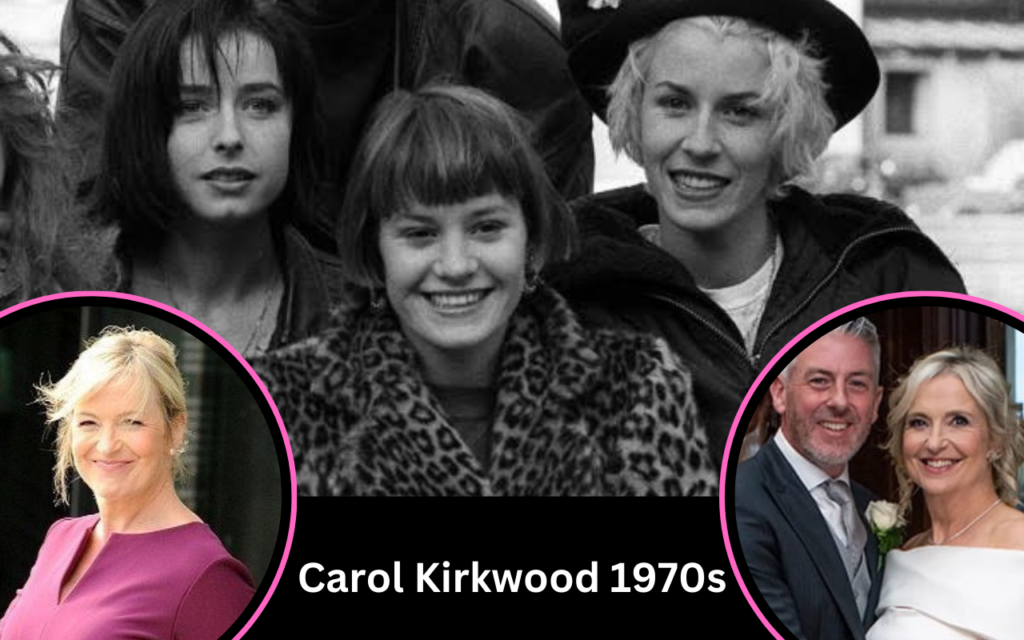

Carol Kirkwood, one of the UK’s most beloved television presenters, is best known for her long-running role as a weather forecaster on BBC Breakfast. But behind her professional success lies a fascinating journey that began in the 1970s, a decade that shaped both her personality and career. From a childhood in the Scottish Highlands to becoming a household name, this article explores how the 1970s played a crucial role in Carol’s formative years and eventual rise to fame.
Early Life and Family Background in the 1970s
Born on May 29, 1962, in Morar, Inverness-shire, Scotland, Carol Kirkwood was one of eight children in a large family. Her parents ran a hotel in the small village of Morar, located on the picturesque west coast of Scotland. Growing up in a family of such a large size meant that Carol was no stranger to the value of hard work, collaboration, and shared responsibility. These early experiences not only taught her the importance of community and family but also instilled in her a work ethic that would prove vital in her later career.
Living in the Scottish Highlands during the 1970s was a unique experience. The landscape, rugged and serene, provided a backdrop to Carol’s childhood. The environment, coupled with a tight-knit family structure, played a significant role in shaping her character. The Highlands are known for their tranquil beauty, which offered Carol the space and freedom to develop a love for nature and the outdoors, values that she would later express in her work.
The Scottish 1970s: A Decade of Change
The 1970s were a time of social, cultural, and political change across the world, and Scotland was no exception. While Carol was still a child, the broader cultural shifts in Scotland laid the foundation for the possibilities available to her in the future. During this time, Scotland saw changes in its education system, with an increasing number of women entering higher education and professional fields. This cultural shift would later help pave the way for women like Carol to pursue careers in fields traditionally dominated by men.
The 1970s also marked a time when the British media landscape was evolving. The rise of television and radio as dominant forms of entertainment and information started to influence the public’s perception of figures in the media. Growing up in an environment where broadcasting was becoming more accessible, Carol was naturally drawn to the idea of working in the media — a dream that would later become a reality.
The Importance of Education and Early Aspirations
Carol’s formal education began at Lochaber High School in Fort William, where she focused on subjects that would eventually prepare her for a professional career. The 1970s education system emphasized general knowledge, numeracy, and literacy, all of which helped Carol develop the intellectual foundation she needed for future academic and career pursuits.
Even as a young girl, Carol had a passion for communication and media. During her school years, she would often watch iconic British television shows like Blue Peter, dreaming of becoming a television presenter. This was a dream shared by many children of the 1970s, who idolized the show’s presenters. Carol’s childhood ambition was not necessarily to present the weather, but instead to become a familiar face on television, much like the stars of Blue Peter. Her early exposure to British media made a lasting impact on her, and she nurtured the idea that, one day, she would have a career that involved presenting.
From Higher Education to BBC Careers
After completing her schooling, Carol left the Highlands to attend Napier College of Commerce and Technology (now Edinburgh Napier University), where she earned a BA in Commerce. Although her degree was not directly related to broadcasting, Carol’s academic journey at university helped her refine the skills of communication and critical thinking that would later benefit her in the media world. The 1980s, immediately following the 1970s, marked a time when many young people were branching out into professional careers, and Carol, now in her twenties, would soon follow suit.
After university, Carol briefly left the BBC to explore opportunities in recruitment and training consultancy, gaining further experience in communication. However, her love for media remained, and in the early 1990s, she rejoined the BBC, initially working as a secretary. This behind-the-scenes role gave her invaluable exposure to how television programming operated, making it a stepping stone to her eventual role as a weather presenter. At the same time, Carol honed her public speaking and presentation skills, often participating in local radio programs and presenting on various shows.
BBC Weather: The Start of a New Chapter
Carol’s journey took a decisive turn in the early 1990s when she joined the BBC Weather Centre as a full-time weather presenter. She had already begun her career in weather broadcasting on BBC Radio Scotland and other regional programs, and the experience helped her develop the skills needed to present complex meteorological data to a national audience. In 1998, Carol became a familiar face to millions of viewers when she was appointed as the main weather presenter for BBC Breakfast. Her clear and approachable style, combined with her warm personality, quickly made her a favourite among viewers.
Her role on BBC Breakfast allowed Carol to bring weather reports to the public every morning, and over time, her association with the program became synonymous with reliability and accuracy. This consistency was crucial in building her reputation as a trusted and engaging weather presenter. Beyond just giving the weather, Carol’s work helped shape the audience’s perception of weather broadcasting as an accessible, friendly, and integral part of their daily routine.
Breaking New Ground and Becoming a Household Name
Carol’s rise to fame was not limited to just her presenting. She became known for her engaging manner and charismatic personality, which made her stand out from her peers. Throughout her career, Carol has balanced her work on BBC Breakfast with guest appearances on various talk shows and news programs, becoming an established television personality in the UK. Her approachable nature and ability to convey information in a friendly, accessible manner made her popular with viewers from all walks of life.
In 2015, Carol even competed on the popular television show Strictly Come Dancing, demonstrating her versatility as a public figure and entertainer. Though she did not win, her participation in the show endeared her even more to the public, showcasing her determination and willingness to step outside her comfort zone.
Carol Kirkwood’s Legacy and Continued Influence
As Carol’s career progressed, her influence extended beyond the weather. She became a prominent figure in the UK media landscape, contributing to discussions on climate change, environmental issues, and public awareness of weather patterns. Her role as a weather presenter also made her a key figure in promoting weather education to the general public. Carol’s legacy is not just about her role in broadcasting, but also her ability to make meteorological information accessible and engaging for a wide audience.
Her 1970s upbringing in the Scottish Highlands provided her with a solid foundation for the resilience, warmth, and professionalism that defined her career. Growing up in a family where hard work and collaboration were paramount, Carol carried those lessons with her, ultimately becoming one of the most beloved figures in UK broadcasting.
Conclusion
Carol Kirkwood’s story is a testament to the power of determination, resilience, and the importance of a strong foundation in the early years. The 1970s, a time of cultural change and evolving opportunities, played a significant role in shaping Carol’s character and future ambitions. From a small village in the Scottish Highlands to becoming a national icon on BBC Breakfast, Carol Kirkwood’s journey is an inspiring tale of ambition, hard work, and success.
Her rise from a young girl watching television shows to becoming one of the UK’s most trusted weather presenters is an example of how early dreams, nurtured by a supportive environment, can transform into a remarkable career. As Carol continues to thrive in her broadcasting career and beyond, her legacy as one of the most recognizable faces in British media remains secure.