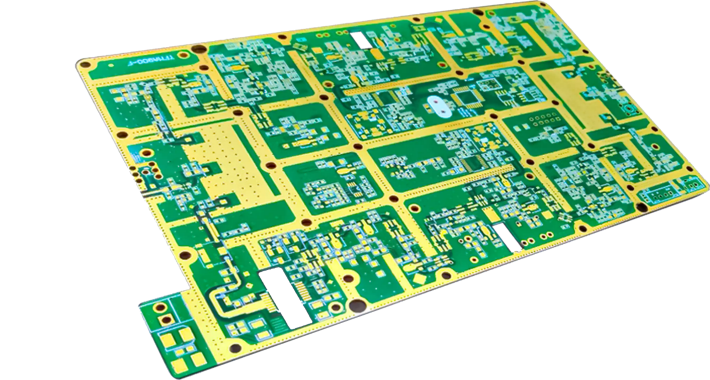

Printed Circuit Boards (PCBs) are the foundation of nearly every modern electronic device. From smartphones and computers to medical equipment, automotive systems, telecommunications infrastructure, and industrial machinery, PCBs provide the electrical pathways that allow components to communicate efficiently. As electronic products become more advanced and compact, manufacturers require PCB solutions that deliver exceptional quality, precision, and fast production.
FastTurnPCBs has become an important partner for businesses seeking reliable PCB fabrication and assembly services. By combining advanced manufacturing technologies, rigorous quality control, and rapid turnaround times, FastTurnPCBs helps companies accelerate product development while maintaining consistent manufacturing standards. Whether producing prototypes or large production runs, choosing the right manufacturing partner can significantly improve product reliability and overall project success.
Understanding PCB Fabrication
PCB fabrication is the process of transforming a circuit board design into a physical printed circuit board. This highly controlled manufacturing process involves multiple stages, each requiring precise engineering and advanced production equipment.
The typical PCB fabrication process includes:
- PCB design verification
- Material selection
- Copper pattern imaging
- Chemical etching
- Hole drilling
- Copper plating
- Layer lamination
- Surface finishing
- Electrical testing
- Final inspection
Each stage contributes to the overall quality, durability, and electrical performance of the finished circuit board.
FastTurnPCBs follows strict manufacturing procedures to ensure every PCB meets demanding industry requirements.
The Importance of PCB Assembly
Fabrication creates the circuit board itself, while PCB assembly (PCBA) installs all electronic components onto that board.
Modern PCB assembly includes:
- Surface Mount Technology (SMT)
- Through-Hole Technology (THT)
- Mixed-technology assembly
- Automated soldering
- Component inspection
- Functional testing
Accurate assembly is essential because even a small placement error can affect the entire electronic system.
FastTurnPCBs uses automated assembly equipment that improves placement accuracy while reducing manufacturing defects.
Why FastTurnPCBs Supports Modern Electronics
Today’s electronics industry demands shorter production cycles without sacrificing quality.
Manufacturers face increasing pressure to:
- Launch products faster
- Improve reliability
- Reduce production costs
- Support complex PCB designs
- Maintain strict quality standards
FastTurnPCBs addresses these challenges through optimized manufacturing workflows, advanced automation, and experienced engineering support.
Rapid turnaround allows engineers to test prototypes earlier, identify design improvements, and move into production much faster than traditional manufacturing methods.
Choosing the Right PCB Material
Material selection is one of the most important decisions in PCB manufacturing.
Different electronic applications require different substrate materials depending on:
- Operating frequency
- Heat resistance
- Signal integrity
- Mechanical strength
- Environmental conditions
While standard FR-4 materials work well for many applications, high-frequency electronic systems often require specialized materials.
One of the most widely used options is rogers pcb board material, which offers superior electrical performance compared to conventional PCB substrates.
Benefits of Rogers PCB Board Material
Modern communication systems operate at increasingly higher frequencies where signal quality becomes extremely important.
Using rogers pcb board material provides several advantages:
Excellent Signal Integrity
Low dielectric loss helps maintain clean signal transmission across high-speed circuits.
Stable Electrical Performance
The material maintains consistent electrical properties over a wide range of temperatures.
Better Thermal Management
Superior heat resistance improves reliability in demanding applications.
Reduced Signal Loss
High-frequency circuits experience less attenuation compared to traditional PCB materials.
These characteristics make Rogers materials ideal for advanced RF and microwave applications.
Applications Requiring High-Frequency PCBs
Many modern technologies rely on high-frequency circuit boards.
Examples include:
- 5G communication equipment
- Satellite communication systems
- Aerospace electronics
- Radar systems
- Medical imaging equipment
- Wireless networking devices
- Automotive radar
- Defense electronics
Producing these advanced circuit boards requires an experienced high frequency PCB manufacturer capable of meeting extremely tight manufacturing tolerances.
Why Experience Matters in High-Frequency Manufacturing
High-frequency PCB production requires far greater precision than conventional PCB fabrication.
An experienced high frequency PCB manufacturer understands critical design factors such as:
- Controlled impedance
- Trace width accuracy
- Layer stack-up optimization
- Low-loss materials
- Thermal stability
- Signal isolation
Maintaining these manufacturing standards ensures stable electrical performance even under demanding operating conditions.
FastTurnPCBs applies advanced manufacturing techniques that support these specialized requirements while maintaining excellent production consistency.
Quality Control Throughout Manufacturing
Speed alone does not guarantee successful PCB production.
Every manufacturing stage requires comprehensive quality control.
FastTurnPCBs incorporates multiple inspection procedures including:
Automated Optical Inspection (AOI)
AOI systems automatically detect manufacturing defects, including missing traces, shorts, and spacing errors.
X-Ray Inspection
Hidden solder joints and multilayer connections can be verified without damaging the board.
Electrical Testing
Completed PCBs undergo electrical testing to verify all connections perform correctly.
Final Visual Inspection
Each finished board is carefully inspected before shipment to ensure consistent quality.
These inspection procedures significantly reduce manufacturing defects while improving customer confidence.
Supporting Rapid Product Development
Innovation depends on fast design validation.
Engineering teams frequently require multiple PCB revisions before final production.
FastTurnPCBs supports rapid product development by offering:
- Quick PCB prototypes
- Fast design revisions
- Efficient engineering support
- Short production lead times
- Reliable manufacturing consistency
These capabilities help businesses reduce development costs while accelerating product launches.
Industries That Benefit from FastTurnPCBs
PCB fabrication and assembly support numerous industries that demand reliable electronic performance.
These industries include:
- Consumer electronics
- Industrial automation
- Telecommunications
- Medical devices
- Automotive electronics
- Aerospace
- Robotics
- Renewable energy
- Artificial intelligence
- Internet of Things (IoT)
Each application requires precision-manufactured PCBs capable of performing under challenging operating conditions.
Reducing Production Costs
Efficient manufacturing not only improves speed but also reduces overall project expenses.
FastTurnPCBs helps businesses lower costs by:
- Reducing manufacturing defects
- Improving production efficiency
- Minimizing engineering delays
- Increasing production consistency
- Shortening development cycles
- Reducing material waste
These improvements contribute to better profitability while maintaining high product quality.
The Future of PCB Fabrication and Assembly
Electronics continue evolving with technologies such as artificial intelligence, electric vehicles, 5G communication, automation, and smart manufacturing.
These innovations require increasingly sophisticated PCB solutions capable of handling higher speeds, greater component density, and improved thermal performance.
Future PCB manufacturing will continue integrating:
- Artificial intelligence inspection
- Smart factory automation
- Advanced robotics
- Improved multilayer manufacturing
- Enhanced material technologies
- Higher production efficiency
Manufacturers that invest in advanced fabrication and assembly capabilities will remain well-positioned to support next-generation electronic products.
Conclusion
PCB fabrication and assembly remain essential to the success of every electronic product. FastTurnPCBs combines advanced manufacturing technology, experienced engineering, and strict quality control to deliver reliable circuit boards for a wide variety of industries. From rapid prototyping to full-scale production, its manufacturing capabilities help businesses reduce development time while maintaining exceptional product quality.
For applications requiring superior electrical performance, selecting rogers pcb board material provides significant advantages in signal integrity, thermal stability, and reliability. Likewise, working with an experienced high frequency PCB manufacturer ensures advanced communication, aerospace, and RF applications receive the precision manufacturing they require. By combining high-quality materials, efficient fabrication, and professional assembly services, FastTurnPCBs continues to support the evolving demands of modern electronics manufacturing.