
A spare-parts request can look settled long before it is ready to buy. Someone has a worn component on a bench, a photograph on a phone, and a supplier catalogue open on a screen. That is enough to begin an investigation. It is not enough to declare two parts interchangeable. In slurry service, small differences in shape, material, revision, or the boundary of a supplied kit can change what arrives and what it is expected to do.
Before comparing prices, connect the serial number, drawing revision, and supply boundary in a request that explains whether the installed impeller still matches the original assembly, whether the previous repair changed the mating parts, and which documents the supplier has actually used to identify the offered component, so unresolved assumptions remain visible to the person approving the purchase.
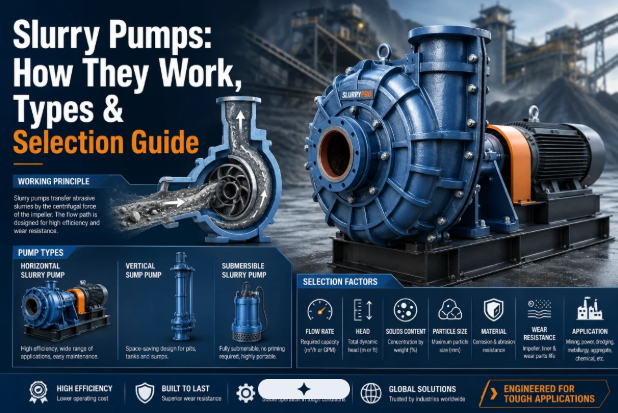
A useful request identifies the job before it asks for a price. The spare-parts range shown by BBP includes wet-end items such as an impeller, volute liner, and throat bush, alongside sealing and support items including a shaft sleeve, expeller, gland packing, stuffing box, and bearing assembly. Those names help a buyer describe a need. They do not establish compatibility with an existing pump or another maker’s part.
Why Appearance is a Weak Purchasing Test
Many pump components look familiar at first glance. Impellers have vanes. Each liner follows a casing profile. The sleeve fits around a shaft. Yet a photograph may not show the dimensions that control the fit, the back-face geometry, the material grade, the balancing requirement, or a revised seal interface. Even a seemingly close part can therefore create an expensive pause after delivery.
Start with the pump identity, not the loose part. Record the nameplate details, pump series, serial number, and any assembly or material code still visible. KSB’s spare-parts guidance describes using a pump serial number, material number, or series and technical data to identify parts, and it points users to drawings and data sheets. That is a sound comparison method because it connects the part to a particular machine record.
Ask for the relevant drawing, exploded view, or bill of materials when one exists. Mark the requested position number and note whether the request concerns one piece, a mating pair, or a set. Both a throat bush and an impeller may be discussed together in a maintenance conversation, while one quote might cover only one of them. That distinction should be visible before prices are compared.
Build an Identity Record Before Asking Suppliers to Quote
A compact identity record travels better than a long email chain. Place the pump series and serial number at the top. Add the part number if it is known, the drawing revision if one is available, a short description of the part’s location, and photographs that show markings as well as the overall shape. Keep a photo of the installed position separate from a photo of the removed component.
Service conditions matter too. Wet-end impellers may face abrasive solids, corrosive liquid, or a different temperature range from a clean-water pump part. Shaft sleeves may be selected with the seal arrangement and shaft dimensions in mind. State the liquid, solids description, temperature range, and known material information without turning a rough estimate into a specification. Unknown items should remain labelled as unknown.
Revision history deserves a line of its own. One plant may have received an updated casing, a modified seal, or a replacement rotating assembly years after the original installation. “Same model” is not a complete revision record. Add the date and source of any previous repair documents, then identify whether the quote must match the installed arrangement or whether an approved update is being considered.
Define the Boundary of the Supplied Item
Quotes become hard to compare when each supplier has assumed a different supply boundary. One line may refer to an impeller alone. Another may include an impeller, O-ring, fasteners, and balancing. Bearing assemblies can mean a housing with bearings, a cartridge, or a broader group of fitted components. The words on the line item need a plain description of what is included.
Write the boundary in practical terms. For example: “one throat bush, material to be confirmed, excluding gaskets and installation labour,” or “one bearing assembly supplied as a named group; bearings, housing, and locking items listed separately.” The second example is longer, but it gives the reviewer something real to compare. It also helps prevent a missing minor item from holding up a planned repair.
BBP’s current spare-parts page groups wet-end components, sealing-related items, and bearing assemblies. Use those groupings as prompts for the request package: is the buyer seeking a volute liner only, an expeller with related seal parts, or a bearing assembly that needs its own content list? The purchasing record should answer that question before a purchase order is prepared.
Compare Materials and Service Information Line by Line
Material is often treated as a footnote. In abrasive or corrosive duties, it belongs near the part number. Ask each supplier to state the offered material designation, the source of that designation, and any limitation they need to put on the offer. Do not convert a supplier’s general product description into a promise about a particular process liquid.
Dimensional information needs similar care. Quoted parts may be identified from a drawing, a sample, a serial-number record, or a combination of those sources. Capture which method was used. If a supplier is working from photographs alone, say so. That statement is not a criticism; it is a useful risk marker when the buyer decides whether to verify a dimension or wait for a drawing review.
Put delivery information on each line rather than in a vague total. One quote may say that some items are available sooner than others, or that a kit has one missing component. The pack should show the stated lead time, the date the statement was made, freight assumptions, and whether a supplier has confirmed stock or merely provided an estimate. No external quote can establish that BBP has a particular item on hand unless BBP confirms it for the request.
Use a Comparison Sheet that Exposes Uncertainty
A comparison sheet does not need complicated scoring. Columns for part identity, source document, offered description, material statement, supply boundary, lead-time statement, price basis, and open question will do more than a single total-price column. Rows should retain the wording that explains what each supplier actually offered.
Keep exceptions visible. One supplier may request a serial-number check. Another may note a drawing revision that is absent from the buyer’s records. A further supplier may quote a different kit boundary. These are not administrative blemishes to erase before management sees the table. They are the reason the table exists.
Exploded drawings can be particularly useful here because they let the team compare a request against a stated assembly position. The drawing is evidence of identity, not a substitute for qualified review where dimensions, material, or service conditions remain unresolved. Buyers can use it to ask a sharper question: which position is this offer intended to replace, and which revision is the offer based on?
Finish with a Decision Record, not a Guess
Before releasing an order, ask one final set of questions. Has the offered part been tied to a series, serial number, part number, or drawing revision? Does the material statement fit the known service description? Is every included and excluded item clear? Has the lead-time statement been captured per line? Are there open compatibility questions that require engineering or supplier confirmation?
The answer may be “not yet.” That is a productive outcome when it stops an appearance-based purchase from becoming a site problem. Discipline in the quote pack does not make all parts interchangeable. It makes the remaining uncertainty easy to see, assign, and resolve.
For discussions with BBP, describe the required impeller, volute liner, throat bush, shaft sleeve, expeller, gland packing, stuffing box, or bearing assembly against the machine record and stated service conditions. BBP can then review an actual request rather than a visual resemblance. Final fit, material suitability, supply scope, and delivery timing require confirmation for the specific pump and order.