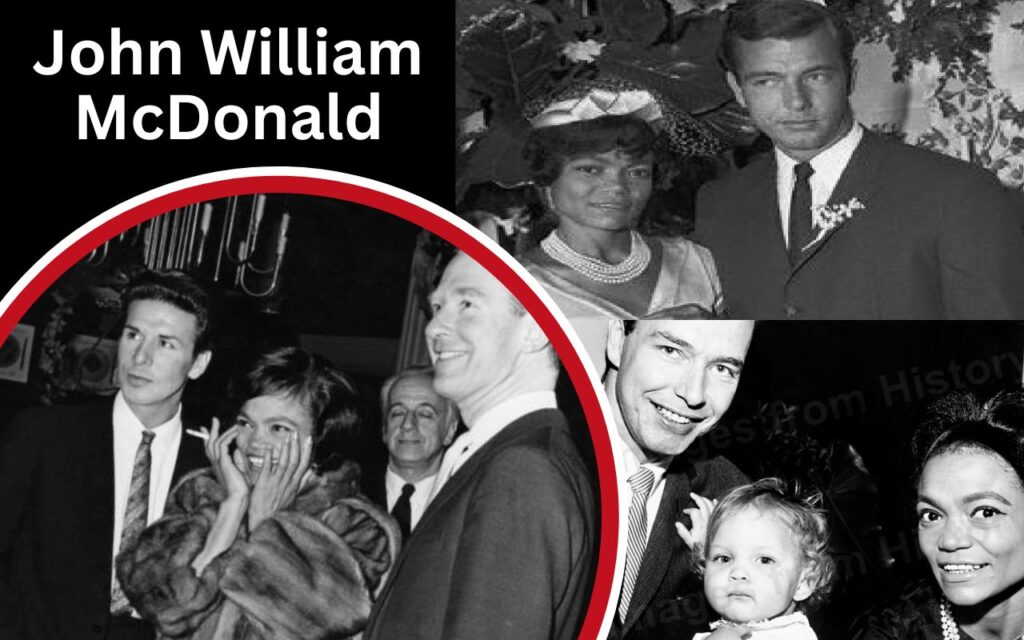

John William McDonald may not have been a household name, but his life is intricately connected to one of the most iconic performers of the 20th century, Eartha Kitt. From his early years and marriage to Kitt to the legacy carried forward by their daughter, McDonald’s story offers a fascinating glimpse into the private life behind a public legend. Beyond the personal, his life intersects with cultural memory, death notices, and obituary traditions, illustrating how history preserves the lives of those connected to fame. This article delves deep into John William McDonald’s life, family, and legacy, exploring every detail from his ties to Eartha Kitt to the ways his story is remembered in funeral notices, obituary announcements, and family records across the UK and beyond.
Early Life and Background of John William McDonald
John William McDonald is a figure who came into public awareness primarily through his marriage to the iconic singer and actress Eartha Kitt. Born in the early decades of the 20th century, McDonald lived a life largely outside the limelight, pursuing business and professional endeavors that are less documented in popular media. Despite this, his association with Kitt, a trailblazing African-American performer celebrated for her sultry voice and charismatic presence, brought him intermittent attention from biographers, historians, and cultural commentators.
McDonald’s early life remains somewhat enigmatic, but sources suggest he was involved in real estate and investment during the late 1950s and early 1960s. His career, though not as widely chronicled as Kitt’s entertainment legacy, positioned him within circles that intersected with notable figures in American and international social and cultural life.
Marriage to Eartha Kitt
John William McDonald married Eartha Mae Kitt in June 1960, a union that would become an important chapter in both their lives. At the time of their marriage, Kitt was already an internationally acclaimed performer, celebrated for her roles on Broadway, in films, and on television. The marriage was a private affair, attended by close family and friends, reflecting the more reserved approach to celebrity unions in that era.
The marriage resulted in the birth of their daughter, Kitt McDonald, in November 1961. The couple’s life together was brief, as they divorced by 1964. The separation was amicable, and McDonald largely retreated from public attention after their divorce. Nevertheless, his connection to Kitt remained part of the narrative of her early life and personal story.
Life After Divorce
Following their separation, Eartha Kitt’s career flourished, including her iconic portrayal of Catwoman in the 1960s television series Batman and her extensive work as a singer, actress, and performer worldwide. McDonald, meanwhile, pursued his professional endeavors and maintained a private life. Little is publicly documented about his later career or personal life, and he did not attain the same public notoriety as his former spouse.
McDonald’s enduring legacy is closely tied to his daughter and his early role in Kitt’s personal life. This connection is occasionally highlighted in discussions about Kitt’s family, her early life, and her relationships that shaped her career trajectory.
Kitt McDonald: Daughter and Family Legacy
The daughter of John William McDonald and Eartha Kitt, Kitt McDonald, later became known as Kitt Shapiro following her marriage. She grew up in a household influenced by her mother’s celebrity status, which meant navigating a public life alongside her private identity. As a result, Kitt McDonald’s life has been intertwined with her mother’s legacy, from media mentions to family announcements and obituary notices following Eartha Kitt’s passing. The mother-daughter bond is a notable facet of both Kitt’s personal story and the family history surrounding John William McDonald.
Obituary Culture and Death Notices
Though John William McDonald did not have a widely publicized death notice or obituary, his life is indirectly recorded in public memorials due to his relationship with Kitt and her family. The death notices and obituary notices of prominent figures such as Eartha Kitt demonstrate how public records capture the intersections of personal and cultural history. Death announcements today, including today’s death notices and obituary notices today, serve not only to inform the public of passing but also to chronicle familial connections, professional achievements, and cultural impact.
In the UK and Scotland, death notices in Inverness, Fort William death notices, and regional publications like the Inverness Courier provide a template for how families communicate bereavement to the public. These notices often include detailed information about surviving family members, funeral arrangements, crematorium schedules (such as Inverness Crematorium funerals this week), and contributions in memory of the deceased. Such detailed funeral notices in Inverness and funeral notices Perth Scotland illustrate the importance of these announcements in maintaining both historical record and community engagement.
Eartha Kitt’s Life and Influence
John William McDonald’s historical significance is often contextualized through the life of his ex-wife, Eartha Mae Kitt. Kitt’s multi-faceted career as a singer, actress, dancer, and activist has made her a cultural icon. She achieved fame for her distinctive voice and unforgettable performances in songs such as “Santa Baby” and “C’est Si Bon”, as well as for her stage presence in Broadway shows. Her portrayal of Catwoman in the television series Batman immortalized her in popular culture. Additionally, her voice work, including the role of Yzma in Disney’s The Emperor’s New Groove, showcases her enduring impact on multiple generations.
Kitt’s passing on December 25, 2008, was documented widely in UK death notices, obituary notices UK, and international news outlets. These notices frequently highlighted her family connections, including her daughter Kitt McDonald, indirectly preserving the memory of John William McDonald in historical records.
The Intersection of Public and Private Lives
The story of John William McDonald exemplifies the tension between public and private life. While his professional and personal details remain largely undocumented, his presence in the public record is preserved through familial and cultural connections. Death notices, funeral notices, and obituary announcements are important tools for historians and family researchers trying to trace these connections. For instance, contemporary death records in Scotland, such as those maintained by D Chisholm & Sons Inverness, Frasers Dingwall, or WT Fraser Funeral Directors, routinely provide detailed family information, illustrating how private lives are memorialized publicly.
Similarly, platforms like Facebook have become venues for sharing Facebook death notices, creating new layers of digital memorialization that expand the reach of traditional obituary systems.
Funeral Notices and Cultural Practices in Scotland
Scotland has a rich tradition of death notices and funeral announcements, with specialized regional practices in areas such as Inverness, Fort William, Perth, Dingwall, and Ross-shire. These notices often provide not only dates and times for funeral services but also personal anecdotes, historical details, and professional affiliations. For example, funeral notices Fort William and funerals in Inverness reflect community engagement with death and remembrance, while Inverness Crematorium schedules detail the timing and logistics of memorial services.
Businesses like D Chisholm & Sons, Frasers Undertakers Inverness, and John Fraser & Son maintain extensive records of these announcements, demonstrating the importance of meticulous documentation for historical and genealogical research. These practices preserve the memory of individuals, their familial relationships, and their cultural impact, offering indirect documentation for individuals like John William McDonald who were connected to public figures.
The Legacy of John William McDonald
Though he may not have been a public figure in the entertainment industry, John William McDonald’s life story intersects with cultural history in meaningful ways. His role as Eartha Kitt’s husband and father to Kitt McDonald places him within a narrative of mid-20th-century American cultural and social history. His life also provides insight into how private individuals are remembered indirectly through death notices, family announcements, and the ongoing documentation of notable family members.
The careful recording of obituary notices today, death notices in the UK, and funeral notices Perth Scotland illustrates the broader context in which individuals like McDonald are remembered, even when their personal stories are less publicly visible. It highlights the intergenerational transmission of memory, where family, community, and media work together to preserve personal histories.
Read More: Harry Lopes – Biography, Career, Family, and Legacy
Conclusion
John William McDonald remains a figure whose primary claim to fame is his connection to Eartha Kitt, but his life exemplifies the way private lives intersect with public history. From his marriage to Kitt and the birth of their daughter, to the recording of Eartha Kitt’s death notices and obituaries, McDonald’s story is part of a larger narrative about family, cultural memory, and the preservation of history through public records.
In exploring today’s funeral notices, obituary notices UK, and funeral directors Inverness, we see the enduring significance of documentation and the role it plays in keeping both public and private legacies alive. John William McDonald’s life, while private, is interwoven with cultural and familial history, providing a case study of how individuals are remembered both directly and indirectly through the lives of those they are connected to.