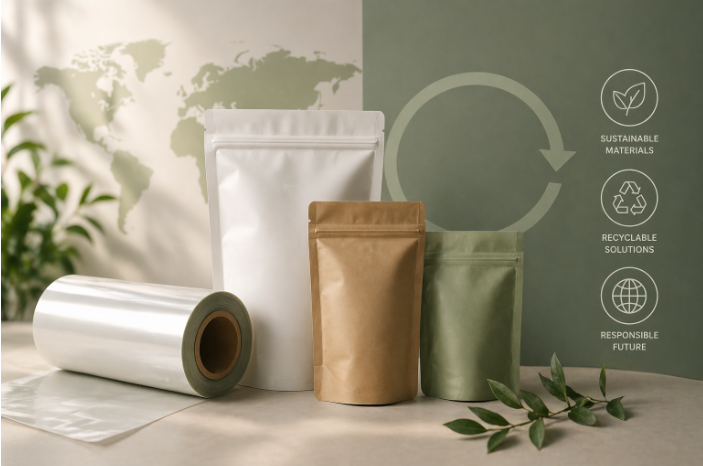

Sustainability used to be a way to stand out. Today, it’s a requirement.
For many brands, the pressure isn’t coming from marketing anymore. It’s coming from regulators, retailers, and even their own supply chains. Packaging decisions now affect where you can sell, how much you pay in compliance fees, and how your product is perceived the moment it hits the shelf.
For manufacturers like China’s YZ Pack, this shift is already shaping how packaging is engineered. It’s no longer just about how a pouch looks. It’s about whether it runs smoothly on your machine, meets regulatory standards, and still protects the product during transport.
That’s why more companies are rethinking their approach and working closely with experienced pouch packaging manufacturers. The goal is simple: better performance with less environmental impact.
Why the Law Is Catching Up to Your Supply Chain
Regulations are no longer something you can deal with later. They are already affecting how packaging decisions are made today.
Across the globe, governments are tightening rules around plastic use and packaging waste. The European Union’s Single-Use Plastics Directive is one example, but similar policies are spreading fast. More than 70 countries now enforce partial or full bans on certain materials.
At the same time, Extended Producer Responsibility (EPR) is becoming standard in many markets. This means brands are financially responsible for what happens to their packaging after use. Fees are often based on material type, recyclability, and total volume.
This changes the equation completely.
A packaging decision is no longer just about cost per unit. It directly impacts compliance costs, reporting requirements, and market access.
Because of this, many companies are moving away from trial-and-error sourcing. They’re working with manufacturers who understand both material performance and regulatory requirements, helping them avoid costly mistakes before production even starts.
Your Customers Are Paying Attention
Packaging is often the first physical interaction a customer has with your product. And people are paying closer attention than ever.
If a product claims to be eco-friendly but comes in excessive or non-recyclable packaging, the mismatch is obvious. Once that trust is lost, it’s hard to rebuild.
This is especially true for younger consumers. Many actively look for products with reduced packaging or materials that are easier to recycle. For them, packaging is part of the product experience, not just a container.
And with social media, feedback spreads quickly. A single post calling out wasteful packaging can reach thousands of potential customers in a short time.
At this point, packaging is no longer a background detail. It’s a visible signal of what your brand stands for.
Sustainability Can Improve Your Margins
There’s a common assumption that sustainable packaging always costs more. In reality, it often leads to better cost control over time.
Reducing material thickness or switching to more efficient structures can lower raw material usage. Lighter packaging also reduces shipping costs, especially for high-volume operations.
There are also savings tied to compliance. Under EPR systems, better packaging design can directly reduce the fees companies pay.
But one of the biggest advantages is risk reduction.
Traditional materials are becoming less predictable due to regulation changes and supply chain disruptions. Businesses that adapt earlier tend to have more stable sourcing and fewer surprises.
This is where experienced packaging manufacturers make a difference. YZ Pack, for example, works closely with clients to match material structures with machine requirements. That includes adjusting factors like friction and sealing performance so packaging runs smoothly during production. These details might seem small, but they prevent costly downtime and waste during large production runs .
In short, sustainability isn’t just about image. It’s about efficiency, stability, and long-term cost control.
The Real Challenge: Making It Work in Production
Switching to sustainable packaging isn’t as simple as changing materials.
Different films behave differently. Some seal at different temperatures. Others affect how smoothly packaging runs through automated machines. Without proper testing, even a small change can lead to issues like misfeeds, weak seals, or production slowdowns.
There’s also the question of equipment. Some existing machines need adjustments to handle newer materials effectively. That adds time and cost if not planned properly.
Supply is another factor. Not all sustainable materials are readily available at consistent quality or scale.
Because of these challenges, companies are moving beyond quick fixes. Instead of just using thinner plastic, they are exploring:
- mono-material structures that are easier to recycle
- bio-based materials
- refillable or reusable systems
Execution is where many businesses struggle. Sustainable packaging still needs to perform under real production conditions.
This is why structured testing matters. YZ Pack, for instance, encourages sampling and machine trials before full production. This helps ensure the packaging not only meets sustainability goals but also runs efficiently on the client’s equipment .
The Shift Is Already Happening
Sustainable packaging is no longer something companies are experimenting with. It is quickly becoming the standard.
Brands that move early are shaping expectations in their market. They are also better positioned to handle new regulations and changing customer demands.
Those that wait face increasing pressure. Compliance costs rise, customer trust becomes harder to maintain, and entering certain markets gets more complicated.
For most businesses, the question is no longer whether to adopt sustainable packaging.
The real question is how quickly you can implement it without disrupting your operations.