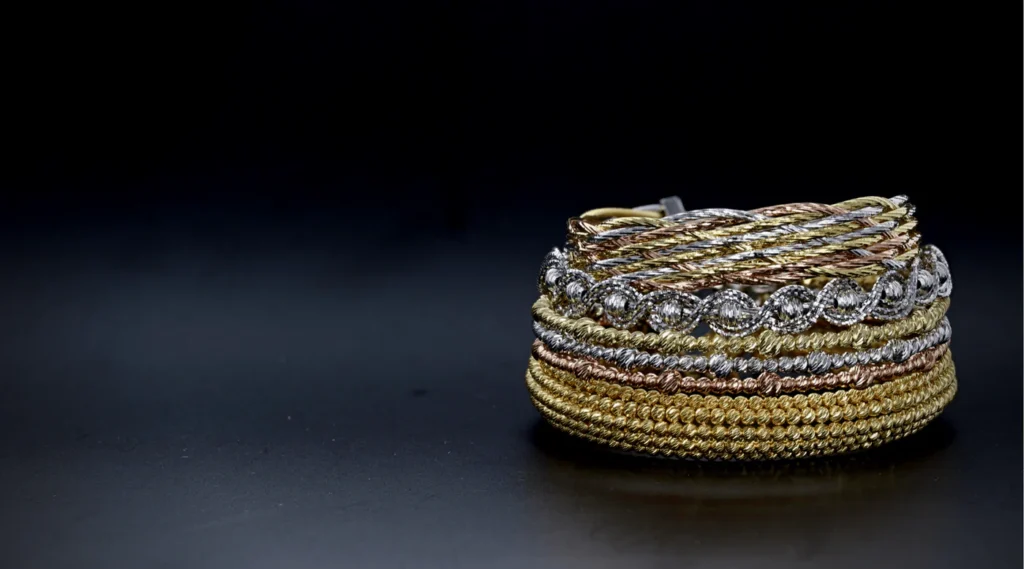

For the next few years, the jewelry market will change immensely, and for good reason. Compared to what it was valued on for the last few decades, what it will be valued on in the future will be more justified. Those who are starting to buy jewelry are creating more than just an aesthetically charged market, they are creating a market filled with meaning and intentionality. When consumers decide to buy a ring, necklace, or a bracelet, they are fulfilling an intentionally curated desire, rather than a shallow one.
1. Market Value Has Become Less Aesthetic
Aesthetic appeal is still an initial factor, but it is no longer the ultimate factor for consumers to make a purchase decision. We are in a market where the average jewelry purchase is influenced more by the emotional and symbolic market value of an offered ring than by the market value of the gold and silver. The average consumer in the current jewelry market is savvy and is no longer a target for advertising market value jewelry. Today’s consumer prioritizes meaningful over market.
Finding jewelry that is metal and rock linked and void of meaning is no longer appreciated. A purchase that lacks a story in the current market will be regretted. A story can be the sourced stones, the heritage of the artisan, or the intention it symbolizes for the user.
2. Personal Expression in Jewelry
One of the most significant trends in 2026 is surge in energy-inspired jewelry. Jewelry has evaded decoration, ornamentation, and even occasion and has formally integrated into identity. Buyers in 2026 are expected to engage their collections as a form of a nonverbal persona. This new shift in purpose has transcended beyond decoration, as they are used to vicariously embody a mood, or philosophy, and in many ways a series of rationalized and ethically aligned goods.
Expectations for what constitutes an infallible piece of jewelry are sacrificed in the exchange for individuality, particularly personal expression. Aesthetically, there is a preference for natural, unrefined and organic jewelry. The make of these items embraces the imperfect as it is undeniably honest. Jewelry has become a ritualistic component of daily dressing. It empowers and comfortable to wear and offers a fortified sense of protection in an ever-digi and increasingly unchartered realm.
3. Beyond the Essentials
Modern consumerism has largely shifted beyond the essentials of craftsmanship. Emotional resonance and individuality are prioritized. Diamonds serve less of a purpose as an indicator of personal luxury. The value of a diamond matter less as a luxury symbol.
This value shift has created a luxury market of pieces of jewelry to appease and reflect swells of internal energy. Protecting inner calm relates to a pendant, as to fostering inner fortitude relates to a ring. This shift matters less about what a particular item of jewelry is and is increasingly more about how it exists in the world and the emotions swells it activates in its owner.
4. Slow Jewelry Aesthetic in Independent Designers’ Practices
Emerging brands have the most to gain from participating in the “Slow Jewelry” movement. Though they are still relative newcomers to the scene, they are quickly learning to interpret the subtle meanings in gemstones for their innovative designs and eschewing the typical design motifs that you would encounter in the world of jewelry making.
At the heart of this emerging design practice is an emphasis on craftsmanship and an understanding of the client. These designers are on a direct path to marrying the consumer to the earth and preventing gemstones from becoming just decorative features of a design. This way of creating jewelry is artisanal and ensures that a client’s need for exclusive pieces is fulfilled.
5. Jewelry Design Forms and Themes Impacting Consumer Thought
Consumer thought is very much impacted by the stone choice. As an example, the ubiquitous use of rose quartz in jewelry design in 2026, while it is known for being soft in tonal quality, is used to represent the current cultural energy of a desire for the practice of self-care and emotional healing.
This influences the nature of modern luxury. There is more to the definition of luxury today than the high price point of a design. A modern luxury design is encapsulated in an emotional feeling such as a sense of pleasantness, care, and a feeling that the piece has been specifically crafted for an individual.
6. Reinventing Perceptions of Jewelry
The change in the design practice of jewelry is moving from design for the sake of aesthetics to design that is meaningful. More than even the artisan, the piece is signified by the precious stone used, and that is the appeal of jewelry design to the today’s jewelry consumer.
Adornment becomes mindfulness. When considering the future of jewelry, it becomes clear that the successful brands of the future will not just sell products, but also offer customers a sense of belonging, a touch of energy, and a manifestation of their self. The future of jewelry is not just seen, it is felt.
READ ALSO: How to Choose the Best Men’s Slim Fit Jeans: Fit, Stretch & Fabric Guide