
Online retail in the United States has matured well beyond its early years of improvised packaging and inconsistent fulfillment. Today, independent sellers on platforms like Etsy, eBay, and Amazon FBA operate under real logistical pressure — carrier compliance requirements, return rate targets, storage fees tied directly to box dimensions, and customer expectations that have little patience for damaged or poorly packaged goods. In this environment, packaging decisions are not cosmetic. They affect cost structures, platform standing, and the condition in which products arrive.
One of the more practical shifts happening across small and mid-size seller operations is a move toward standardized box sizing. Rather than stocking a range of cartons for every conceivable product, experienced sellers are consolidating around a smaller set of reliable dimensions that cover the widest range of goods. Among those, one size consistently earns its place across categories, platforms, and business models — not because it is marketed aggressively, but because it works reliably across a broad range of real shipping scenarios.
What Makes a Corrugated Kraft Box the Default Choice for Independent Sellers
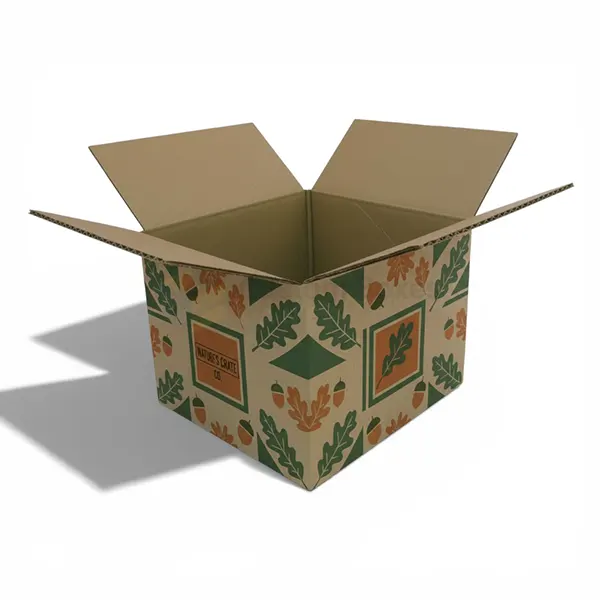
The 7x7x7 corrugated kraft shipping box has become a reference point for sellers who prioritize consistency over variety. Its dimensions place it in a practical middle ground — large enough to accommodate a meaningful range of goods without requiring void fill in excessive quantities, and compact enough to avoid dimensional weight surcharges that erode margins on lightweight products. Corrugated kraft construction, as distinct from chipboard or recycled composite alternatives, provides the structural integrity necessary for stacking during transit and storage without adding unnecessary weight to the shipment itself.
Kraft paper, derived from the chemical pulping process that produces strong, tear-resistant fiber, has long been the material of choice for industrial and commercial shipping applications precisely because it holds its structure under compression. When formed into a corrugated board with a fluted interior layer, it becomes capable of absorbing impact forces that would otherwise transfer directly to the contents. For sellers shipping fragile goods, artisan products, or anything with a surface that marks easily, this structural behavior is not a minor detail — it is the difference between a clean delivery and a return request.
Why Construction Quality Affects More Than Just Damage Rates
Sellers sometimes evaluate boxes purely on price per unit, which is a reasonable starting point but an incomplete calculation. A box that collapses under moderate compression during pallet stacking at a carrier hub does not just damage the product inside — it can shift the entire pallet load, potentially damaging adjacent shipments and triggering carrier claims. On Amazon FBA in particular, repeated damage patterns can flag a seller’s account for packaging compliance review, which creates administrative friction that costs far more in time than any savings from cheaper materials.
The corrugated structure of a quality kraft box also holds tape adhesion more consistently than recycled or coated alternatives. This matters in humid conditions common in warehouse and fulfillment center environments, where moisture can compromise the bond between tape and box surface. A box that arrives at a fulfillment center with a compromised seal will often be rejected or require reprocessing — both outcomes that add cost and delay without adding value.
How Platform Requirements Shape Packaging Decisions
Each major selling platform in the US imposes its own packaging and preparation requirements, and those requirements shape the practical choices available to sellers more than most packaging guides acknowledge. Amazon FBA has detailed specifications covering box weight limits, acceptable outer carton construction, labeling clearance zones, and poly-bagging thresholds for certain product types. Etsy sellers, while not subject to warehouse receiving requirements, face carrier-specific rules and the reputational consequences of poor presentation at the point of delivery.
A standardized box size reduces the cognitive and logistical overhead of navigating these requirements across multiple platforms. When a seller stocks a single reliable carton format, the packing workflow becomes repeatable. Labels are placed consistently. Void fill quantities become predictable. Carrier rate calculations stabilize. None of these outcomes are dramatic in isolation, but together they represent a meaningful reduction in operational variance — which, over the course of thousands of shipments per year, has a measurable effect on both cost and error rates.
The Dimensional Weight Problem and How Box Size Addresses It
Dimensional weight pricing, now standard across major US carriers including UPS, FedEx, and USPS for certain service classes, calculates shipping cost based on the volume of a package rather than its actual weight when the dimensional weight exceeds the real weight. This means that a lightweight product shipped in an oversized box will be billed at a higher rate than its physical weight would suggest. Sellers who have not calibrated their box sizes to their product range often discover this discrepancy only after reviewing carrier invoices, by which point the cumulative overcharge across a high-volume season can be substantial.
Choosing a box whose dimensions closely match the typical product being shipped eliminates most of this exposure. The cubic footprint of a well-matched carton keeps dimensional weight calculations in line with actual weight, which means the rate charged reflects the real cost of moving the package rather than the inefficiency of wasted air space. For sellers managing thin margins across high order volumes, this alignment between actual and dimensional weight is one of the more straightforward ways to protect profitability without changing carrier relationships or negotiating rate structures.
Versatility Across Product Categories
The practical value of a compact, square-format corrugated box becomes most apparent when examining the range of products it can reasonably accommodate. Sellers across handmade goods, consumer electronics accessories, personal care products, small home goods, books, candles, and subscription box components have all identified this general format as covering a significant share of their shipping volume without modification.
Square-format boxes carry an additional structural advantage over rectangular alternatives of similar volume: force is distributed more evenly across all faces during compression. This matters when boxes are stacked during transit or held in warehouse storage, where uneven stacking loads can cause rectangular boxes to bow or deform along their longer axis. A cube-proportioned carton resists this more effectively, which extends its usable condition through the full shipping cycle from packing station to final delivery.
Applications Across Common Seller Categories
- Handmade ceramic or pottery items wrapped in tissue and padded with kraft fill benefit from the uniform interior dimensions, which allow consistent protection without custom-cut inserts.
- Small electronics accessories — cables, chargers, adapters, and cases — often fit within this format without requiring additional packaging layers that add weight and material cost.
- Candles and personal care products, particularly those sold in sets or gift configurations, frequently align with this cube format when bundled together, reducing the need for larger cartons that introduce dimensional weight penalties.
- Subscription box operations building monthly or seasonal kits use this format to standardize their fulfillment line, allowing a single carton template to accommodate product variation across months without workflow disruption.
- Book sellers shipping single hardcover titles or small multi-volume sets find that this format provides adequate protection without the rigidity of dedicated book mailers, which are often more expensive per unit.
Inventory Management and Storage Implications
For sellers operating from home studios, small warehouses, or shared fulfillment spaces, the physical footprint of packaging inventory is a genuine operational constraint. Corrugated boxes shipped flat and stored in stacks occupy a predictable and manageable volume. Standardizing on fewer box sizes reduces the number of SKUs a seller must track, reorder, and store, which simplifies both the physical organization of the workspace and the administrative overhead of managing supplier relationships.
According to the Fibre Box Association, the corrugated packaging industry in the United States produces billions of square feet of board annually, and the standardization of common sizes across the industry is one of the factors that keeps per-unit costs accessible even for low-volume buyers. Sellers who align their purchasing with commonly produced dimensions benefit from that supply chain efficiency — shorter lead times, more consistent availability, and pricing that reflects volume production rather than custom specification.
Reorder Cycles and Supply Continuity
One of the more overlooked risks in small seller operations is packaging stockout during a high-volume period. A seller who runs out of boxes during the Q4 holiday season or a promotional spike faces a choice between delaying shipments, sourcing emergency supply at premium cost, or improvising with mismatched packaging that introduces both presentation and compliance risks. Maintaining a standardized box format that is widely available from multiple suppliers significantly reduces this risk, because the seller is not dependent on a custom or specialty item that may have limited availability.
Corrugated kraft boxes in common cubic dimensions are among the most consistently stocked items in the US packaging supply market precisely because demand for them is broad and stable. Sellers who build their fulfillment operations around these formats are, in effect, aligning themselves with the most reliable segment of the packaging supply chain — which is a form of operational risk management that does not require any additional process or cost to maintain.
Closing Thoughts
Packaging decisions in e-commerce are rarely as simple as selecting a box that fits a product. They involve carrier pricing structures, platform compliance requirements, storage constraints, material performance under transit conditions, and the cumulative effect of thousands of individual shipment outcomes on cost and reputation. The fact that a single corrugated kraft box format has emerged as a reliable answer to so many of these considerations simultaneously is not coincidental — it reflects the convergence of practical geometry, material performance, and supply chain availability around a dimension that genuinely works across a wide range of seller scenarios.
For sellers looking to reduce operational variance and build a more predictable fulfillment process, the starting point is often simpler than expected. Consolidating around a proven, widely available carton format — one that performs consistently across platforms, product types, and carrier requirements — does more for the reliability of a shipping operation than most optimization strategies that receive far more attention. The 7x7x7 corrugated kraft shipping box is not a solution to every packaging challenge, but for the range of categories and platforms where US online sellers compete, it earns its place as a foundation rather than a compromise.