
When a tractor goes down during peak season, the cost is rarely just the part itself. It is the delayed harvest, the idle labor, the cascading schedule disruption that follows. Cooling system failures are among the more common causes of unplanned downtime in agricultural equipment, and the radiator sits at the center of that risk. For farm operators, fleet managers, and equipment buyers, the decision between an OEM and an aftermarket replacement is not abstract. It is a practical choice that affects how reliably the machine performs over the next several seasons.
The market for replacement cooling components has expanded considerably over the past decade. That growth has brought more options, more price variation, and, unfortunately, more inconsistency in quality. Understanding what separates a durable replacement from a short-term fix requires looking past price and label, and focusing instead on how each type of part actually performs under real working conditions.
What the OEM vs. Aftermarket Distinction Actually Means for Cooling Systems
The term “OEM” refers to parts manufactured by or directly for the original equipment manufacturer — the company that built the tractor. These components are designed to match the exact specifications of the original cooling system, including core dimensions, tank material, flow rate design, and pressure tolerances. An aftermarket part, by contrast, is produced by a third-party manufacturer and designed to fit the same application, but without a direct mandate to replicate every engineering detail of the original.
For anyone sourcing a radiator for tractor use across different makes and models, understanding this distinction matters because fit and function are not always the same thing. A part can physically mount to the chassis and still underperform if its internal flow characteristics or material composition differ from what the engine cooling system was designed around. Detailed product listings organized by equipment type, such as those at radiator for tractor applications, can help buyers identify parts matched to specific models rather than relying on general compatibility claims.
Why Fit Tolerances Matter More Than They Appear
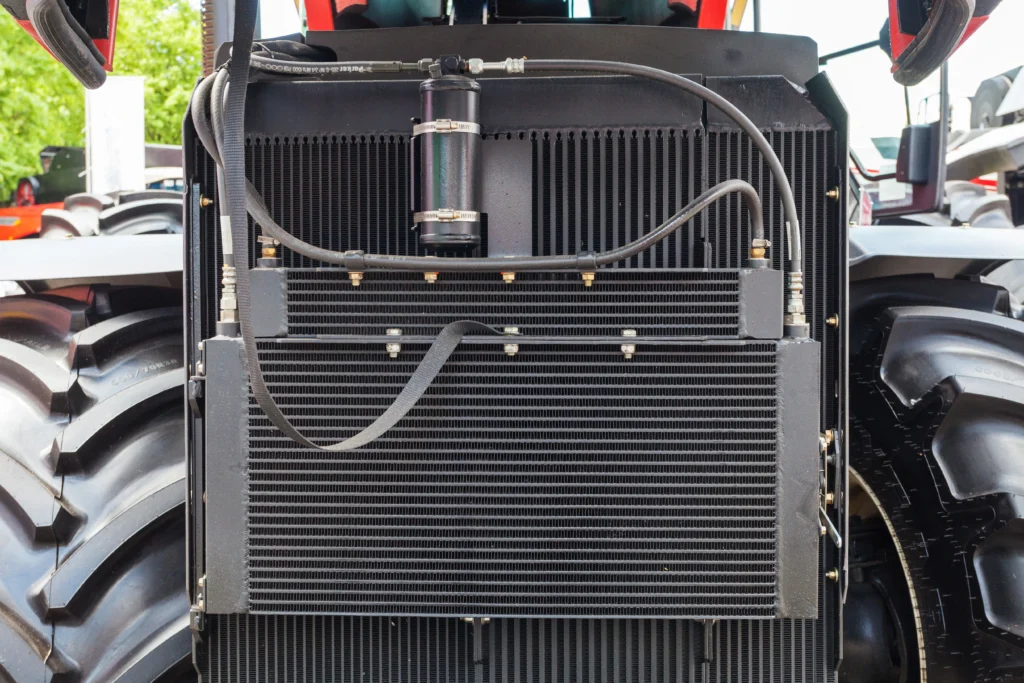
Agricultural tractors operate in conditions that stress every component on the machine. Engine loads fluctuate with terrain, implement resistance, and ambient temperature. The cooling system must respond dynamically to those changes, and the radiator’s internal design — the size and spacing of its core tubes, the efficiency of its fins, the capacity of its tanks — determines how well it manages heat transfer under peak demand.
OEM parts are engineered with those specific load profiles in mind. When an aftermarket part uses a slightly different core design, even marginal reductions in heat exchange capacity can lead to elevated operating temperatures during prolonged heavy use. In a high-ambient-temperature environment, like a field in late summer, that margin matters. It is not always apparent during light use or cooler conditions, which is why quality differences between OEM and aftermarket parts often only surface after extended seasonal operation.
The Real Cost of the Cheaper Option
Aftermarket radiators are often positioned as the budget-conscious alternative, and in many cases, the upfront price difference is meaningful. For an operation managing multiple pieces of equipment, the savings can look significant on paper. However, total cost of ownership in equipment maintenance is rarely determined by the purchase price alone. It is shaped by how often the part needs attention, how long it lasts before failure, and what secondary damage occurs if it degrades prematurely.
Material Quality and Its Effect on Service Life
Radiator longevity in farm equipment is closely tied to the quality of materials used in construction. The core — typically aluminum in modern tractors — must resist corrosion from coolant chemistry, mechanical vibration from the drivetrain, and thermal cycling from repeated heating and cooling. Lower-grade aluminum alloys or inconsistent welding at tank connections can accelerate the development of micro-fractures and pinhole leaks.
OEM parts are manufactured to standards that the equipment maker has validated over thousands of operating hours. Reputable aftermarket manufacturers can meet comparable standards, but the range of quality across the aftermarket is wide. Some manufacturers cut costs through thinner core construction or by reducing the number of tubes in the core, which affects both durability and cooling capacity. Without access to detailed manufacturing specifications, buyers often cannot distinguish a high-quality aftermarket option from a low-grade one based on appearance alone.
The Hidden Impact of Repeated Replacements
An aftermarket radiator that lasts two seasons instead of five or six does not save money over time — it creates more total expenditure, more installation labor, and more exposure to the risk of failure at an inconvenient moment. In agricultural operations, equipment typically has defined windows of peak use. A cooling system failure during planting or harvest does not have the same operational impact as one occurring during a slower period. The timing of failure, not just its frequency, is part of the real cost equation.
This is a point that favors higher-quality parts regardless of whether they carry an OEM designation. The objective is to minimize the probability of failure during critical use windows, and that objective is better served by a durable part installed correctly once than by a cheaper part installed more frequently.
Where Aftermarket Parts Make Practical Sense
Aftermarket components are not categorically inferior. The agricultural equipment sector relies heavily on the aftermarket supply chain, and many third-party manufacturers produce parts that meet or approach OEM quality standards. For older equipment where OEM parts are discontinued or supply is limited, aftermarket options may represent the only viable path to keeping a machine operational.
Evaluating an Aftermarket Supplier’s Credibility
The differentiating factor in aftermarket quality is the supplier’s sourcing and manufacturing standards. Suppliers who specialize in cooling systems for agricultural equipment — rather than offering a general catalog of mixed automotive and industrial parts — typically have tighter quality controls and more consistent product specifications. They are also more likely to provide accurate fitment data and to stand behind warranty terms that reflect confidence in the product.
According to engineering standards maintained by bodies such as the SAE International, cooling system components for off-highway equipment are subject to specific performance and material requirements. Aftermarket manufacturers who align their products with recognized industry standards offer a more reliable baseline for comparison than those who rely solely on physical fitment as their quality claim.
Matching the Part to the Application Context
The intended use of the tractor also informs the right sourcing decision. A utility tractor used for light property maintenance a few times per week operates under very different thermal stress than a row crop tractor running ten to twelve hours a day during harvest. For lower-intensity applications, a well-sourced aftermarket radiator for tractor use may perform adequately over a reasonable service life. For high-demand, high-hour operations, the risk tolerance is lower, and the argument for a verified OEM or premium aftermarket part becomes stronger.
- High-hour seasonal operations benefit most from OEM or certified premium aftermarket parts due to reduced failure risk during critical use periods.
- Older tractors with discontinued OEM parts often depend on the aftermarket supply chain, making supplier reputation and fitment accuracy more important than brand origin.
- Multi-machine fleets can use aftermarket parts strategically on lower-utilization equipment while reserving OEM parts for primary production machines.
- Warranty coverage on aftermarket parts varies significantly and should be reviewed as part of the total cost assessment, not treated as a secondary consideration.
Installation and Ongoing Maintenance as Part of the Equation
The quality of a replacement radiator is only one variable in long-term cooling system performance. How the part is installed, how the coolant system is maintained, and how early signs of degradation are identified all affect how long any radiator — OEM or aftermarket — holds up in service. A high-quality part installed with old coolant, compromised hoses, or a worn thermostat will not perform to its rated capacity, and a failure attributed to the radiator may actually originate elsewhere in the system.
Cooling System Context Beyond the Radiator
Radiator replacement is most effective when treated as part of a broader cooling system review. Coolant condition, hose integrity, fan belt tension, and water pump performance all interact with how the radiator manages heat. Operators who replace only the radiator while deferring maintenance on connected components may find that cooling performance improves initially and then deteriorates again within a shorter timeframe than expected.
This is especially relevant in older equipment where multiple components may be approaching the end of their service life simultaneously. Taking a system-level view of the cooling circuit during a radiator replacement is a practical step that reduces the probability of a secondary failure shortly after the repair is complete.
Conclusion
The OEM versus aftermarket decision for a tractor radiator is not resolved by a simple rule. It is shaped by the age of the equipment, the intensity of its use, the availability of OEM parts, and the credibility of the aftermarket supplier. What remains consistent across those variables is the underlying principle: the part that holds up in the field is the one that was matched to the application with accurate specifications, manufactured to a reliable standard, and installed into a well-maintained system.
Price is a legitimate factor in equipment maintenance decisions, but it works best as a filter applied after quality and fitment have been confirmed — not as the starting point. Operators who approach the replacement decision with that ordering tend to experience fewer repeat failures, lower total maintenance costs over time, and less exposure to the kind of untimely breakdowns that define a difficult season.
For farm operations where equipment reliability is not optional, the investment in understanding what a replacement part is actually made of, and where it comes from, is rarely wasted effort.