
Long-haul trucking operates on tight margins and tighter schedules. When a Class 8 truck goes down unexpectedly on an interstate, the consequences extend well beyond a single missed delivery. There are towing costs, emergency repair premiums, potential cargo penalties, and the kind of unplanned downtime that disrupts the entire dispatch chain. For owner-operators and fleet managers running Peterbilt 379s, cooling system failures are among the most preventable causes of roadside breakdowns — yet they remain one of the most commonly overlooked maintenance areas until symptoms become impossible to ignore.
The Peterbilt 379 has been a fixture on American highways for decades, favored for its durability and long service life. But that longevity depends heavily on how well the cooling system is maintained. The radiator, in particular, bears the continuous burden of managing engine heat across thousands of miles in varying climates and load conditions. When it begins to fail, it rarely does so without warning. The challenge is knowing what to look for before a minor issue becomes a complete engine overheat event.
What follows is a practical breakdown of ten signs that a 379 Peterbilt radiator is starting to fail — identified early enough to act on, grounded in the realities of highway operation.
Why Radiator Health Is Central to Long-Haul Reliability
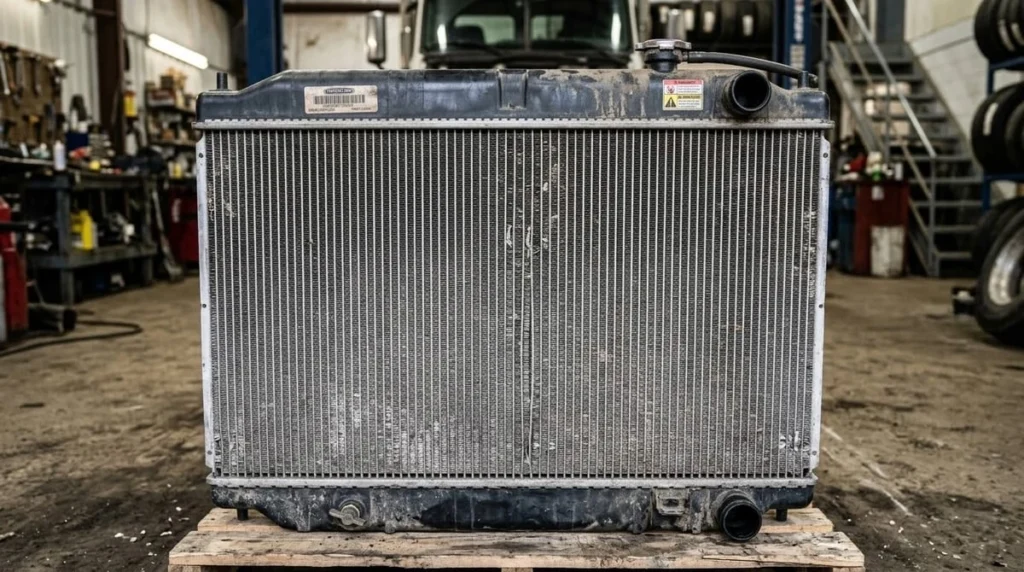
The cooling system in a heavy-duty diesel truck is not a passive component. It actively manages one of the most demanding thermal environments in any commercial vehicle application. When the radiator in a 379 Peterbilt begins to degrade, the consequences affect not just the cooling circuit but the engine, transmission cooler, and the overall operating temperature of the drivetrain. A failing 379 peterbilt radiator does not simply cause overheating — it introduces instability across interconnected systems that depend on consistent thermal regulation.
Understanding why the radiator matters sets the right foundation for recognizing failure signs early. Many drivers and even some fleet technicians treat the radiator as a background component — something to address after other systems are diagnosed. In practice, cooling system degradation often presents before engine performance symptoms appear, which makes early identification both possible and financially important.
The Relationship Between Operating Conditions and Radiator Wear
Highway miles, mountain grades, and sustained high-load driving all place different demands on the cooling system. A truck that primarily runs flat interstate routes accumulates wear differently than one working through elevation changes or urban stop-and-go delivery cycles. Thermal cycling — the repeated expansion and contraction of coolant under heat and pressure — gradually stresses radiator core tubes, end tanks, and seals. Over time, this wear becomes visible through specific symptoms that signal the system is no longer performing as designed.
Sign 1: Temperature Gauge Climbing Beyond Its Normal Range
The temperature gauge is the most direct instrument for cooling system feedback. When it begins creeping above where it normally stabilizes during a run, it indicates the radiator is no longer transferring heat away from the coolant at the rate needed to keep the engine within its operating range. This is especially noticeable during climbs, heavy loads, or warm weather conditions where cooling demand increases.
A single elevated reading might reflect a minor condition, but a consistent pattern of the gauge running higher than usual is a clear sign that the radiator’s capacity has been compromised.
Sign 2: Coolant Loss Without a Visible External Leak
When coolant levels drop between refills and there is no obvious puddle or wet spot under the truck, the coolant is going somewhere that requires investigation. Internal seepage through a radiator core, small pinhole leaks that evaporate on hot surfaces, or a compromised end tank seal can all cause gradual coolant loss that never leaves visible evidence at the ground level.
What Gradual Coolant Loss Signals About Core Integrity
A radiator that is seeping coolant slowly is under internal pressure stress. The leak path typically begins small and widens with continued thermal cycling. Drivers who top off the reservoir regularly without investigating the source are essentially masking a progressing failure. By the time the leak becomes visible externally, the radiator has usually been in a degraded state for some time.
Sign 3: Visible Rust or Discoloration in the Coolant Reservoir
Coolant that appears brown, rusty, or muddy is a sign of internal corrosion within the cooling circuit. The radiator’s internal surfaces are susceptible to rust when coolant breaks down chemically or when the system has been improperly mixed with incompatible fluids. Discolored coolant also has reduced heat transfer efficiency, which compounds the original problem.
Sign 4: External Coolant Deposits Around the Radiator Core or End Tanks
White or greenish mineral deposits visible on the outside of the radiator — particularly around the inlet and outlet tanks or along core fins — are the dried residue of coolant that has seeped through micro-cracks or compromised seals. These deposits do not repair themselves. The underlying opening typically widens with continued pressure and temperature cycles.
Sign 5: Fins That Are Bent, Clogged, or Visibly Damaged
The external fins of a radiator core are what allow heat to dissipate into the airflow passing through the front of the truck. When those fins are bent from road debris impact, packed with road dirt and insect buildup, or corroded from prolonged moisture exposure, airflow through the core is restricted. A radiator can be internally sound but thermally compromised simply because its external fin surface has been degraded over time.
The Cumulative Effect of Fin Damage on System Efficiency
A single damaged section across the face of the radiator may have minimal immediate effect. But as highway miles accumulate and fin damage spreads — especially in trucks running heavily loaded through summer heat — the combined restriction in airflow pushes the coolant temperature higher. The engine compensates by working harder, which creates more heat, which the degraded radiator is even less equipped to manage. This cycle is one of the more gradual failure progressions drivers encounter.
Sign 6: Pressure Buildup That Releases the Overflow Cap Repeatedly
A cooling system that repeatedly pressurizes to the point of releasing coolant through the overflow is working harder than it should. This can indicate a compromised pressure cap, but it can also reflect a radiator that is no longer dissipating heat efficiently enough to keep system pressure within normal operating bounds. Repeated overflow events are a sign the system is under thermal stress.
Sign 7: Steam or Vapor Rising from Under the Hood During or After a Run
Steam from under the hood is not always catastrophic, but it is never something to ignore. In a 379 Peterbilt, steam rising from the cooling area after a run often indicates coolant contacting hot engine surfaces — meaning there is a leak path allowing coolant to escape before it cycles back through the system properly. Even small amounts of steam indicate a breach in the cooling circuit that will worsen under continued operation.
Sign 8: Heater Performance Inside the Cab Declining
The cab heater in a heavy-duty truck draws warm coolant from the engine cooling circuit through the heater core. When radiator performance drops and the coolant is no longer maintaining consistent temperature, or when air has entered the system due to a leak, heater output in the cab often declines noticeably. Drivers who notice their heater running cooler than usual, or cycling unevenly, should consider the radiator as part of a broader cooling system inspection — as noted in guidance published by the Federal Motor Carrier Safety Administration regarding vehicle inspection standards for commercial operators.
Sign 9: Oil Contamination in the Coolant or Vice Versa
In trucks equipped with a transmission oil cooler integrated into the radiator, a breach in the internal barrier between the oil circuit and the coolant circuit results in cross-contamination. Coolant that has a slick or oily appearance, or coolant that has turned a milky color, indicates that oil and coolant have mixed. This is a serious internal failure of the radiator that requires immediate attention — continued operation risks damaging the engine and transmission simultaneously.
Why Cross-Contamination Accelerates System Damage
Once oil enters the coolant circuit, it coats the internal surfaces of the radiator, reducing heat transfer efficiency. Simultaneously, coolant entering the oil circuit degrades lubrication quality. The radiator in this scenario has failed internally and cannot be restored through flushing alone. Replacement is typically the only viable corrective action at this stage.
Sign 10: A History of Extended Runs Without Cooling System Service
Preventive maintenance records often tell a story that the truck itself does not yet show visibly. A 379 Peterbilt that has accumulated high mileage without documented coolant flushes, pressure tests, or radiator inspections is operating on borrowed time. Coolant degrades chemically over time, losing its inhibitor properties and becoming corrosive. Radiator core tubes and end tanks exposed to degraded coolant for extended periods develop internal corrosion that is not visible externally but steadily reduces the radiator’s structural integrity and thermal performance.
Knowing When to Inspect, When to Service, and When to Replace
Not every sign listed here points immediately to radiator replacement. Some — such as bent fins or dirty coolant — can be corrected with cleaning, flushing, or minor repairs if caught early enough. Others, such as cross-contamination or structural cracks in the end tanks, represent failures where continued operation compounds risk significantly and replacement is the responsible course of action.
The practical approach is to treat these signs as a diagnostic framework rather than a checklist of guaranteed failures. A single sign warrants investigation. Multiple signs appearing simultaneously or in close sequence is a strong indicator that the radiator has reached the end of its effective service life and should be evaluated by a qualified heavy truck technician.
For fleet managers scheduling preventive maintenance, incorporating a cooling system inspection into every major service interval — not just when problems appear — reduces the likelihood of any of these signs progressing to a full breakdown event on a US highway. The cost of a proactive radiator evaluation is modest compared to the combined expense of a roadside breakdown, emergency towing, and unscheduled downtime during peak freight seasons.
Conclusion
The Peterbilt 379 is a proven platform with a long operational history, but its reliability is conditional on the maintenance disciplines applied to it. The cooling system, and the radiator specifically, is one area where early warning signs are almost always present before a failure becomes critical. Drivers who understand what to look for — rising temperatures, unexplained coolant loss, discoloration, external deposits, or deteriorating cab heat — are in a position to act before those signs become roadside emergencies.
Keeping the cooling system on a regular inspection schedule, staying attentive to changes in temperature gauge behavior, and responding to early indicators without delay are the habits that separate well-managed trucks from ones that end up on the shoulder of an interstate waiting for a tow. The warning signs are there. The value is in recognizing them early enough to do something about it.