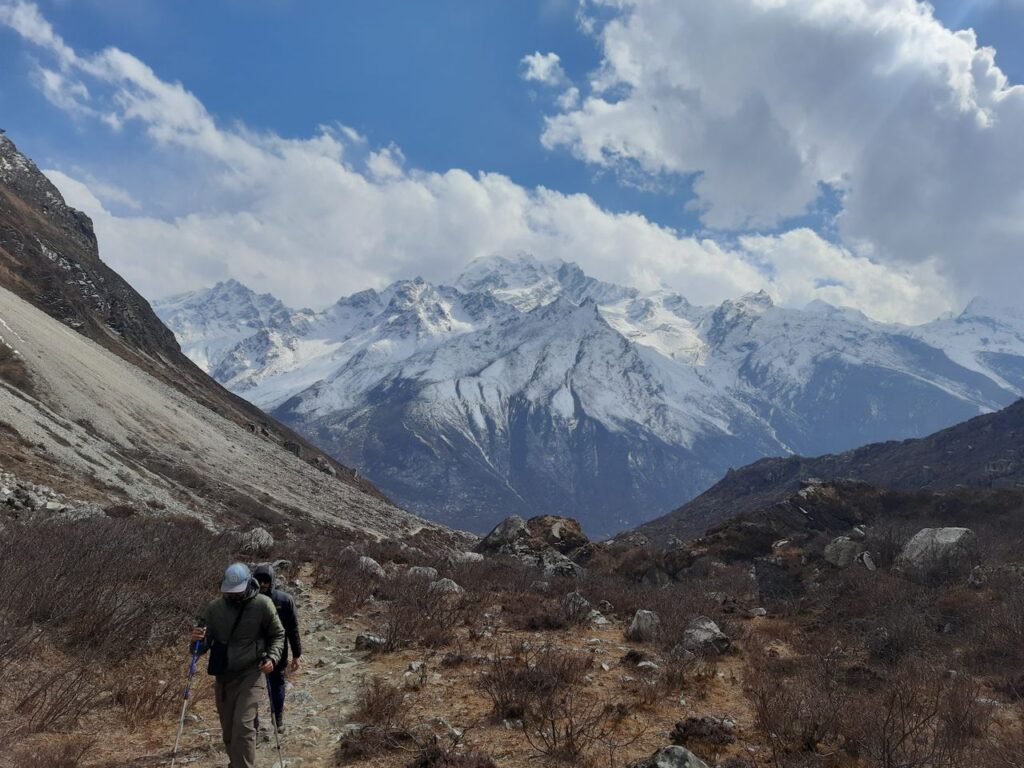

Annapurna Circuit Trek: Encompasses some of Nepal’s best views, cultural highlights and high-alpine trekking on one of the most famous multi-day hiking trails in the world Having knowledge of the entire distance and the duration of trails with various modes of work on a daily basis enables the travelers to prepare their endurance.
The route runs alongside the infamous Thorong La Pass (5416 m) for over 20 days; expect to be amazed by beautiful valleys, secluded villages, alpine, and dramatic landscapes. And if you are gearing up for your first Himalayan trekking expedition or adding to the array of beastly moves under your belt, it helps to know the Annapurna Circuit Trek distance and walking a day, allowing you to sketch a workable itinerary so that this is as enjoyable as can be.
Annapurna Circuit Trek Distance: How Long Is It?
Annapurna Circuit Trek Distance: As per the itinerary as well as the starting point of the trek or vehicles. The full route is typically 160 to 230 kilometers in length, but modern routes are normally shorter, as roads today reach parts of the course. Most of the trekkers today at least start from Besisahar or Dharapani onwards through Manang, Thorong La Pass, Muktinath, and Jomsom until they finish in the Lower Mustang area. It is a like reward (rather than overpowering) distance as all the sections have new scenery and HUGE cultural significance while gaining advantage and your altitude gradually, often by foot.
How Many Days Do You Need for Annapurna Circuit Trek?
Depending on your route, acclimatization plan, and transport method, Annapurna Circuit generally lasts 12 to 20 days. Longer itineraries allow the trekkers to acclimatize to height, venture into different villages, and soak in the limitless tranquil views offered by the ever-majestic Himalayas.
A few of the shorter versions are possible if you’re traveling at the last minute, but each subsequent day gained in altitude must be considered, as you will need to acclimatize to this sublime environment. A high-quality itinerary also incorporates one or two rest and acclimatization days in Manang before proceeding up and over the daunting Thorong La Pass.
How many days do you walk in a day?
On the Annapurna Circuit Trek itinerary, doling out days-wise walking typically provides a range of five to eight hours per day on level ground and continues over views that set out or pitch up elevation & distance as needed. Some sections have smooth trails that drop into valleys, and all are different steep climbs or rocky mountain passes where you need additional time and working effort.
Daily walking schedules are made to match the trekker and their relaxation and chill by the beautiful sights, receptive homesteads, mouthwatering dishes, and, more critically, their socio-social appreciations on this route. Once you start anywhere at higher elevations, the speed at which you walk is secondary to a steady pace when it comes to preserving energy as you adapt to small amounts of oxygen in your lungs.
Staff: Travel Report Walk the First Half in Low Elevation
The Annapurna Circuit Trek is largely located within a lower Himalayan location with vistas of tinted or prescription green forests (… the craze of multi-colored hills), streams and falls, and cultivation land decorated in flat perspectives. These sections allow you to ease yourself comfortably into the trek, as they are shorter walks.
The trekkers walk through beautiful villages and get a feel for life in the mountain culture. The altitude is not extreme here, but the steady trekking prepares your body for higher sections ahead. The opening days over more palatable terrain allow for a good rhythm to be developed, which best prepares the body to undergo the strenuous patches of the Himalayan hike.
The Second Parts: Adaptation and Stronger Conflicts
The Annapurna Circuit Trek heads on precipitation towards Manang and the upper mountains, where higher elevation and progressive landforms cause a moderate steadiness to your walks. This is why many travelers/trekkers spend a few days in the Manang area to acclimatize to the air and then proceed towards Thorong La Pass.
In this phase, you may require tougher walks (on a daily basis), as there is less oxygen in the atmosphere and the trails are lower. Then it is the job of a well-fed, well-hydrated human being to burn less energy per breath and no longer go for long walks. Another of the amazing contrasts in trekking Nepal is the sudden changes from jungles to alpine landscapes.
Articles: Hardest Day: The Thorong La Pass
Thorong La Pass (5,416 m)—the super hard but, again, super satisfying section of the Annapurna Circuit trek. As weather conditions at high altitude can change quickly, the walking day generally starts early in the morning. This effort can involve from seven to nine hours walking over snow-covered rocky ground with very steep climbs. The awe-inspiring view of the neighboring peaks of the Himalayas from up there comes along with an immense feeling of satisfaction on reaching it. The high-altitude crossing is no joke, and acclimatization is a prerequisite before attempting to cross the pass.
Goes right down to Route 99 and Mustang
In the deep, strong mountains of the Thorang La Pass, your trail will return to flat land where Muktinath and Mustang lands with golden fields changing from the alpine mountain range to an arid, desert-like valley. Walking properly does feel different, as uphill bits can put pressure on the knees and legs.
The trekkers move through older settlements, Buddhist cloisters, and odd landscapes until they at last touch base at the final purposes of the circuit. The most significant altitude challenge is behind you, although maintaining hydration and utilizing trekking poles will assist in reducing your workload for such an extensive descent.
Leading Conditions That Determine the Length and Time of Trekking.
The standard trek length will take much of your time doing the Annapurna Circuit Trek because many factors play a role:
- Important factors include:
- Weather conditions
- Personal fitness level
- Acclimatization needs
- Chosen route
- Transportation availability
- Walking speed
Similar topics are covered in both shorter trips traveling the sections of highway that are available and longer itineraries. Understand your own trekking potential and be prepared, and this will result in a more fun & hazard-free journey. Flexibility: The weather conditions in the mountains are swift and unexpected, making flexibility an essential quality of any trek you embark on in the Himalayas.
Prepare Yourself for Tadapani Trek, Annapurna Circuit Unforgettable
The Annapurna Circuit Trek, where adventure blends with beauty as well as culture. Trekking to the Himalayas is extremely appropriate for nearly any universally conditioned voyager with an adaptable reach, particularly relying on the chosen course in terms of step-by-step height adjustment. The number of hours you have to walk a day, the total elevation gain and loss per segment of the route, and where it gets hard (such as, for example, trekkers know that they will face challenges on Thorong La Pass time), helping to anticipate it and prepare for what lies ahead without frantic scouring on Google Search. Each step, step-by-step, on the Annapurna Circuit trek leaves you memories for a lifetime in one of the trekking locations with different diversity to explore, from beautiful valleys to charming villages.