
Claudio Carlos Basso is a Paris-born photographer, filmmaker, creative director, teacher, and Buddhist practitioner whose professional life has crossed several countries and artistic disciplines. He became known in the international fashion industry for his editorial and commercial photography, working in major creative centers such as Milan, Paris, London, Monte Carlo, New York, and Sydney. Over time, however, his interests moved beyond fashion and celebrity imagery toward black-and-white landscape photography, spirituality, environmental awareness, writing, and Buddhist practice.
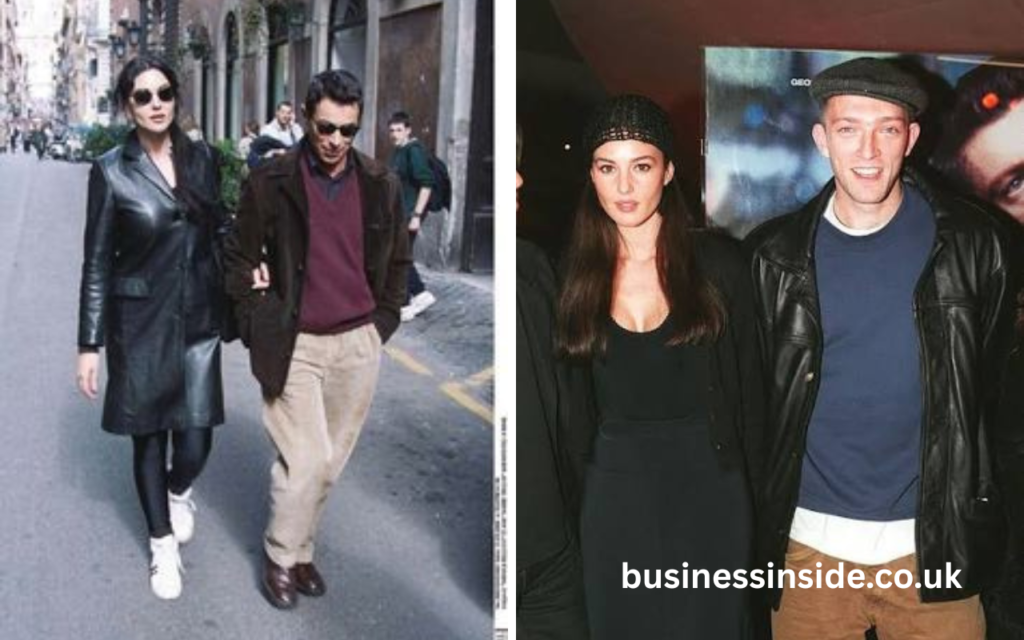
Public interest in Claudio Carlos Basso is also connected to his brief marriage to Italian actress and model Monica Bellucci. Although that relationship frequently dominates online searches about him, Basso built a substantial creative career independently of Bellucci. His life includes work for international magazines, department-store catalogues, beauty campaigns, photography workshops, film projects, fine-art exhibitions, and spiritually inspired books.
In later years, he became publicly associated with the name Bodhivata Dharmashanti. This identity reflects the increasingly important role of Buddhism, meditation, nature, and personal transformation in his life and work.
Early Life and Family Background
Claudio Carlos Basso was born in Paris, France, in 1959. An exact birth date has not been consistently confirmed by strong public records, although a number of biography websites list November 28, 1959. Because many of those sites repeat the same information without identifying an original source, the year 1959 is more firmly established than the precise day and month.
Basso’s childhood appears to have been international from the beginning. His family spent time in Buenos Aires, Argentina, as well as in Italy. He reportedly grew up partly in Portofino, the famous coastal town on the Italian Riviera. Exposure to French, Argentine, and Italian culture may have influenced his later ability to work comfortably across Europe, North America, Australia, and other international markets.
His multicultural upbringing also contributed to his language skills. Professional profiles associated with Basso indicate that he speaks or has worked in Italian, French, Spanish, English, and Portuguese. Although the exact level of fluency in each language is not independently documented, his international career suggests that he was capable of operating in several linguistic and cultural environments.
How Claudio Carlos Basso Became Interested in Photography
Basso’s interest in photography reportedly began when he was approximately 14 years old. According to interviews and biographical profiles, his mother gave him a Russian-made copy of a Rolleiflex medium-format camera. Rolleiflex-style cameras are known for their square images, waist-level viewfinders, and careful approach to composition. Learning photography through this type of equipment may have encouraged Basso to think deliberately about framing, geometry, light, texture, and visual balance.
Photography during this period required patience and technical discipline. Unlike modern digital photography, film photographers could not immediately review their images. They had to understand exposure, focus, film sensitivity, lens behavior, and darkroom development. This early experience likely helped Basso develop the technical foundation that later supported his work in demanding editorial and advertising environments.
His teenage interest eventually grew into a professional ambition. However, Basso’s entry into the fashion industry was not presented as a straightforward or privileged path. He has described working long hours, earning limited money, and learning through direct observation inside a professional studio.
Sailing and His Entry into the Fashion Industry
Before becoming established as a photographer, Basso was reportedly involved in competitive sailing. Some profiles state that he sailed with the Italian national team. Sailing introduced him to individuals from creative and professional circles, and one of these encounters apparently became a turning point in his life.
Through sailing, Basso met a fashion photographer who offered him an opportunity to work in Milan. He accepted the position and became an assistant. His early experience was financially difficult, and he reportedly slept in the photography studio because his income was not sufficient to support more comfortable accommodation.
This period lasted for approximately three years. As an assistant, Basso would have been exposed to lighting preparation, camera equipment, film handling, set construction, communication with models, fashion styling, production schedules, and client expectations. Studio assisting is often one of the most practical forms of education in commercial photography because it allows a young photographer to observe the entire process behind a finished magazine spread or advertising image.
The experience gave Basso access to the professional fashion world at a time when Milan was becoming increasingly influential as a center of luxury, design, publishing, and modeling.
Mentorship and Development in Milan
At approximately 21 years old, Basso came into contact with Alberto Nodolini, an influential Italian art director associated with fashion publishing and Italian Vogue. Nodolini reportedly became an important mentor to him.
An art director plays a major role in shaping the visual language of a magazine. The position involves choosing photographers, approving concepts, coordinating typography and layout, and ensuring that images fit the identity of the publication. Working around an experienced art director would have helped Basso understand that successful fashion photography involves more than producing a technically attractive image. It must also communicate an editorial idea, suit a publication’s audience, present clothing effectively, and contribute to a larger visual story.
During his development in Milan, Basso refined his approach to fashion imagery. His later descriptions of photography emphasized elegance, sensuality, emotional impact, and the relationship between the subject and the surrounding space. These qualities became important features of his work.
International Fashion Photography Career
Claudio Carlos Basso gradually developed an international photography career that took him beyond Milan. He worked in Paris, London, Monte Carlo, New York, and other major markets. These cities each had distinctive fashion cultures, and moving between them required professional adaptability.
Paris was central to haute couture and luxury fashion. London was known for experimental styling and youth culture. Milan combined commercial elegance with Italian design. Monte Carlo offered access to wealthy clients, luxury brands, and international personalities. New York provided opportunities in editorial publishing, department-store advertising, beauty campaigns, celebrity photography, and large-scale commercial production.
Basso’s credited editorial work has been connected with publications such as American Vogue, Italian Vogue, French Elle, New York Woman, Amica, Grazia, Bazaar, and Vanity. The precise nature and extent of every assignment are not equally documented online, but contemporary photography profiles describe him as a working international fashion photographer with access to major magazines and commercial clients.
His work also included catalogue and advertising photography. He has been associated with campaigns or catalogues for Saks Fifth Avenue, Bloomingdale’s, Bonwit Teller, and the German mail-order company Otto Versand. Catalogue photography requires a different discipline from purely editorial work. The clothes, beauty products, or accessories must remain commercially clear while still appearing stylish and desirable.
Basso was also connected with Max Factor work in Japan and with international editions of Elle. Such assignments demonstrate the global structure of fashion photography, in which a photographer may produce images for one market while working with models, stylists, agencies, and clients from several countries.
Move to New York
Basso moved to New York in 1989. According to accounts of his career, the move was encouraged by Eileen Ford, the influential co-founder of the Ford Modeling Agency. Eileen Ford played a major role in the development of the modern modeling business, and encouragement from someone in her position would have been professionally significant.
New York in the late 1980s and early 1990s was an important center for magazine publishing, advertising, fashion, cosmetics, and celebrity culture. A successful photographer needed to work quickly, manage complex productions, maintain relationships with agencies, understand commercial expectations, and compete with many other established professionals.
Basso’s New York period expanded his access to American clients and strengthened his position as an international photographer. It also placed him in the same professional environment as many leading models, actors, editors, designers, and creative directors.
Celebrity Photography and Cindy Crawford
Among the public figures associated with Basso’s photography is American supermodel Cindy Crawford. Crawford became one of the most recognizable models of the late twentieth century and worked with many leading photographers and fashion publications.
Photographing a major model required more than technical competence. High-profile sessions were supported by teams that could include makeup artists, hairstylists, fashion editors, assistants, producers, and agency representatives. The photographer was responsible for directing the subject, managing the mood of the set, controlling lighting, and creating images that met the expectations of both the client and the publication.
Basso’s experience with well-known models and public figures helped establish his reputation, although his later artistic work became less focused on celebrity and more interested in nature, spirituality, and the emotional experience of looking.
A Star and a Baby Charity Project
One of Basso’s notable portrait projects was titled “A Star and a Baby.” The concept involved photographing famous individuals with infants. The project was connected to charitable aims and used the visibility of public figures to draw attention to children and humanitarian concerns.
The combination of celebrity portraiture and images of babies created a contrast between public identity and human vulnerability. Celebrities are usually photographed in controlled, glamorous, or promotional settings. Placing them with infants introduced intimacy, tenderness, and a sense of shared humanity.
The project also reflected Basso’s interest in emotional communication. Rather than treating photography only as a tool for selling fashion, he used portraiture to create an empathetic response and support a cause.
Relationship With Monica Bellucci
Claudio Carlos Basso is widely known as the first husband of Monica Bellucci. Bellucci later became internationally famous as a model and actress, appearing in European productions as well as English-language films.
The two reportedly met during a photography session in the late 1980s. Bellucci was developing her modeling career at the time, and Basso was already active in fashion photography. Their professional connection became a personal relationship.
Claudio Basso and Monica Bellucci married in Monte Carlo on January 3, 1990. The marriage was brief. Bellucci later stated in an interview that it lasted approximately 18 months. Other biographies describe it as lasting around one year, while a number of less reliable celebrity websites list 1994 as the divorce year.
The most careful interpretation is that their marriage ended around 1991 or 1992. The often-repeated 1994 date is not supported by a clearly identified public legal record in the available material. Basso and Bellucci did not have children together.
Their relationship took place before Bellucci achieved the full level of international fame she later received through films such as Malèna, The Matrix Reloaded, The Matrix Revolutions, The Passion of the Christ, and Spectre. For this reason, modern celebrity coverage sometimes treats the marriage as a detail of Bellucci’s early life rather than examining Basso’s independent career.
Claudio Basso’s Other Marriages and Personal Life
A profile published in 2011 stated that Basso had experienced three marriages. Earlier and later professional references identify women named Kirsten and Sheri as his wife at different points.
A 2005 report connected with one of his photography exhibitions referred to his wife as Kirsten. A later photography workshop announcement from around 2009 referred to his wife as Sheri. These references suggest that Basso remarried after his relationship with Monica Bellucci.
However, the available public information does not provide a complete, independently documented marital timeline. It is therefore difficult to determine the exact dates of these relationships or Basso’s current marital status. There is also no strongly documented public account confirming whether he has children.
Basso has generally kept much of his personal life away from highly public celebrity coverage. Most substantial information about him concerns his photography, spiritual practice, artistic philosophy, and teaching activities.
Work in Australia and Transition to Film
At one point in his career, Basso reportedly became exhausted by the pressures and repetition of the fashion industry. He traveled to Sydney, Australia, for what was initially intended to be a short visit. Instead, he remained in Australia for approximately five years.
During this period, Basso expanded into film directing and cinematography. Moving from still photography into motion pictures requires a different understanding of time, movement, narrative, sound, editing, and performance. However, many of the visual skills developed in photography remain relevant, including composition, lighting, lens choice, color, visual rhythm, and the direction of performers.
Basso reportedly received an International Mobius Award for Outstanding Creativity. Public profiles mention this recognition, although the specific project, category, and year are not consistently identified in easily accessible award records. The claim is therefore best presented as part of his published professional biography rather than as a fully documented award entry.
His film work demonstrated that he did not see himself solely as a fashion photographer. Instead, he continued to explore different forms of visual storytelling.
Photography Teaching and Renovance Workshops
Basso later became involved in teaching fashion photography through a workshop initiative known as Renovance. The program offered intensive training for photographers seeking to understand both the creative and commercial sides of the industry.
Renovance workshops addressed editorial photography, studio lighting, working with models, styling, production, digital retouching, portfolio development, and professional business practices. This combination was important because aspiring photographers often concentrate heavily on camera technique while underestimating the importance of planning, networking, budgeting, client communication, and presentation.
Basso’s international experience allowed him to teach students about the realities of fashion production. He had worked with magazines, catalogue companies, beauty clients, agencies, art directors, models, and commercial teams. His instruction could therefore include both artistic guidance and practical knowledge of how assignments are produced.
Teaching also represented a shift in his career. Instead of concentrating entirely on his own commissions, he began sharing the methods and lessons he had developed over several decades.
Development of His Fine-Art Photography
As Basso moved away from the commercial fashion industry, he devoted more attention to fine-art photography. His later images often focused on trees, water, wind, driftwood, natural surfaces, and organic forms.
He frequently worked in black and white. Removing color can make viewers more aware of shape, line, contrast, texture, light, shadow, and negative space. In Basso’s landscape work, natural objects were not treated simply as documentary subjects. They were photographed as if they possessed individuality, movement, emotional presence, and character.
This approach has sometimes been described as “Zen Landscape Portraiture.” The phrase suggests that Basso photographed natural forms with the same care normally given to a human portrait. A tree, piece of driftwood, stone, cloud, or body of water could become a subject with its own visual personality.
The change from fashion to landscapes was significant, but it did not completely reject his earlier style. His experience photographing the human body, clothing, fabric, and beauty remained visible in his attention to sensual curves, elegant forms, and carefully controlled composition.
The Drifters Exhibition
One of Basso’s best-documented fine-art projects was “Drifters,” exhibited at Audubon Greenwich in Connecticut in 2005. The exhibition featured large-format, limited-edition black-and-white photographs inspired by landscape and natural objects.
The title “Drifters” appears to refer to objects shaped and transported by natural forces, particularly water and wind. Driftwood, branches, and other materials can be transformed over time through movement, erosion, pressure, weather, and exposure.
Basso’s photographs presented these objects as sculptural forms. Their curves, surfaces, cracks, and shadows were emphasized through monochrome printing. The exhibition connected his visual interest in the human form with the forms found in nature.
Audubon Greenwich provided an environmentally meaningful setting for the work. Exhibiting nature photography in a conservation-oriented location reinforced the relationship between art, observation, ecological awareness, and respect for the natural world.
Other Artistic Projects
Basso has been associated with several other creative projects, including works titled “Homo Ignudo,” “The XII Station,” and the “IC Collection.” Information about these projects is less complete than the material available on “Drifters,” but their titles suggest an ongoing interest in the body, spirituality, symbolic imagery, suffering, transformation, and natural forces.
“Homo Ignudo,” which can be understood as referring to the naked or unclothed human being, appears connected to Basso’s study of the body as an expressive form. “The XII Station” may relate to the twelfth station in the Christian Stations of the Cross, traditionally associated with the death of Jesus. Without a full catalogue or artist statement, however, the project’s exact interpretation should not be stated with certainty.
The “IC Collection” has been described in connection with wind and water. These elements fit naturally with Basso’s later interest in flow, impermanence, movement, and the forces that shape the physical world.
Buddhist Practice and Spiritual Identity
Buddhism became a central part of Basso’s identity. A contributor biography associated with One Earth Sangha states that he began practicing Buddhism in 1981 and became connected with the Order of Interbeing.
The Order of Interbeing was founded by Vietnamese Zen teacher Thích Nhất Hạnh. Its teachings emphasize mindfulness, compassion, ethical living, peace, community, and the interdependence of all forms of life.
Basso later legally adopted the name Bodhivata Dharmashanti. The name has been associated with his Buddhist practice and is reportedly connected to Thích Nhất Hạnh. In public profiles, he appears under both Claudio Basso and Bodhivata Dharmashanti.
The adoption of a Buddhist name was not merely a branding decision. It reflected a deeper transformation in how he understood identity, work, suffering, nature, creativity, and human responsibility.
Under his Buddhist identity, Basso increasingly described photography as a contemplative practice. Rather than simply capturing an object, the photographer observes carefully, becomes present, and develops a relationship with the subject.
Life-Threatening Medical Experience
A serious medical event in 2008 reportedly had a major effect on Basso’s priorities. Public biographies describe it as a life-threatening experience that led him to reconsider his relationship with commercial photography and the fashion industry.
Near-death or severe medical experiences can cause individuals to reevaluate ambition, time, relationships, work, and personal meaning. In Basso’s case, the experience appears to have strengthened his commitment to Buddhism, nature, writing, and spiritually oriented art.
After this period, he became less publicly associated with mainstream fashion assignments and more focused on contemplative photography. The change did not erase his previous career, but it redirected the skills he had developed toward a different purpose.
Fashion photography had taught him how to create idealized, highly controlled images. His later work was more concerned with impermanence, peace, flow, simplicity, and the beauty found in ordinary natural forms.
Zen Landscape Portraiture
Basso’s later photography is often described using the term “Zen Landscape Portraiture.” The concept combines portrait photography, landscape photography, and Buddhist observation.
Traditional landscape photography often emphasizes scale, location, weather, and visual drama. Portraiture focuses on individuality, presence, expression, and relationship. Basso’s approach applied portrait-like attention to trees, water, wood, stones, and natural environments.
The word “Zen” does not necessarily mean that every image contains an obvious religious symbol. Instead, it refers to a way of seeing. The photographer slows down, observes without forcing the scene, and pays attention to what is already present.
This approach also encourages the viewer to spend more time with an image. A photograph of a branch or surface of water may initially appear simple, but extended observation can reveal rhythm, movement, tension, age, erosion, balance, and silence.
Books and Writing
Basso has been credited with several books connected to photography and Buddhist reflection. These include Being the Flow, Being Peace, and Being Happiness.
Being the Flow was reportedly created with Buddhist writer and teacher Bodhipaksa. The project combined Basso’s black-and-white photography with Buddhist writings. The title reflects the idea that life is not fixed and that peace may come from understanding change rather than resisting it.
Being Peace and Being Happiness appear to continue similar themes. Their titles emphasize states of awareness rather than the possession of external objects. In Buddhist teaching, peace and happiness are often understood as practices that can be cultivated through mindfulness, compassion, ethical conduct, and acceptance.
Basso has also been associated with a planned or developing work titled Emails to Myself – Suggestions for a Good Life. The title suggests a personal and reflective format, possibly combining short observations, spiritual guidance, memories, and practical lessons.
Not all of these titles are widely represented in conventional publishing catalogues or library databases. Some may have been privately published, independently released, produced in limited editions, or distributed within particular communities.
Environmental Awareness and One Earth Sangha
Basso’s later public identity has been linked with One Earth Sangha, a Buddhist environmental community. The organization explores the relationship between Buddhist practice, ecological responsibility, climate awareness, and collective action.
His association with this community is consistent with the direction of his landscape photography. By presenting trees, water, and natural materials as subjects worthy of intimate attention, his work encourages viewers to see nature as more than a background or resource.
Buddhist environmental thought often emphasizes interdependence. Human beings depend on air, water, soil, plants, animals, climate systems, and one another. Damage to the environment is therefore not separate from human suffering.
Basso’s spiritual and photographic interests meet in this idea. His images can be understood as invitations to pay attention to the natural world and recognize the relationship between beauty, fragility, change, and responsibility.
Professional Work Outside Photography
An online professional profile under the name Bodhivata Dharmashanti has described Basso as working as a field operations manager with the United States Census Bureau. The profile has also placed him in Brooklyn, New York.
This employment information appears to be self-reported through a professional networking platform rather than confirmed through a public Census Bureau staff page. It should therefore be treated as a credible professional claim but not as an independently verified government biography.
The apparent move into field operations would represent another major transition in Basso’s career. Census work involves organization, public communication, logistics, staff coordination, data collection, and community engagement. These responsibilities are different from fashion photography, but they may draw on the communication and management skills developed during decades of international production work.
Claudio Carlos Basso’s Photography Style
Basso has described his visual approach in terms of elegance, sensuality, and positive emotion. His fashion work sought to make the model, clothing, lighting, and environment function as a unified image.
In fashion photography, sensuality does not depend only on nudity or glamour. It can be communicated through posture, fabric, movement, shadow, facial expression, and the relationship between the body and the camera. Basso’s images were shaped by his ability to direct models while maintaining visual sophistication.
His landscape work carried many of these qualities into nature. Driftwood could resemble a human body. A tree trunk could appear muscular, aged, wounded, or graceful. Water could suggest fabric, skin, memory, or motion.
His use of monochrome helped connect these subjects. Black-and-white printing removed distracting colors and allowed form to become the dominant visual language.
Difference Between Claudio Carlos Basso and Claudio Basso
Claudio Carlos Basso is sometimes confused with another person named Claudio Basso. The other Claudio Basso is an Argentine singer and television personality born in 1977 who became known through the reality program Operación Triunfo.
The photographer Claudio Carlos Basso was born in Paris in 1959, built a career in international fashion photography, married Monica Bellucci in 1990, and later used the Buddhist name Bodhivata Dharmashanti.
The Argentine entertainer Claudio Basso belongs to a different generation and professional field. Articles and databases that combine details from the two men can produce incorrect ages, occupations, nationalities, and relationship histories.
For accurate identification, the keywords “Claudio Carlos Basso photographer,” “Claudio Basso Monica Bellucci,” or “Bodhivata Dharmashanti” are more reliable than searching only for “Claudio Basso.”
Net Worth and Unverified Online Claims
Several entertainment and celebrity biography websites claim that Claudio Carlos Basso has a net worth of approximately $5 million. This figure has not been supported by publicly available financial documents, reliable business reporting, or confirmed statements from Basso.
Net-worth estimates for private individuals are frequently speculative. They may be calculated using assumptions about past career success, property, photography fees, or professional associations. Such estimates often fail to account for expenses, taxes, changes in income, business losses, private assets, or personal obligations.
The same caution applies to online claims about his exact height, weight, parents, citizenship, and current relationships. Many sites copy one another, which can create the appearance of confirmation even when all versions originate from a single unsupported source.
The best-documented details about Basso concern his birth year and place, photography career, international work, marriage to Monica Bellucci, fine-art exhibitions, Buddhist practice, and later use of the name Bodhivata Dharmashanti.
Public Presence and Online Profiles
Basso historically maintained a professional website connected to his photography. The site was referenced in photography publications and workshop announcements, although it has not always remained active or accessible.
His later public presence has been more closely connected to Buddhist and environmental communities, professional networking profiles, archived interviews, exhibition reports, and photography articles.
Because much of his best-known commercial work was produced before social media became central to the creative industry, his career is not fully represented through modern platforms. Magazine assignments, catalogues, film productions, and advertising projects from the 1980s and 1990s were often documented in print rather than preserved in searchable online archives.
This helps explain why a photographer with a long international career may have a relatively limited current digital footprint.
Legacy and Significance
Claudio Carlos Basso’s life illustrates the possibility of creative reinvention. He moved from a teenage interest in medium-format photography to studio assisting, international fashion assignments, celebrity portraiture, film directing, teaching, fine-art exhibitions, Buddhist practice, environmental engagement, and writing.
His marriage to Monica Bellucci remains the most widely searched aspect of his personal life, but it represents only a brief period in a much broader story. Basso’s professional identity was developed through decades of artistic work before and after that relationship.
His transition from fashion to Zen-inspired landscape photography is especially significant. Fashion photography often focuses on appearance, novelty, consumption, and controlled beauty. Basso’s later work focused on silence, natural form, impermanence, and inner awareness.
Rather than abandoning photography, he changed what he expected photography to accomplish. The camera became not only a commercial tool but also a method of meditation, observation, and communication.
Conclusion
Claudio Carlos Basso is a Paris-born international photographer whose career has included fashion, advertising, celebrity portraiture, film, education, fine art, Buddhism, environmental awareness, and writing. Born in 1959 and raised across different cultural environments, he entered photography as a teenager and developed professionally in Milan before working in Paris, London, Monte Carlo, New York, Sydney, and other international centers.
He photographed fashion and public figures, contributed to editorial and commercial projects, developed the charity portrait series “A Star and a Baby,” and later taught aspiring photographers through intensive workshops. His fine-art projects, especially the “Drifters” collection, reflected a growing fascination with black-and-white landscapes, organic forms, water, wind, and spiritual presence.
His brief marriage to Monica Bellucci in 1990 brought him lasting public attention, but his creative and spiritual development extends far beyond that relationship. Under the name Bodhivata Dharmashanti, he became increasingly identified with Buddhist practice, mindful photography, ecological concern, and the exploration of peace and happiness.
The available record contains gaps, especially regarding his precise birth date, complete marriage history, present family status, award details, book distribution, and financial position. Nevertheless, the documented outline of his life reveals an artist who repeatedly transformed his work in response to experience. Claudio Carlos Basso’s story is ultimately one of international creativity, personal change, and the search for a more contemplative relationship with art, nature, and life.
You may also read : Acting Career and Screen Credits