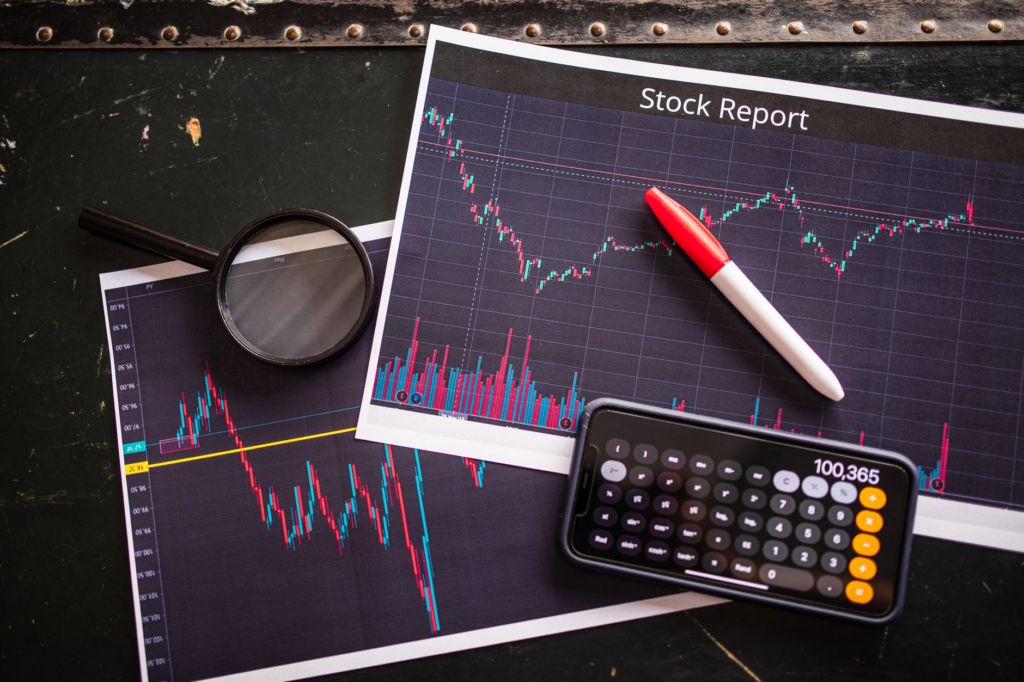

Stock prices have become harder to read in 2026, not because companies stopped reporting earnings or consumers stopped spending, but because the forces moving shares are pulling in different directions. Rate expectations, AI optimism, recession risk, and geopolitics can all change sentiment before a board meeting has finished, contributing to increased market volatility that investors must navigate carefully.
Photo by StockRadars Co., on Pexels
Why Price Swings Matter to Stock Investors
Rapid price movement is not just a red number on a screen. It represents the speed and size of price shifts. For stock investors studying market volatility in relation to individual shares, the concept matters because a 10% fall in a £10,000 position removes £1,000 of market value before dividends or tax are considered.
That connection reaches beyond active traders. The BBC’s guide to how falling share prices affect investors makes the point that lower equity prices can feed through to pensions and household wealth. A listed company may still be sound, but its share price can move sharply if investors demand a higher return for taking risk.

Photo by Markus Spiske on Pexels
The Four Headwinds Driving Recent Stock Swings
The 2026 debate is not about one fear. It is about several risks arriving together. A January 2026 Guardian overview of AI bubble and Fed fears framed the global outlook around stretched technology expectations, central bank uncertainty and political shocks. Those themes help explain why stock moves can look disorderly even when company results are steady.
- Interest rate uncertainty changes discount rates, so growth stocks can reprice quickly when bond yields move by even 0.25 percentage points.
- AI concentration raises sensitivity because the global AI market is expected to expand from about $390 billion in 2025 to more than $3.4 trillion by 2033, inviting both optimism and valuation stress.
- Earnings revisions matter because a single downgrade can reset sector expectations, especially where margins are already thin.
- Recession risk affects cyclical shares first, since banks, retailers and industrial groups often respond faster to demand warnings than defensive sectors.
How Geopolitical Tensions Are Amplifying Price Swings
Geopolitical risk is difficult for markets because it rarely arrives with a tidy earnings model. One sanction decision, tariff proposal or shipping disruption can affect at least 4 parts of the equity market at once: energy costs, supply chains, currency expectations and sector margins.
That is why even shares with limited overseas revenue can move on global events. A UK-listed manufacturer may buy components priced in dollars, insure cargo through international routes and sell to customers exposed to borrowing costs. If any 1 of those links becomes more expensive, analysts may cut profit assumptions before quarterly numbers are released.
What Historical Patterns Tell Us About Recovery
History gives investors a framework, not a timetable. A stock market correction is commonly treated as a fall of 10% or more from a recent high, while a bear market is usually associated with a decline of 20% or more. Those thresholds matter because they influence risk controls, client reporting and the language used by fund managers.
Recovery also tends to be uneven. Some sectors rebound quickly when interest rate expectations ease, while others need proof that earnings have stabilised. A 20% fall requires a 25% gain to return to its starting level, which is why large drawdowns can test patience even when the long-term business case remains intact.
How Can Investors Prepare for Continued Market Swings?
The main lesson is that volatility in 2026 is being driven by several connected forces, not a single market story. Rate expectations, AI valuations, earnings sensitivity and geopolitics each affect stocks through different channels, while historical patterns show that recovery can be slower than the initial fall.
The answer to the problem raised at the start is that stock swingscan provide signals about how investors are pricing uncertainty, although short-term movements may also reflect temporary market noise. A portfolio does not need to predict every move, but it should be tested against at least 3 scenarios: higher rates, weaker earnings and geopolitical disruption.
The next step for investors is disciplined review rather than reaction. Position sizing, diversification and a clear reason for holding each stock should matter more as markets adjust to a world where 1 policy surprise can shift sentiment across several sectors.