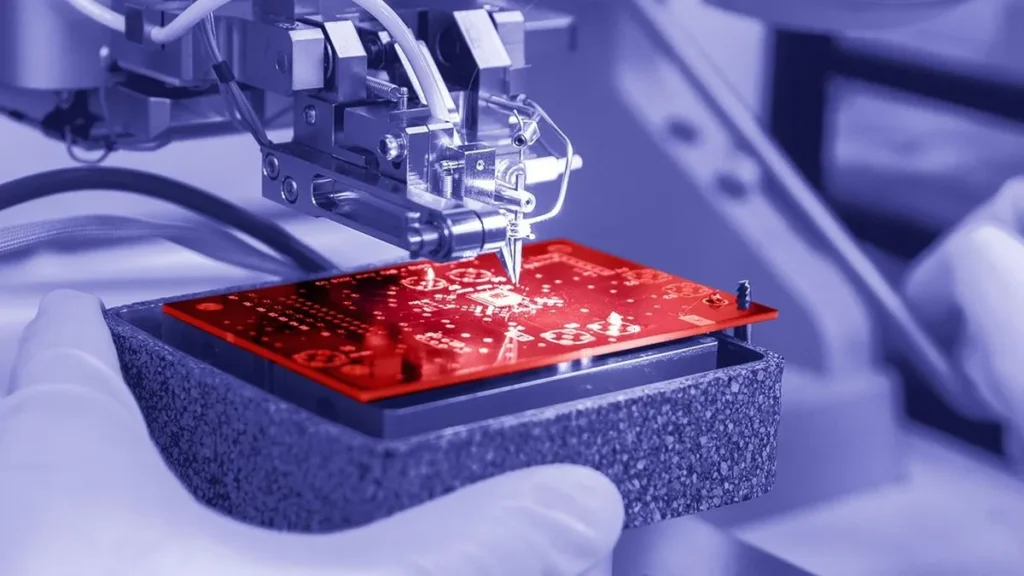

This year I have the chance to talk to another procurement manager from the semiconductor supply chain. Last year he had a color coded spreadsheet with 23 tabs of data across 6 distributors for his components. He would refresh the data manually every morning. After 6 months he got caught off guard by changes in lead times. It took 3 weeks to produce a 3 week production run of parts, but after that it took 6 months to complete the same run.
This isn’t a workflow problem.
As all of us know, the semiconductor supply chain is one of the most punishing environments in manufacturing. It’s not the people that work in this environment that are punishing to deal with, but the environment itself is very punitive in terms of not being able to predict what’s going to happen next. While demand goes in and out of fashion in a matter of days or weeks, the fab’s and other parts of the semiconductor supply chain are not as agile. As a result, when demand jumps up sharply and there is not enough production capacity to support that demand, the result is that production schedules get pulled down the drain like a sinkhole that opens up in a parking lot suddenly and completely.
The illusion of buffer stock
Here’s the thing about safety stock: everyone believes in it until it’s time to pay for it. Then it becomes a line item that gets quietly trimmed in the next budget cycle. Six months later, an allocation shortage materializes and suddenly the whole team is scrambling to justify why the buffer wasn’t bigger. This pattern repeats itself with depressing regularity across the industry, and it genuinely frustrates me, because the math isn’t complicated. People just don’t want to do it until they’re forced to.
Carrying inventory is expensive. Nobody’s arguing otherwise. But the calculus shifts completely when you factor in the cost of a stopped production line, emergency air freight, or a customer who walks because you missed a delivery window by three weeks. Strategic buffer inventory, built around your most critical and historically volatile components, isn’t hoarding. It’s insurance. The companies that came through the 2020-2022 chip crisis with the least damage weren’t the ones with the leanest shelves. They were the ones who’d made peace with holding stock that felt, at the time, like overkill.
Strategic buffer inventory; holding stock of key components that historically have been highly volatile, such as popular or hard to get active and passive components, are not hoarders, they are running their company with a dose of prudent reality. Those companies that came through the 2020/2022 chip shortage crisis in the best shape were those who had held an ‘over optimistic’ stock of key parts prior to the crisis. These companies were not lucky, they had simply set their inventory management processes up with a healthy dose of realistic safety stock.
When single-source relationships become a liability
Being loyal to a supplier is very important. However, a supplier having an allocation problem and your order being at the back of the queue to be contrary to the previous statements. Diversifying your approved vendor list for critical components, even for a single source (i.e. primary) part, will provide you with the necessary optionality in the event things fall apart for you. And things
One weakness of semiconductor supply chains today is that many semiconductor supply chains have been designed around single source suppliers for critical components. This can be fine in terms of supplier loyalty and treating suppliers well when things are going well. But when they are not and fail, then there can be a complete failure in the supply of critical components to manufacturing.
Some items to consider when thinking about how to manage your supplier base:
- Maintain at least two qualified sources for any component that would halt production if it went on allocation
- Run periodic trial orders with secondary suppliers so the relationship stays warm, not cold, when you actually need to lean on them
- Track supplier lead times historically rather than just as a point-in-time snapshot, because the trend line tells a different story than any single data point
- Document approved alternates at the design stage, not after the shortage has already bitten you
Visibility is not optional anymore
Additionally, as more real time data becomes available throughout the entire supply chain it is no longer acceptable to rely on quarterly reviews to stay up to date on production and continually require others to manually update spreadsheets to verify status. That is not how to run a business. The production risk will only compound rapidly as delays pile up. It is best to have real time updates throughout your entire organization with the simplest method to verify information as possible.
Supply Chain Activities of Reactive vs. Proactive Supply Chain Management:
| Area | Reactive approach | Proactive approach |
| Lead time monitoring | Checked at order placement | Tracked continuously with trend alerts |
| Supplier base | Single-source for most parts | Dual or multi-source for critical components |
| Shortage response | Emergency sourcing after impact | Early buys triggered by market signals |
| Inventory strategy | Lean by default | Risk-tiered buffer by component criticality |
| Design flexibility | Single approved part per BOM line | Alternates qualified at design stage |
This is where the silent buildup of production risk occurs and by the time someone realizes it production risk has accumulated to a point where it can no longer be easily addressed.
The shortage problem nobody discusses honestly
Sometimes before we even realize what is happening to us, lead times for parts that we have always bought off the shelf creep up slowly to 52 weeks or more. This is where having the right distribution and sourcing partner can make all the difference. People that specialize in sourcing components for semiconductor manufacturing have a deep knowledge of the industry and can help you get the parts you need to keep your production running.
A semiconductor distribution and sourcing company can help to navigate a company’s way through the Semiconductor Supply Chain when long lead times exist for the semiconductor component sourcing needed for their products. When a component is allocated (i.e. only so much of that part can be purchased by any customer) the sourcing specialist can search for the components needed for their client. In the case of end-of-life components, that company’s sourcing specialists can also help to find alternative components that will work in production for their clients as well.
There is no nice way to deal with a shortage but having the right distribution and sourcing partner will help alleviate the worst of the pain when a part does become unavailable.
(And just to be very clear, having an excellent sourcing partner does not equal to having magic. But they can provide you with earlier intelligence, better positioning to get the products you need, and access to inventory that is not yet publicly visible).
Resilience is built in the quiet moments, not the chaotic ones
Yes there is software that can aid your supply chain, and good supplier relationships. However no single software program, or supplier relationship can make your supply chain resilient to supply chain disruptions. Such resilience is typically developed during the ‘quiet’ time (i.e. before the next supply chain crisis) through a host of strategic decisions typically made in respect of secondary suppliers, inventory positions, and additional qualified alternative components – typically held in inventory when deemed excessive to carry.
The fear of watching the lead time for key components slowly inflate while you are powerless to do anything about it until it is finally too late and your production schedule becomes the supplier’s problem is a well-known dread of every manufacturer in the semiconductor industry. However, the fact that a company has handled a given situation well or poorly is entirely a result of the work that the company put into building options to handle problems that have not yet occurred while the company is still functioning in a rational and calm manner.
So do that before the next supply chain crisis hits!