
Introduction
In today’s construction, industrial, warehousing, and facility maintenance sectors, access to elevated work areas is a critical requirement for completing projects safely and efficiently. Whether workers are installing electrical systems, repairing ceilings, managing inventory, painting structures, or performing routine maintenance, they need reliable equipment that allows them to work at height without compromising safety. While ladders and scaffolding have been used for decades, modern aerial work platforms have transformed how businesses approach elevated tasks. Among these solutions, scissor lifts have become one of the most practical and widely used options due to their stability, versatility, and ability to support workers and materials simultaneously.
For many businesses, purchasing aerial equipment is not always the most economical option. Equipment ownership comes with substantial costs, including maintenance, repairs, inspections, insurance, storage, and depreciation. As a result, renting has become a preferred solution for organizations seeking flexibility and cost control. A professional scissor lift rental service provides access to modern equipment without the financial burden of ownership, making it easier for businesses to complete projects on time while maintaining high safety standards.
Understanding the advantages of scissor lift equipment and the benefits of rental services can help businesses maximize productivity and improve operational efficiency across a wide range of industries.
Understanding Scissor Lift Equipment
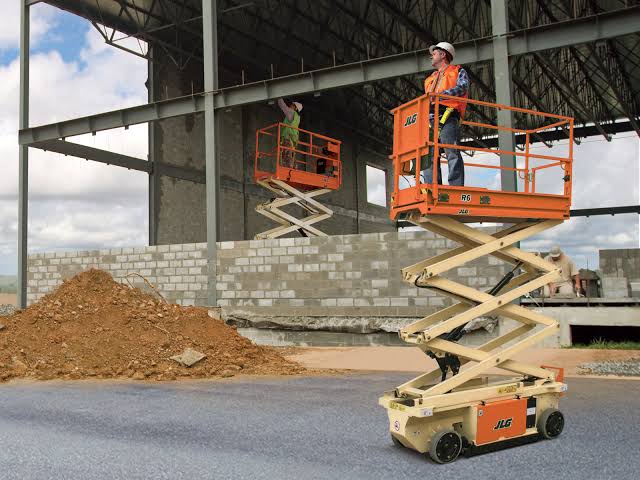
Scissor lifts are elevated work platforms designed to provide vertical access to areas that are difficult to reach from the ground. Their name comes from the crisscrossing support structure located beneath the platform, which expands and contracts in a scissor-like motion to raise or lower the working surface.
Unlike boom lifts that can extend both horizontally and vertically, scissor lifts primarily move straight upward. This vertical design creates a stable working platform capable of supporting multiple workers, tools, and materials simultaneously. Because of their stability and load capacity, scissor lifts are commonly used in situations where workers need secure access to elevated locations for extended periods.
Modern scissor lifts are available in electric, diesel, and hybrid models. Electric lifts are ideal for indoor applications because they operate quietly and produce no emissions. Diesel-powered lifts are better suited for outdoor construction environments where additional power and rough-terrain capability are required.
The combination of stability, efficiency, and ease of operation has made scissor lifts an essential part of many industries that depend on elevated work access.
Why Rental Solutions Are Growing in Popularity
Businesses constantly seek ways to improve productivity while controlling expenses. Purchasing specialized equipment may seem beneficial for companies with ongoing needs, but ownership often creates financial obligations that can limit flexibility. Equipment must be maintained, inspected, repaired, transported, and stored when not in use.
Rental services eliminate many of these concerns by providing equipment only when it is needed. Companies gain immediate access to modern machinery without making large capital investments. This allows organizations to allocate resources more effectively and focus on project completion rather than equipment management.
One of the primary benefits of choosing a scissor lift rental service is flexibility. Different projects require different working heights, load capacities, and operating conditions. Renting allows businesses to select equipment that precisely matches project requirements rather than relying on a limited fleet of owned machines.
Additionally, rental providers regularly inspect and maintain their equipment, ensuring that customers receive reliable machinery that meets current safety standards.
Industries That Benefit from Scissor Lift Rentals
Scissor lifts serve a broad range of industries because elevated access is necessary in many professional environments. Construction companies frequently rely on scissor lifts for framing, drywall installation, electrical work, plumbing, painting, and finishing tasks. Their ability to provide a large, stable platform improves worker efficiency while reducing setup time compared to traditional access methods.
Warehouses and distribution centers use scissor lifts for inventory management, shelving installation, equipment maintenance, and lighting repairs. Their compact design makes them particularly useful in indoor environments where maneuverability is important.
Manufacturing facilities often utilize scissor lifts during equipment inspections, machinery maintenance, and production line upgrades. Facility managers use them for routine maintenance tasks involving HVAC systems, lighting fixtures, ceilings, and structural components.
Retail stores, educational institutions, hospitals, entertainment venues, and commercial properties also depend on aerial access equipment to support maintenance and renovation activities. Because of their versatility, scissor lifts remain one of the most commonly rented types of aerial work platforms.
Safety Advantages of Using Scissor Lifts
Workplace safety remains a top priority across all industries, especially when tasks involve elevated work areas. Falls continue to be one of the leading causes of workplace injuries, making proper equipment selection essential for reducing risk.
Scissor lifts are specifically engineered to provide a safe and stable work environment. Their large platforms allow workers to move freely while carrying tools and materials. Integrated guardrails help prevent falls, while emergency controls provide additional protection during operation.
Many modern models include advanced safety technologies such as tilt sensors, overload protection systems, emergency lowering functions, and automatic braking systems. These features help ensure safe operation even in demanding work environments.Choosing a reliable scissor lift rental provider further enhances safety by ensuring that equipment is inspected, serviced, and maintained according to manufacturer recommendations and industry standards.
Selecting the Right Equipment for Specific Projects
Choosing the correct scissor lift requires careful consideration of several factors. The first consideration is working height. Different models are designed to reach varying elevations, making it important to select equipment capable of safely accessing the required work area.
Load capacity is another important factor. Some projects require only one worker and minimal tools, while others involve multiple workers and heavier materials. Selecting equipment with adequate capacity ensures safe and efficient operation.
The work environment also influences equipment selection. Indoor projects generally benefit from electric models due to their quiet operation and zero-emission performance. Outdoor construction projects often require rough-terrain models equipped with larger tires and enhanced stability systems capable of navigating uneven surfaces.
Project duration and frequency of use should also be considered. Rental solutions provide flexibility that allows businesses to adjust equipment choices based on changing project requirements.
Productivity Benefits of Elevated Access Equipment
One of the most significant advantages of using scissor lifts is increased productivity. Traditional methods such as ladders often require constant repositioning, which consumes valuable time and slows project progress. Scaffolding systems can provide stable access but require significant labor and time for assembly and dismantling.
Scissor lifts eliminate many of these inefficiencies by providing quick and secure access to elevated work areas. Workers can easily reposition the platform as needed while maintaining access to tools and materials. This reduces downtime and allows tasks to be completed more quickly.
The spacious platform design also allows multiple workers to collaborate simultaneously, improving workflow efficiency. As a result, projects can often be completed faster and with fewer labor hours compared to traditional access methods.
Organizations that regularly utilize rental equipment often experience measurable improvements in productivity and project timelines.
Maintenance and Equipment Reliability
Equipment reliability is critical for maintaining project schedules and preventing costly delays. Unexpected breakdowns can disrupt operations and increase labor costs.
Rental providers typically implement rigorous maintenance programs to ensure that equipment remains in excellent condition. Machines are inspected, serviced, and tested before being delivered to customers, reducing the likelihood of mechanical failures.
This maintenance support is one of the key advantages of renting equipment. Businesses can focus on completing their projects without worrying about service schedules, repair expenses, or replacement parts.
Although rental providers handle most maintenance responsibilities, operators should still conduct routine pre-use inspections to verify safe operating conditions and identify any visible issues before beginning work.
Financial Advantages of Renting Instead of Buying
Purchasing aerial equipment represents a significant capital investment that may not be practical for many businesses. In addition to acquisition costs, ownership requires ongoing spending for maintenance, repairs, insurance, inspections, transportation, and storage.
Rental solutions provide a more flexible financial model by allowing companies to pay only for the equipment they need when they need it. This helps preserve capital and improves budget predictability.
Renting also eliminates concerns about equipment depreciation and technological obsolescence. Businesses gain access to modern machinery without the long-term commitment associated with ownership.
For organizations seeking cost-effective access solutions, renting often provides the ideal balance between performance, flexibility, and affordability.
Technological Innovations in Modern Scissor Lifts
The aerial equipment industry continues to evolve through technological advancements that improve safety, efficiency, and sustainability. Modern scissor lifts feature enhanced control systems that provide smoother operation and more precise positioning.
Battery technology has improved significantly, allowing electric models to operate longer between charges while delivering consistent performance. Advanced onboard diagnostics help identify maintenance needs before they become major issues, reducing downtime and improving reliability.
Manufacturers have also focused on improving operator comfort and usability through ergonomic controls and intuitive interfaces. These innovations contribute to higher productivity and safer operation across various work environments.
Environmental Considerations
Sustainability has become an increasingly important factor in equipment selection. Electric scissor lifts offer significant environmental benefits by eliminating direct emissions and reducing noise pollution. These advantages make them ideal for indoor facilities and environmentally conscious projects.
Improved energy efficiency also helps reduce operating costs while supporting sustainability goals. As businesses continue to prioritize environmentally responsible practices, demand for electric aerial work platforms is expected to grow.
Rental providers often maintain fleets that include the latest environmentally friendly equipment, giving customers access to sustainable solutions without requiring major investments.
Conclusion
Scissor lifts have become an essential tool for businesses that require safe and efficient access to elevated work areas. Their stability, versatility, and productivity advantages make them valuable assets in construction, maintenance, warehousing, manufacturing, and many other industries.
By utilizing a professional scissor lift rental service, organizations can access modern equipment without the financial responsibilities associated with ownership. Rental solutions provide flexibility, cost savings, maintenance support, and access to advanced technology that improves overall project performance.
As workplace safety standards continue to evolve and businesses seek more efficient operational strategies, the demand for aerial work platforms will remain strong. Investing in the right equipment solution allows companies to improve productivity, reduce risks, and complete projects with greater confidence and efficiency. Whether for short-term assignments or long-term operational needs, a quality scissor lift rental solution offers a practical and effective way to achieve elevated work objectives while maintaining safety and cost control.