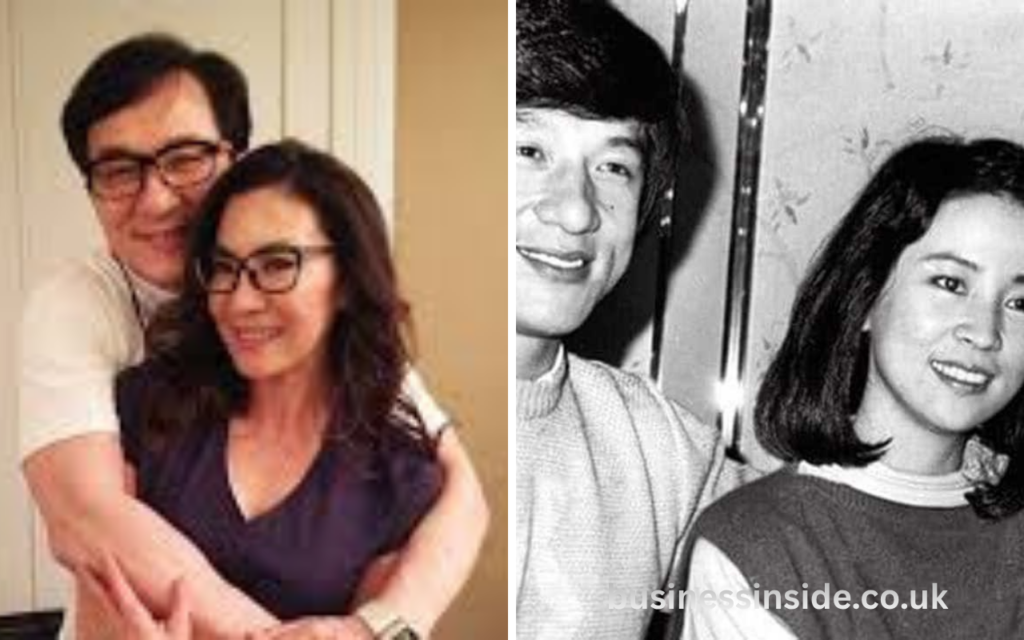

Joan Lin is one of those rare film personalities whose name continues to create curiosity even decades after she stepped away from the screen. Known in Mandarin as Lin Feng-jiao, she was a celebrated Taiwanese actress during the 1970s and early 1980s, a period remembered for romantic dramas, emotional family stories, and powerful performances in Chinese-language cinema. Although many modern readers know her mainly as the wife of Jackie Chan, Joan Lin’s own career deserves serious attention because she was already a successful and respected actress before her marriage became public interest.
Her story is not only about fame. It is about talent, sacrifice, privacy, and the changing shape of Asian entertainment. Joan Lin became part of a famous star era, won critical recognition, appeared in many popular films, and then made the surprising decision to leave acting. This choice made her even more mysterious. Unlike celebrities who remain visible through interviews, social media, and public events, Joan Lin chose a quieter life, allowing her work and personal dignity to speak for her.
Who Is Joan Lin?
Joan Lin, also written as Joan Lin Feng-jiao, is a Taiwanese former actress born on 30 June 1953. She became one of the most recognised female stars in Mandarin-language cinema during the 1970s. Her career was built on romantic dramas, emotional roles, and films that reflected the values, struggles, and relationships of ordinary people. Her gentle screen presence made her a favourite among audiences who loved sincere, heartfelt storytelling.
Joan Lin’s fame grew at a time when Taiwanese cinema had a strong local identity. Before global audiences became familiar with later Taiwanese art cinema, stars like Joan Lin were already helping shape the entertainment culture of the region. She represented elegance, innocence, emotional strength, and natural acting. She had the kind of face and presence that worked beautifully in melodrama, where small expressions could carry deep meaning.
Today, her name appears in searches related to Jackie Chan’s wife, Jaycee Chan’s mother, Golden Horse Award actresses, Taiwanese classic films, and the famous “Two Chins, Two Lins” era. However, to understand Joan Lin properly, it is important to look at her as an actress first, not only as a celebrity wife.
Early Life and Background
Joan Lin did not come from a highly privileged background. Her early life has often been described as difficult, and public accounts mention that she grew up in a family that faced financial hardship. This background shaped her image as someone who rose through effort rather than comfort. She entered the entertainment world at a young age and gradually built herself into one of the leading actresses of her time.
Her humble beginning adds depth to her public story. Many actresses of her generation were admired for beauty, but Joan Lin also carried a sense of realism. She could portray women who suffered, loved, waited, and sacrificed because her screen personality felt emotionally believable. Audiences did not see her as distant or artificial. They saw her as graceful, gentle, and human.
This connection with ordinary emotions became one of her greatest strengths. In romantic and family dramas, an actress must make viewers believe in the pain and hope of the character. Joan Lin had that gift. Her performances often felt quiet rather than loud, but that quietness made them stronger.
Joan Lin’s Entry Into the Film Industry
Joan Lin began acting in the early 1970s, when the Chinese-language film industry was full of opportunity but also intense competition. Taiwanese and Hong Kong productions were active, and audiences were deeply interested in romance, melodrama, and family-centred stories. Young actresses had to work hard to stand out, especially because film production moved quickly and the market constantly needed new faces.
Joan Lin entered this environment with natural charm and emotional screen power. Her early roles allowed her to develop her acting style and become familiar to cinema audiences. As she appeared in more films, directors and producers began to recognise her ability to carry emotional scenes with sincerity. This helped her move from being a young performer to a leading actress.
Her rise was not built on scandal or heavy publicity. It came through consistent work. She became known because audiences liked watching her. Her performances matched the emotional tone of the time, and her image became closely linked with romantic Taiwanese cinema.
The Golden Era of Taiwanese Romantic Cinema
To understand Joan Lin’s importance, it is necessary to understand the era in which she became famous. The 1970s were a major period for romantic Mandarin-language films. These films often explored love, heartbreak, family duty, personal sacrifice, and moral conflict. They were emotional, dramatic, and deeply connected to the tastes of the audience.
Many of these films were influenced by literary romance and popular novels. The stories often focused on young lovers, family pressure, class differences, illness, misunderstanding, and tragic choices. For actresses, these roles required emotional sensitivity. The heroine was often the heart of the story, and her suffering or loyalty gave the film its emotional weight.
Joan Lin became one of the strongest actresses in this environment. Her face could express sadness without becoming exaggerated. Her voice and body language carried softness, but her characters often had inner strength. This made her ideal for the romantic dramas of the period.
The “Two Chins, Two Lins” Phenomenon
One of the most famous parts of Joan Lin’s career is her place in the “Two Chins, Two Lins” phenomenon. This phrase referred to four major stars of 1970s Taiwanese romantic cinema: Charlie Chin, Chin Han, Brigitte Lin, and Joan Lin. Together, they represented a golden star system in which audiences strongly followed actors and actresses across romantic films.
The phrase became a cultural label because these stars appeared in many popular films and were strongly associated with love stories. Their names carried emotional and commercial value. If a film featured one or more of them, audiences paid attention. This was a time when star power truly mattered.
Joan Lin’s inclusion in this group proves how popular she was during her peak. She was not a minor performer. She was one of the leading faces of an entire film trend. Being mentioned alongside Brigitte Lin, Charlie Chin, and Chin Han placed her at the centre of a memorable cinematic era.
Joan Lin and Brigitte Lin
Joan Lin is often compared with Brigitte Lin because both actresses were part of the same star generation. Brigitte Lin later became internationally famous through a wide range of roles, including martial arts fantasy, drama, and art-house cinema. Joan Lin, by contrast, left the industry much earlier and became more private.
This difference affected how later audiences remembered them. Brigitte Lin remained visible for a longer time, while Joan Lin became a quieter and more mysterious figure. However, during the 1970s, Joan Lin’s popularity was real and powerful. She was not simply standing beside Brigitte Lin; she was a major actress in her own right.
The comparison also shows two different paths of fame. One actress continued to build a long public career. The other reached success, won recognition, and then stepped away. Both paths became part of Chinese-language cinema history.
Joan Lin’s Acting Style
Joan Lin’s acting style was based on natural emotion. She did not need loud dialogue or dramatic movements to create impact. Her strength came from restraint, softness, and honest expression. This made her especially effective in roles where the character experienced silent pain or emotional conflict.
In many of her films, she played women who were kind, patient, loving, and morally strong. These characters often faced family pressure, romantic struggle, or personal sacrifice. Joan Lin gave these roles dignity. She made them feel real rather than flat.
Her acting worked because she understood emotional timing. A small pause, a lowered gaze, or a quiet expression could say more than a long speech. This type of performance suited the romantic dramas of her era and helped her become one of the most admired actresses of Taiwanese cinema.
Major Films and Career Highlights
Joan Lin appeared in many films during her active career. Her filmography is connected mainly with Taiwanese and Mandarin-language cinema of the 1970s and early 1980s. Some of the titles most often associated with her include The Story of a Small Town, He Never Gives Up, Good Morning, Taipei, My Native Land, Spring in Autumn, and The Battle for the Republic of China.
These films show the range of her work within the emotional and dramatic style of the time. She appeared in stories about family, love, society, personal duty, and national feeling. Her roles were often built around emotion, but they also reflected wider social values.
Her career was relatively short compared with some other actresses, but it was highly active. During that period, successful stars often worked continuously, sometimes appearing in several films within a year. Joan Lin’s strong output helped make her a familiar and trusted face for audiences.
The Story of a Small Town
The Story of a Small Town is the most important film in Joan Lin’s career. Released in 1979 and directed by Li Hsing, the film became a landmark work for her because it gave her the role that won major critical recognition. In the film, Joan Lin played a mute woman, a part that required deep emotional control.
This role was difficult because the character could not depend heavily on spoken dialogue. Joan Lin had to communicate through facial expression, body language, and silence. Her performance showed maturity and sensitivity. She was able to create a character who felt vulnerable but also deeply human.
The film became strongly connected with her legacy because it proved that she was more than a popular romantic actress. She had serious acting ability. Her performance in The Story of a Small Town remains one of the strongest reasons film fans continue to discuss her today.
Golden Horse Award Success
Joan Lin won the Golden Horse Award for Best Leading Actress for The Story of a Small Town in 1979. This was a major achievement because the Golden Horse Awards are among the most respected honours in Chinese-language cinema. Winning this award confirmed her status as one of the finest actresses of her generation.
This recognition is important for any biography of Joan Lin because it separates fact from simple celebrity attention. Many people know her because of her connection to Jackie Chan, but the Golden Horse Award shows that she had already earned industry respect through her own work.
Her award also gave lasting value to her career. Even though she later retired from acting, the honour remained part of her public identity. It proves that her time in cinema was not only popular but also artistically recognised.
Joan Lin’s Place in Chinese-Language Cinema
Joan Lin’s career belongs to a wider history of Chinese-language cinema. She worked during a period when Taiwanese films were popular across Mandarin-speaking audiences. These films may not always receive the same international attention as later festival cinema, but they were deeply loved by viewers.
Her importance lies in the emotional connection she built with audiences. She represented the romantic heroine of her time: graceful, sincere, loyal, and emotionally expressive. Her roles reflected the values of family, love, duty, and personal sacrifice.
Through her work, Joan Lin helped define what a leading actress looked like in 1970s Taiwanese cinema. She was not only part of the industry; she helped shape its style and memory.
Marriage to Jackie Chan
Joan Lin married Jackie Chan in 1982. Their marriage became one of the most discussed relationships in Asian entertainment because Jackie Chan later became a global superstar. At the time, he was already a major action star, and his career continued to grow internationally through Hong Kong cinema and Hollywood films.
Their relationship has often attracted public curiosity because Joan Lin stayed private while Jackie Chan lived a very public life. Unlike many celebrity wives, she did not use the marriage to build a separate media image. She rarely appeared in interviews and kept herself away from constant attention.
This made the public even more curious about her. Many people search for “Jackie Chan wife” and discover Joan Lin, but her life story shows that she should not be defined only by that relationship. She had her own fame before marriage.
Joan Lin as Jaycee Chan’s Mother
Joan Lin and Jackie Chan have one son, Jaycee Chan. Jaycee later became known as an actor and singer. Because Jackie Chan is internationally famous, Jaycee’s life has also attracted media attention, and Joan Lin is often mentioned in relation to him.
As a mother, Joan Lin chose a quiet role. She stepped away from acting and focused more on family life. This decision shows how different her priorities became after marriage and motherhood. She moved from public stardom to private responsibility.
Her role as Jaycee Chan’s mother is part of her biography, but it is not the whole story. It adds another layer to her life: from actress to wife, from star to mother, from public figure to private person.
Why Joan Lin Left Acting
One of the most common questions about Joan Lin is why she left acting. After her marriage to Jackie Chan and the birth of her son, she gradually withdrew from the entertainment industry. She did not continue chasing fame, despite being successful and award-winning.
Her retirement can be understood in several ways. On a personal level, she may have wanted a stable family life. On a cultural level, many actresses of her era faced pressure to choose between public careers and private family roles. On a celebrity level, being married to Jackie Chan brought intense attention, and privacy may have become more valuable to her.
Whatever the full reason, Joan Lin’s departure made her legacy more mysterious. She left before the audience became tired of her. This means she is remembered as a star who disappeared at a high point rather than one who slowly faded away.
A Life Away From Public Attention
Joan Lin’s private lifestyle is one of the reasons she remains fascinating. She does not live as a modern celebrity. She does not constantly appear in public, give frequent interviews, or build attention through social media. Her silence has become part of her image.
In today’s entertainment world, many stars stay relevant by sharing personal details. Joan Lin did the opposite. She protected her private life. This has created respect among many fans, especially those who admire celebrities who do not turn every personal moment into publicity.
Her privacy also makes it difficult to confirm many personal details. For this reason, responsible articles about Joan Lin should avoid unsupported claims about her wealth, health, private home, or family matters. The confirmed story of her career and life choices is already powerful enough.
Joan Lin’s Rare Screen Appearance After Retirement
Although Joan Lin stayed mostly retired, she has occasionally been mentioned in connection with Jackie Chan’s later work. Her rare association with his film projects reminded audiences that she remained close to the entertainment world, even if she was no longer active as a public actress.
These rare moments are meaningful because fans have not seen much of her for decades. Even a small appearance or public mention can create interest. It shows that her name still has emotional value for audiences who remember her films or know her through Jackie Chan’s life story.
However, she never made a full return to acting. Her retirement remained real, and her public life stayed limited. This consistency makes her different from many former stars who repeatedly return to the spotlight.
Joan Lin’s Public Image
Joan Lin’s public image is graceful, quiet, and dignified. She is not remembered for controversy or attention-seeking behaviour. Instead, she is remembered for beauty, acting talent, marriage to Jackie Chan, motherhood, and privacy.
Her image has changed over time. During her acting years, she was seen as a popular romantic actress. After marriage, she became known as Jackie Chan’s wife. In later years, as more people researched classic Asian cinema, her own acting legacy became important again.
This layered public image makes her biography interesting. She is both a classic film star and a private celebrity spouse. She is both remembered and hidden. She is famous, but not always visible.
Joan Lin and the Meaning of Sacrifice
Sacrifice is a major theme in Joan Lin’s story. She sacrificed continued film fame for family and privacy. Whether this was fully her personal choice, shaped by circumstances, or influenced by cultural expectations, it became one of the defining turns in her life.
This sacrifice gives her story emotional weight. Many actresses dream of awards and long careers, but Joan Lin stepped away after achieving recognition. For some readers, this may seem sad because she had more to offer cinema. For others, it shows strength because she chose the life she wanted.
Her story invites a larger discussion about women in entertainment. Female stars have often carried different burdens from male stars. They face pressure around marriage, motherhood, age, and public image. Joan Lin’s life reflects those realities in a quiet but powerful way.
Why Joan Lin Still Matters Today
Joan Lin still matters because she represents an important period in Taiwanese cinema. She was part of a star system that shaped romantic film culture. She won a major acting award. She became one of the “Two Chins, Two Lins.” She married one of the most famous action stars in the world. Then she stepped away and remained private.
Her story continues to attract searches because it contains contrast. She was famous but quiet. She was successful but retired early. She was connected to global celebrity but avoided public attention. These contrasts make her more interesting than a simple biography.
For film lovers, Joan Lin is a reminder that some stars leave behind influence without staying constantly visible. Her legacy survives through memory, awards, film history, and public curiosity.
Related Keywords and Search Interest Around Joan Lin
People search for Joan Lin using many related terms, including Joan Lin biography, Joan Lin Feng-jiao, Lin Feng-jiao, Joan Lin actress, Joan Lin movies, Jackie Chan wife, Jackie Chan and Joan Lin, Jaycee Chan mother, Joan Lin age, Joan Lin Golden Horse Award, The Story of a Small Town actress, Taiwanese actress Joan Lin, and Two Chins Two Lins.
These keywords show how wide her public interest is. Some searches are about her personal life, while others are about her film career. Some people want to know her age or family background, while others want to understand her connection to classic Taiwanese cinema.
For an SEO article, it is important to include both sides. Joan Lin’s biography should cover her identity as an actress and her role in Jackie Chan’s family life. But the strongest article should always give proper weight to her own achievements.
Joan Lin’s Legacy
Joan Lin’s legacy is quiet but lasting. She did not continue acting for decades, yet her name still appears in discussions of Taiwanese cinema. She did not build a modern media brand, yet people continue to search for her. She did not chase international fame, yet she remains known around the world because of both her career and her connection to Jackie Chan.
Her Golden Horse Award remains one of the strongest symbols of her talent. Her place in the “Two Chins, Two Lins” era remains proof of her popularity. Her retirement remains part of her mystery. Together, these elements make her a unique figure in Asian entertainment history.
Joan Lin is best understood as a star who belonged to a golden moment and then chose silence. That silence did not erase her. In some ways, it made her even more memorable.
Conclusion
Joan Lin is far more than a name connected to Jackie Chan. She is a former Taiwanese actress who built a respected career during one of the most emotional and memorable periods of Mandarin-language cinema. She became part of the famous “Two Chins, Two Lins” era, appeared in many romantic and dramatic films, and won the Golden Horse Award for Best Leading Actress for The Story of a Small Town.
Her decision to leave acting after marriage and motherhood changed the direction of her life, but it did not remove her place in film history. Instead, it gave her story a rare quality. Joan Lin became a star remembered not for constant publicity, but for talent, grace, privacy, and quiet strength.
For today’s readers, Joan Lin’s biography offers more than celebrity curiosity. It offers a look at classic Taiwanese cinema, the pressures of fame, the role of women in entertainment, and the lasting power of a performer who stepped away but was never truly forgotten.
you may also read :Why Sylvia Ahí Became a Popular Search Topic