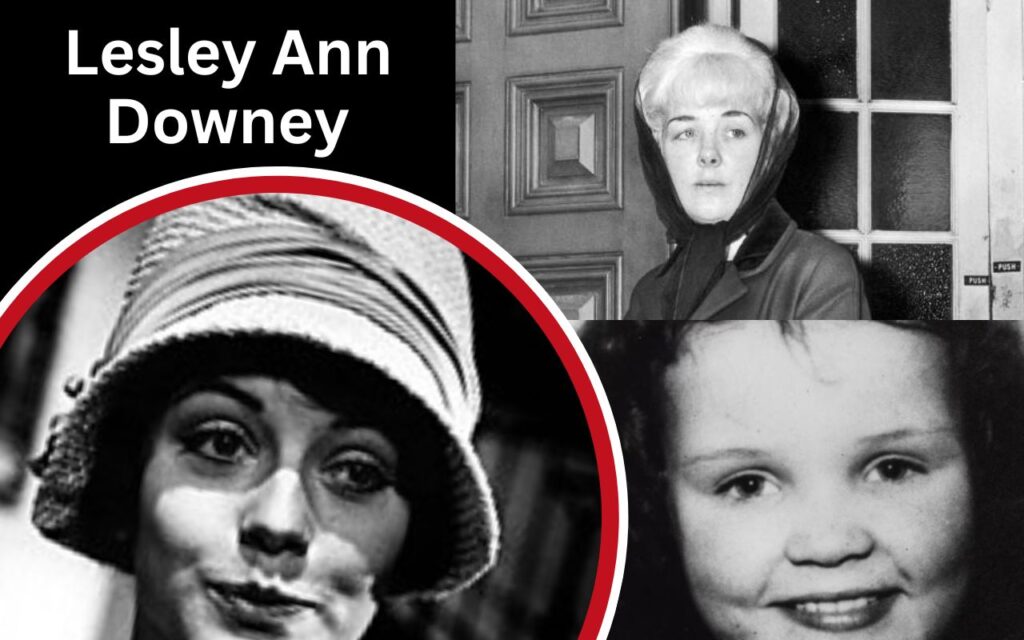

The story of Lesley Ann Downey is a haunting chapter in British criminal history, remembered for both its innocence and its unimaginable cruelty. Born on August 21, 1954, Lesley was a lively, bright, and affectionate 10-year-old girl living in Ancoats, Manchester, a working-class district of Northern England. She was the cherished daughter of Ann West and part of a family that, though not wealthy, shared love and warmth. Lesley had three brothers and enjoyed attending school, participating in local church groups, and spending time with friends. She was described by her family as a polite, cheerful, and obedient child who loved to be helpful and kind to others. Her life, full of promise, was tragically cut short on December 26, 1964, when she became one of the victims of the infamous Moors Murders, a series of murders that would shock Britain and the world.
Lesley Ann Downey’s Childhood and Family Life
Lesley grew up in a close-knit family environment. Her mother, Ann West, later known as Ann Downey, was dedicated to raising her children with love and care. Despite financial struggles common in post-war Manchester, the family ensured that Lesley had a happy and structured childhood. She enjoyed playing with her siblings, attending school, and participating in community activities. Lesley was particularly active in the Girls’ Guildry at Trinity Methodist Church, a group that encouraged young girls to engage in local social activities, charitable work, and skill-building events. Friends remembered her as intelligent, joyful, and mature beyond her years. Her bright personality and gentle demeanor made her well-loved in her neighborhood. Her family saw her as the embodiment of innocence and hope, a child whose potential seemed limitless before the tragedy struck.
The Day of Her Disappearance: Boxing Day 1964
The day of Lesley’s disappearance began like any other Christmas holiday. Boxing Day, celebrated on December 26, 1964, was a day of family gatherings and festive outings. After Christmas lunch with her family, Lesley asked her mother for permission to attend a local fair in Ancoats, a common event for children during the holidays. Her mother allowed it, trusting that Lesley would remain safe in the company of friends and neighbors. At the fair, Lesley was last seen around 5:35 PM near the bumper cars, alone and unaware of the danger that awaited her. When she failed to return home, her family launched an immediate search, alerting neighbors and contacting the police. The initial investigation treated the case as a missing child scenario, but unknown to the authorities and public, her abduction was linked to a much darker criminal operation that would later be revealed.
The Moors Murders: Ian Brady and Myra Hindley
The abduction and murder of Lesley Ann Downey were carried out by Ian Brady and Myra Hindley, a couple whose crimes became known as the Moors Murders. Between 1963 and 1965, Brady and Hindley abducted, sexually assaulted, and murdered a series of young victims, burying many of them on the remote Saddleworth Moor near Manchester. The couple’s known victims included Pauline Reade, John Kilbride, Edward Evans, Keith Bennett, and Lesley herself. The murders were characterized by a chilling level of premeditation and sadism, and they became a symbol of the darkest human impulses and the vulnerability of children. Lesley’s murder stood out in particular for the horrifying circumstances, which included both sexual assault and psychological torment captured in photographs and audio recordings.
The Horrific Circumstances of Lesley’s Murder
Lesley’s encounter with Brady and Hindley began at the fairground, where the couple lured her with a pretext, reportedly asking for help carrying groceries. She was taken to Hindley’s home on Wardle Brook Avenue, where she was held captive, forcibly undressed, and photographed in distressing poses. Audio recordings captured Lesley’s terrified screams and pleas, evidence of the brutality inflicted by Brady and Hindley. These materials, discovered later by investigators, were crucial in piecing together the details of her final moments. The crime’s calculated nature demonstrated a level of cruelty that stunned both the authorities and the public. Lesley’s tragic death was not only a personal loss for her family but also a horrifying public example of the predatory danger posed by Brady and Hindley.
Investigation and Discovery of Evidence
The investigation into Lesley’s disappearance remained inconclusive until the murder of Edward Evans in October 1965. A crucial witness, David Smith, Hindley’s brother-in-law, provided information about Evans’ death, prompting police to search Brady and Hindley’s residence. There, investigators discovered evidence linking the couple to multiple murders. Among the findings were photographs of Lesley, a reel-to-reel tape containing her screams, and other incriminating materials pointing to their systematic abuse of children. These discoveries provided irrefutable evidence of the crimes and allowed investigators to connect the disappearance of Lesley to the broader series of Moors Murders.
The Trial and Convictions
The trial of Brady and Hindley began in April 1966 and captured national attention. The court proceedings exposed the harrowing details of the murders, including the abuse and death of Lesley Ann Downey. Brady was convicted of three murders, including Lesley’s, while Hindley was convicted of murder and accessory charges. Both received life sentences, reflecting the severity of their crimes. The evidence presented, especially the photographs and audio recordings of Lesley, played a pivotal role in securing their convictions. The trial highlighted not only the personal tragedy of the victims’ families but also the societal horror and outrage over the premeditated nature of the crimes.
Impact on the Downey Family
The murder of Lesley Ann Downey had a profound and enduring impact on her family. Her mother, Ann West, became a prominent advocate for justice, campaigning to ensure that Hindley remained incarcerated and preventing any possibility of early release. Ann’s advocacy reflected the enduring pain and trauma inflicted by the murder, as well as her determination to honor her daughter’s memory. The emotional toll on the family was immense, with Ann never fully recovering from the loss of her child. The Downey family’s experience became emblematic of the suffering endured by families of violent crime victims and highlighted the need for comprehensive support systems for survivors.
Legacy and Lessons from the Moors Murders
The Moors Murders, and specifically the murder of Lesley Ann Downey, left a lasting imprint on British society. The case led to changes in police investigation procedures, media coverage of child murders, and public awareness of child safety. Lesley’s story continues to be studied in discussions of serial killer behavior, child safety, psychological profiling, and victim advocacy. Memorials and public remembrances ensure that her life is honored and that the lessons of her tragic death are not forgotten. The case remains a benchmark for understanding criminal psychology and the long-term impact of violent crime on families and communities.
Read More: Sam Thompson Girlfriend: Inside His Love Life, Past Relationships, and New Romance
Conclusion: Remembering Lesley Ann Downey
Lesley Ann Downey’s life, though tragically brief, serves as a powerful reminder of innocence lost and the need for justice. Her story is not merely a statistic but a human life extinguished too soon, whose impact reverberated through her family, the legal system, and the collective memory of Britain. The enduring legacy of her case emphasizes the importance of vigilance, compassion, and advocacy for vulnerable individuals. In remembering Lesley, society also remembers the broader lessons about the consequences of unchecked evil, the value of protective institutions, and the resilience of grieving families.
Lesley’s name is forever linked to the fight for justice and child protection. Her story continues to inspire awareness, reforms, and the unwavering commitment of families and communities to prevent similar tragedies. Though she is gone, Lesley Ann Downey remains a symbol of innocence, resilience, and the enduring need to confront and understand the darkest aspects of human behavior.