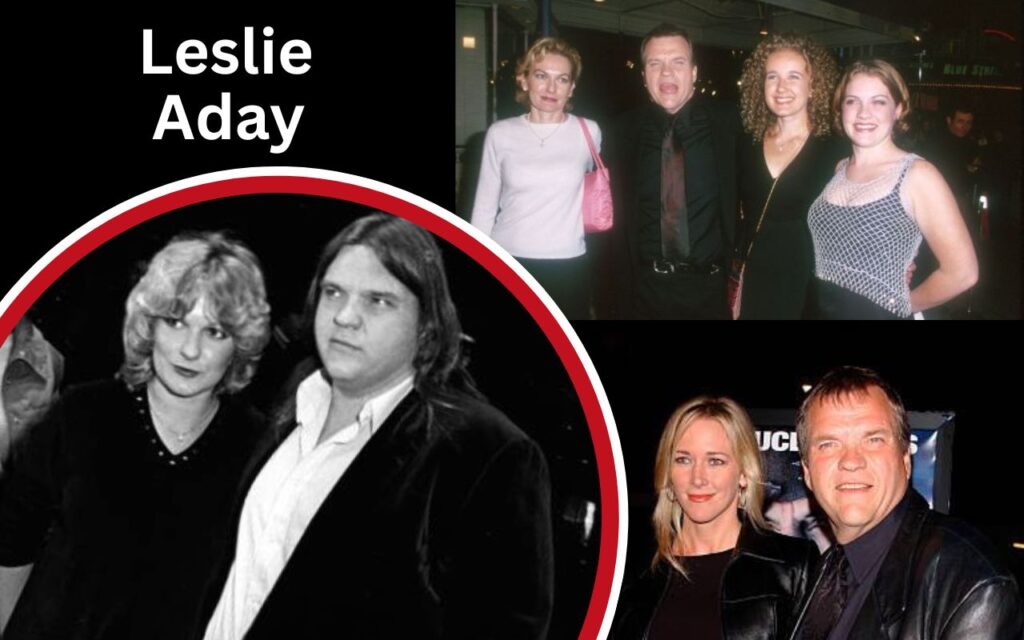

Leslie Aday is a name that may not immediately resonate like other celebrity figures, yet her life story is deeply interwoven with American entertainment history, rock culture, and the untold personal narratives behind some of the biggest music legends of the late 20th century. She is most widely known for her long marriage to the legendary rock singer Meat Loaf, born Marvin Lee Aday, whose Bat Out of Hell albums became an enduring part of global popular culture. To understand the life of Leslie Aday is to look beyond the marquee names, beyond the screaming fans and sold‑out tours, and into the behind‑the‑scenes world of a woman who lived much of her life outside the spotlight — yet played an integral role in the family and personal foundation of a rock icon.
Leslie Aday’s story represents the experiences of countless spouses of high‑profile artists: providing stability, love, and family life while navigating the extraordinary complexities of fame by association. This detailed biography explores her life from her early years as Leslie Gay Edmonds to her marriage and family, and finally to her own quiet legacy as a mother, partner, and enduring presence in the lives of those closest to her.
Early Life of Leslie Gay Edmonds
Born as Leslie Gay Edmonds on May 21, 1951 in Norfolk, Virginia, Leslie’s early life unfolded far from the glare of celebrity culture. Growing up in a mid‑20th century American environment, she was part of a generation shaped by changing cultural values, the rise of rock ’n’ roll, and the social transformations of the 1960s and 1970s. Although specific details of her childhood, education, and formative years are not widely available in the public domain, what remains clear is that she lived a relatively private life before crossing paths with Marvin Lee Aday — the man who would become one of the most internationally recognized voices in rock music.
Even before she entered the public consciousness as Leslie Aday, her roots in a modest American upbringing shaped her identity. She was not a performer or entertainer by profession, and her early adulthood remains largely undocumented in interviews or profile pieces. It was not until her personal life intersected with that of Meat Loaf that biographical interest in Leslie began to emerge, and even then, she resisted the urge to become a media personality in her own right.
Meeting Meat Loaf: A Turning Point
Leslie’s life took a dramatic turn when she met Marvin Lee Aday — known professionally as Meat Loaf — at a formative moment in his musical journey. The late 1970s were pivotal years for Meat Loaf, who was recording and performing the groundbreaking rock album Bat Out of Hell. Working in environments such as Bearsville Studios in Woodstock, New York, where some of the era’s most influential musicians created their art, Leslie found herself drawn into a world very different from her own quiet beginnings.
Their connection, rooted in personal chemistry and shared moments away from public scrutiny, led to a deep romantic relationship. Leslie and Meat Loaf married on February 23, 1979, at the home of famed musician and producer Todd Rundgren — a figure closely associated with Meat Loaf’s seminal albums. This union marked the beginning of what would become a long‑standing partnership that endured more than two decades.
While much of the celebrity press focused on Meat Loaf’s theatrical performances and chart‑topping success, Leslie stood by his side through the demanding lifestyles of recording sessions, concert tours, and the celebrity circuits of the 1970s and 1980s. Her ability to maintain a grounded personal life amidst the chaos of fame was one of her defining qualities.
Life in the Spotlight by Association
Although Leslie Aday did not seek public attention, her role as the spouse of a global rock star placed her in situations where she became a recognizable figure at events, premieres, and music industry gatherings. Her understated presence contrasted with the flamboyant persona of Meat Loaf, who was known for his powerful vocal performances and dramatic stage theatrics. Where he embodied the brash energy of rock ’n’ roll, she provided a quieter counterbalance — a partner who prioritized family, home life, and personal connections over tabloid headlines.
Their shared life reflects a broader narrative often overlooked in celebrity culture: the role of the partner who supports, stabilizes, and nurtures without seeking fame. Leslie’s life was marked more by personal devotion than by pursuit of public acclaim. Her contributions to her family and her support for her husband’s career speak to different forms of achievement that are rarely tracked by charts or award ceremonies but carry deep significance in the individuals she influenced.
Motherhood and Family Life
One of the most important aspects of Leslie Aday’s life was her role as a mother. She raised two daughters, each of whom followed her own path in the creative world. The couple welcomed their daughter Amanda Aday in 1981. Amanda would go on to build a successful acting career with roles in television series such as Carnivàle, Boston Public, ER, and Private Practice, bringing her own artistic talents into the spotlight while drawing from the rich creative environment of her upbringing.
In addition to Amanda, Leslie was also the mother of Pearl Aday — a singer and performer who joined her stepfather’s band, The Neverland Express, as a vocalist. Pearl was adopted by Meat Loaf after he married Leslie, and she embraced her artistic identity early on, performing on tours and continuing to cultivate her own music career independent of her father’s reputation.
Motherhood for Leslie was more than a title — it defined a significant part of her identity. She balanced her daughters’ artistic ambitions with responsible parenting, fostering environments where creativity and professionalism could flourish. Her daughters’ subsequent achievements reflect not only their innate talents but also the foundational support and stability they received at home.
Marriage, Challenges, and Divorce
Despite their many years together, Leslie and Meat Loaf’s marriage was not without its challenges — a reality that often accompanies long relationships, particularly within the pressures of fame and public visibility. After more than 20 years of marriage, Leslie and Meat Loaf divorced in 2001. The details of their separation were kept largely private, consistent with Leslie’s lifelong preference for personal dignity over sensational headlines.
The decision to divorce a long‑term partner — especially one whose career is defined by emotional expression and public persona — speaks to the complex nature of intimate relationships under the constant glare of public observation. Although their marriage ended, the mutual respect for family and their daughters remained a central part of their post‑divorce relationship.
Legacy and Later Years
After the end of her marriage to Meat Loaf, Leslie continued to live a private life. She did not pursue public ventures or media opportunities. Instead, she focused on family, personal relationships, and the quieter rhythms of her own path. Her daughters’ careers flourished independently, yet Leslie’s influence as a mother was a foundational force in their development.
The death of Meat Loaf in January 2022 brought renewed public interest in the people who shaped his personal life, including Leslie. Tributes to Meat Loaf often referenced his early years with Leslie, acknowledging her role as his partner during some of the most creative and intense periods of his career. These reflections reaffirmed her place in the broader narrative of rock history — not as a performer, but as someone whose personal presence supported a global icon.
Sadly, Leslie Aday passed away on June 2, 2024, at the age of 73 in Nashville, Tennessee. Her death marked the conclusion of a life lived chiefly away from the spotlight, yet one intimately connected to enduring cultural legacies.
Understanding Her Impact
Although Leslie Aday did not seek fame, the resonance of her life can be observed through several dimensions of influence. She shaped the personal world of one of rock’s most iconic voices, nurtured her daughters’ creative pursuits, and remained a quietly stable presence amidst the tumultuous world of entertainment. Her story illustrates that not all meaningful legacies are measured by awards or album sales — many are measured by their effects on the people and relationships closest to them.
Her experience also embodies the experiences of many partners of high‑profile figures: the emotional labor, the behind‑the‑scenes care, and the quiet resilience that fosters family and personal wellbeing. In that sense, Leslie’s legacy is less about public recognition and more about lived influence — the kind that shapes lives in ways deeply personal and indelible.
Read More: Maureen Pegg: The Life, Career, and Family of Simon Pegg’s Wife
Conclusion
Leslie Aday’s life is a story of quiet resilience, profound personal influence, and enduring relevance. Although her name may not headline history books in the same way as her husband’s stage persona, her contributions to family life, her daughters’ creative paths, and her lifelong commitment to love and personal integrity make her a figure worth remembering. In an age of celebrity fixation, her story offers perspective: that meaningful lives are often lived in the spaces between the headlines — in homes, in family ties, and in the hearts of those who carry forward one’s legacy.