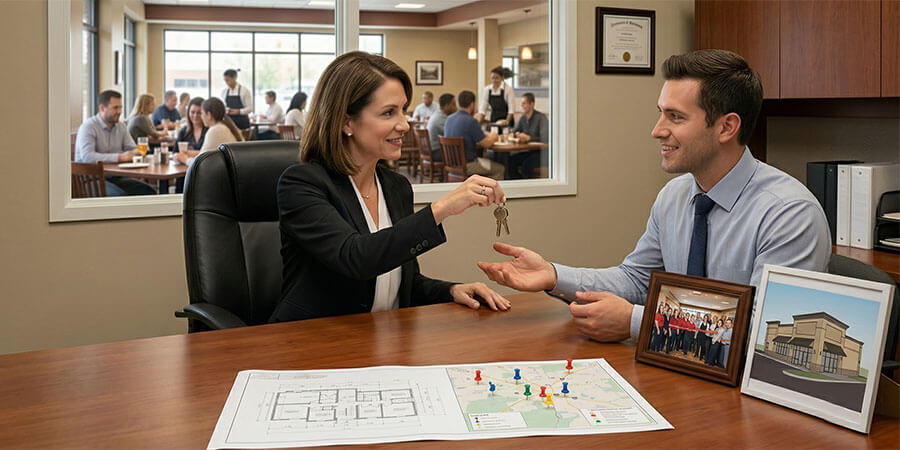

Marisol and her father run one restaurant off Orchard Lake Road, and last spring they came within a week of signing the lease on a second. Twelve years in, roughly $1.2 million a year, a summer patio that carries the calendar. The landlord wanted an answer by Friday. They had a strong year and a folder of bank statements, which felt like plenty. It was not, and the person who said so was one of the business accountants west bloomfield mi owners tend to call only in April. A second location is either affordable or it is not, and only a cash flow forecast settles that before anybody signs.
One Location Was Working and That Was the Trap
The restaurant was profitable, which is what makes this decision easy to get wrong, because profit measured over twelve months and cash sitting in the account in February are nothing like the same thing. August ran about $138,000 in sales. February barely cleared $71,000, and payroll did not shrink to match. Averaged out it looks roomy. Lived month by month, August was carrying February on its back.
One good summer is not a trend. It is a season.
Growth Without a Forecast Is a Guess
Owners rarely expand because the numbers told them to. A storefront opens up. A landlord calls in January with terms that expire Friday. The Federal Reserve Banks’ Small Business Credit Survey found that 56% of employer firms seeking financing did it to cover operating expenses, against 46% pursuing expansion or a new opportunity. Survival money outranks growth money at the lender’s window, and plenty borrowed for a second store quietly props up the first.
The case we see most often is an owner who can recite last year’s revenue to the dollar and cannot say what the bank balance looks like next March. That is not carelessness. Nobody hands you a forecast with the liquor license. How many second locations open on nothing but a good feeling? I cannot tell you, and I have looked; the failure numbers get quoted everywhere and none separate the forecasters from everyone else.
Building the Numbers Before the Lease
A forecast is not a spreadsheet of hopes. Thirteen weeks of cash, then twelve months of it. Take the seasonal curve of location one, discount the new store against it, then load in every fixed cost down to the manager you hire before opening. SCORE publishes a free twelve month cash flow template that is fine for a first pass. A forecast is a stress test of your worst month, not a prediction of your best one.
Small costs move too, and they move midyear. The IRS raised the standard business mileage rate to 76 cents effective July 2026, up from 72.5 cents, which Journal of Accountancy reported when the notice landed. For two stores running catering trips between kitchens that is a line nobody budgeted in January, which is the whole argument for revisiting a spring forecast each quarter instead of framing it.
Questions Owners Ask Before Expanding
Three questions come up in almost every one of these conversations. First, some housekeeping. The IRS is moving to waive penalties automatically for first time late filers, late payers and late depositors with a clean compliance history, and the Taxpayer Advocate Service estimated that more than 1.5 million taxpayers would have received that relief. Eligibility is narrower than the headline sounds, so ask whether your own filing history qualifies. It is a cushion, not permission to file late.
How Much Cash Should I Have Before I Sign a Second Lease?
Enough to carry the new store’s fixed costs through its slowest stretch without touching the first store’s cash, which for a seasonal restaurant means budgeting against deep winter rather than the average month. Winter is what decides it. A real figure only exists once the forecast does.
Can I Just Plan From Last Year’s Numbers?
Start there. Last year is history rather than a plan, and a forecast is what runs that history forward against the costs you already know are shifting, from wages to your insurance renewal. The version worth having gets updated quarterly instead of filed away.
Do I Need a Forecast if the Bank Is Not Asking?
The bank is not the audience. You are, because you are signing a five year lease on a personal guarantee. A lender’s checklist is the floor, and the model that protects an owner runs deeper.
A Second Location Should Follow the Plan
Marisol’s family did not sign that lease. The forecast showed the second store running about $9,000 a month short through its first two winters, more than the original could absorb. They are opening next spring instead, with a deeper reserve and better terms. That is the quiet value of the business accountants West Bloomfield MI owners keep on retainer. It is not the tax return. It is the model that tells you which year to move. Expansion takes nerve, but it should never take a coin flip.