
Electric vehicles are changing the global automotive industry. As more car brands, battery companies, and mobility startups invest in electric powertrains, motor performance has become one of the most important factors in vehicle efficiency, driving range, acceleration, noise control, and long-term reliability. Inside every EV motor, the stator core and rotor core play a critical role. Although these components may look simple, their material quality, dimensional accuracy, lamination process, and assembly stability directly affect the final motor performance.
For EV motor manufacturers, using high-quality stator and rotor cores is not only a technical choice but also a business decision. Better cores can improve product quality, reduce production risks, support higher efficiency, and help manufacturers build stronger competitiveness in the fast-growing electric vehicle market.
The Role of Stator and Rotor Cores in EV Motors
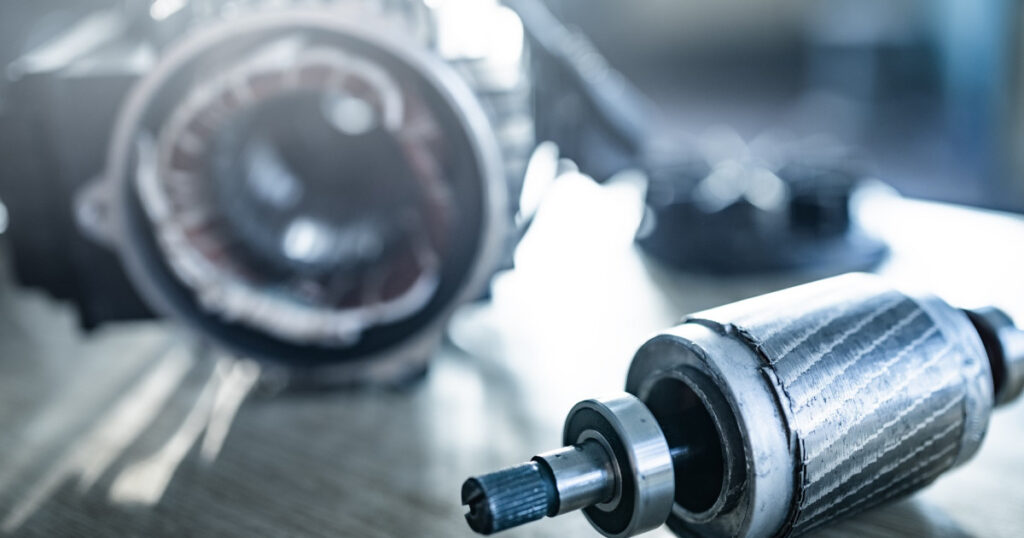
The stator core is the stationary part of the motor, while the rotor core is the rotating part. Together, they create and guide the magnetic field that converts electrical energy into mechanical power. In an EV motor, this process must happen efficiently, smoothly, and reliably under different driving conditions.
Unlike traditional industrial motors, EV motors often need to operate at high speed, high torque, and high efficiency. They must also handle frequent acceleration, braking, temperature changes, and vibration. Because of this, the quality of the stator and rotor cores becomes especially important.
If the core material is poor, the lamination thickness is inconsistent, or the stacking accuracy is low, the motor may suffer from higher energy loss, more heat, stronger vibration, lower efficiency, and shorter service life.
Higher Efficiency and Better Driving Range
One of the biggest goals in EV motor design is improving efficiency. Higher motor efficiency means more electrical energy can be converted into useful driving power. This helps increase vehicle range, reduce battery consumption, and improve the overall user experience.
High-quality stator and rotor cores are usually made from precision electrical steel laminations. These thin laminations help reduce eddy current loss, which is one of the main causes of energy waste inside the motor. When the laminations are properly stamped, insulated, stacked, and fixed, the magnetic path becomes more stable and efficient.
For EV manufacturers, even a small improvement in motor efficiency can make a meaningful difference. Better efficiency can support longer driving range, smaller battery requirements, lower operating temperature, and improved energy performance.
Lower Heat Generation
Heat is a major challenge in EV motors. When a motor operates at high speed or high load, excessive heat can reduce performance and damage key components. Poor-quality stator and rotor cores may increase iron loss, friction-related problems, and magnetic instability, all of which can lead to higher temperature.
High-quality cores help reduce unnecessary energy loss and support better thermal performance. A stable lamination structure, clean punching edges, proper insulation coating, and accurate stacking process all help minimize heat generation.
Lower heat is important because it protects winding insulation, magnets, bearings, and other motor components. It also reduces the burden on the cooling system. For EV motor manufacturers, better thermal control can improve product reliability and reduce warranty risks.
Improved Torque Stability and Motor Performance
EV drivers expect smooth acceleration, quiet operation, and responsive power delivery. These performance factors depend heavily on the quality of the motor core. If the stator or rotor core has defects such as burrs, misalignment, uneven stacking, or deformation, the magnetic field may become unstable.
This can cause torque ripple, vibration, noise, and reduced motor smoothness. In high-performance EVs, even small defects may affect driving comfort and control accuracy.
High-quality stator and rotor cores help maintain a uniform magnetic field and stable mechanical structure. This improves torque output, reduces vibration, and supports smoother motor operation. For manufacturers producing motors for passenger cars, electric motorcycles, commercial vehicles, robots, or electric drive systems, consistent motor performance is a key selling point.
Better Dimensional Accuracy for Assembly
EV motor production requires precise assembly. The stator core, rotor core, shaft, magnets, windings, housing, and bearings must fit together accurately. If the stator or rotor core dimensions are not stable, assembly problems can occur.
Common issues include incorrect inner or outer diameter, uneven stack height, poor concentricity, loose laminations, and misaligned slots. These problems can affect winding insertion, magnet installation, air gap control, and rotor balance.
A high-quality stator and rotor core supplier such as Gator Lamination can help EV motor manufacturers improve lamination accuracy, stacking consistency, and production stability.
Precise core dimensions help reduce rework, improve assembly efficiency, and support automated production. This is especially important for EV motor manufacturers that need to scale from pilot production to mass production.
Reduced Noise and Vibration
Noise, vibration, and harshness are important quality indicators in electric vehicles. Because EVs do not have traditional engine noise, motor noise becomes more noticeable to drivers and passengers. Poor-quality stator and rotor cores can cause magnetic noise, mechanical vibration, and imbalance.
Burrs, uneven lamination surfaces, loose stacking, and poor rotor balance can all contribute to noise and vibration. High-quality cores help reduce these risks through better material selection, precision stamping, controlled stacking pressure, and strict inspection.
For EV brands, a quieter motor improves the driving experience and supports a more premium product image.
Longer Motor Service Life
EV motors are expected to operate reliably for many years. High-quality stator and rotor cores help improve long-term durability by reducing heat, vibration, mechanical stress, and magnetic loss.
Good insulation between laminations helps prevent excessive eddy currents. Accurate stacking and strong fixing methods help prevent loosening during operation. Clean edges and stable geometry reduce the risk of winding damage or rotor imbalance.
For motor manufacturers, long service life means fewer failures, lower after-sales costs, and better customer trust.
Support for Mass Production Quality
EV motor manufacturers must not only develop high-performance motors but also produce them consistently at scale. A prototype motor may perform well, but mass production requires repeatable quality.
High-quality stator and rotor core manufacturing includes material inspection, mold precision control, stamping quality checks, burr control, lamination alignment, stack height inspection, and final dimensional testing. These steps help ensure that every core meets the required specifications.
Consistent core quality allows manufacturers to maintain stable motor performance across large production batches. This is essential for automotive supply chains, where quality requirements are strict and failure risks are costly.
Conclusion
High-quality stator and rotor cores are essential for EV motor manufacturers because they directly affect efficiency, heat control, torque stability, noise reduction, assembly accuracy, and service life. As the electric vehicle market becomes more competitive, motor manufacturers need components that support both high performance and stable mass production.
By choosing reliable stator and rotor cores, EV motor manufacturers can build motors with better efficiency, smoother operation, longer durability, and stronger market value. In the EV industry, core quality is not just a small detail. It is one of the foundations of motor performance and product success.
READ ALSO: Telecoms Sector Challenges Facing Commercial Property Owners