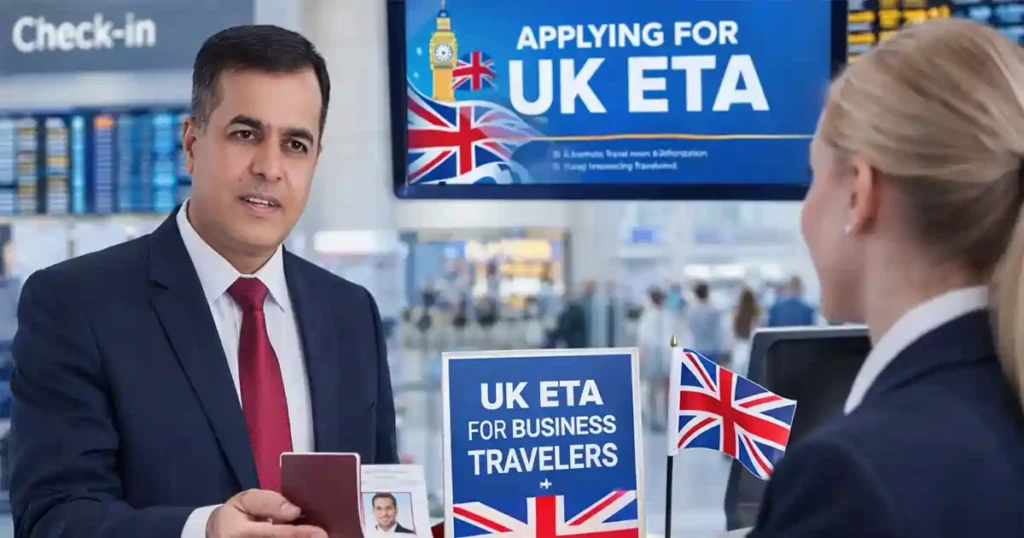

For anyone who travels to the United Kingdom for work, the entry rules have changed. Since early 2026, most visa-exempt business visitors must hold an Electronic Travel Authorisation before they fly. Here is a complete guide to how it affects meetings, conferences and the frequent flyers who keep deals moving.
Meetings and conferences are permitted on a UK ETA.
A new requirement on the corporate checklist
Business travel to Britain used to be refreshingly simple for visitors from many countries: book the flight, turn up with a passport, attend the meeting. In 2026 there is an extra step. Most travellers who do not need a full visa must now hold an Electronic Travel Authorisation, tied digitally to their passport, before they board a flight, train or cruise. It is not a visa, but airlines check for it at the gate, and without one a traveller is simply not allowed to fly.
For companies that send staff to the UK regularly, this is a small administrative change with real consequences if ignored. A missed authorisation can derail a client meeting, a site visit or a conference appearance, so it belongs on the standard pre-trip checklist alongside flights, accommodation and expenses.
Apply before you fly: airlines check at the gate.
What you can do on an ETA
The authorisation permits short stays of up to six months and explicitly covers a range of legitimate business activities. Attending meetings, conferences and trade fairs, negotiating contracts, conducting site visits and meeting clients all fall comfortably within the permitted scope. Once granted, it typically remains valid for around two years or until the passport expires, and it allows multiple entries throughout that period, which suits executives who shuttle in and out several times a year.
Where the line is drawn
There is, however, a firm limit. An Electronic Travel Authorisation does not grant the right to take up employment, fill a role in the UK labour market, or be paid by a UK employer. The distinction between permitted business activity and actual work matters, and getting it wrong can mean refusal at the border. Anyone whose trip edges towards genuine employment should check carefully whether they can work on a UK ETA before they travel, and consider whether a work visa is in fact required.
London remains a magnet for international business travel.
Apply early, and let one approval cover the year
The golden rule is to apply in good time. Many decisions land within hours, but some take longer where additional checks are needed, and a delayed authorisation colliding with a fixed meeting date is exactly the scenario to avoid. The application is short and online: a valid passport, a digital photo, an email address and a payment card, plus a few suitability questions. Because the approval covers multiple entries, a single application can comfortably span a year of regular trips.
Don’t forget the wider team
There is no exemption for colleagues travelling together. Every member of a delegation needs their own authorisation, and so does any family member joining the trip. Dual nationals should apply with the passport they intend to travel on. For larger teams heading to a conference or roadshow, it pays to coordinate everyone’s applications well ahead of time rather than discovering a gap at the airport on the morning of departure.
Know where business activity ends and work begins.
Building it into company travel policy
Forward-thinking travel managers are now writing the authorisation into their booking workflows, much as they handle passports and visas for other destinations. Keeping a simple record of who holds a valid authorisation, which passport it is tied to and when it expires avoids last-minute scrambles, especially for staff who travel at short notice. A shared checklist and a reminder before passports are renewed will spare the team most of the common pitfalls.
At the border
Arrivals are increasingly automated, with many travellers using ePassport gates that match the passport against the authorisation electronically. Officers may still ask about the purpose and duration of the visit, so a clear sense of your itinerary and some evidence of return travel help things run smoothly. Keep the approval confirmation accessible, and make sure it is linked to the passport actually being carried, as a renewed passport means reapplying.
Plan it once, travel all year
The new system adds a step, but for organised business travellers it is a minor one. Sort the authorisation early, make sure it is the right permission for the nature of the trip, and ensure everyone travelling is covered. Independent advisory services such as VisaETA.uk can help first-time applicants navigate the entry requirements, leaving teams free to focus on the business that brought them to Britain in the first place.
Frequently asked questions
Can I attend meetings and conferences on a UK ETA?
Yes. Meetings, conferences, trade fairs, negotiations and site visits are all permitted business activities on a short visit, provided you are not taking up employment in the UK.
Can I work or be employed on an ETA?
No. The authorisation does not allow you to take a job in the UK labour market or be paid by a UK employer. That requires an appropriate work visa.
How long is the authorisation valid for business travellers?
Typically around two years, or until your passport expires, with multiple entries allowed, which is ideal for executives who travel to the UK several times a year.
Do all colleagues on a trip need their own?
Yes. There is no group or delegation exemption; each traveller needs their own authorisation linked to their own passport.
How far ahead should staff apply?
As early as possible. Many approvals arrive within hours, but allow a few days in case extra checks are needed, particularly for last-minute travellers.
What happens if a passport is renewed mid-validity?
A new application is required, because the authorisation is tied to a specific passport. Build a reminder into your travel policy to catch this before trips.
READ ALSO: Esim for UK travelers to Europe: a hassle-free guide post-Brexit