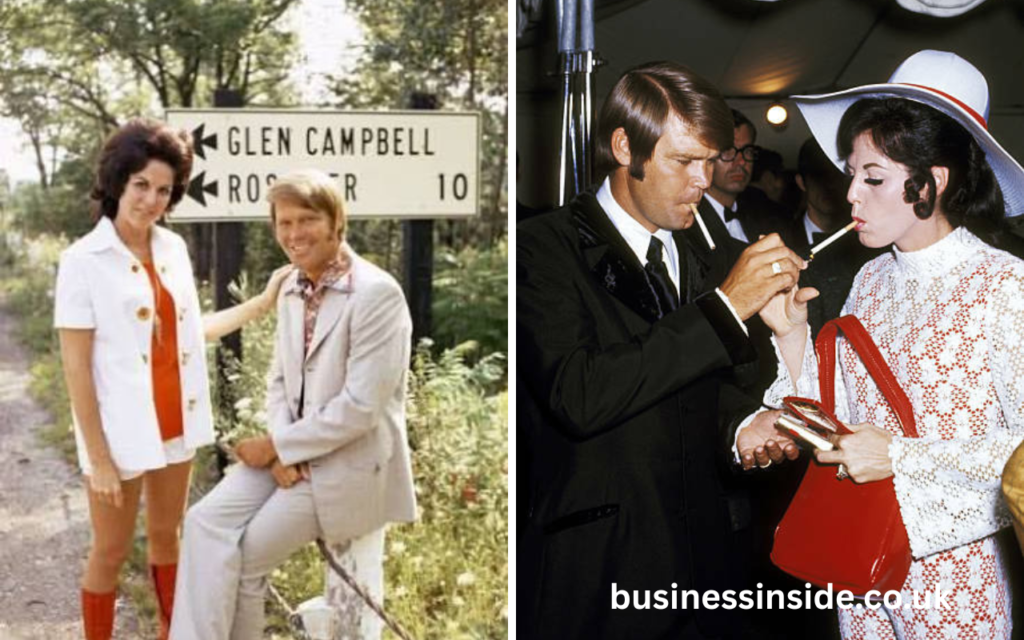

Billie Jean Nunley is a name that continues to appear in searches connected to country music history, primarily due to her marriage to legendary singer-songwriter Glen Campbell. Although she lived a private life away from fame, her story is closely tied to one of the most influential figures in American music during the 1960s and 1970s.
Billie Jean Nunley’s life reflects a quieter side of celebrity history—one shaped by early marriage, family responsibilities, and the emotional realities of being connected to a rapidly rising star. While Glen Campbell’s career unfolded on stage and television, Billie Jean Nunley’s life unfolded largely behind the scenes, centered on home, children, and personal endurance during a time of major cultural change in America.
This article explores her background, relationship, marriage, family life, divorce, later years, and legacy in a detailed narrative form.
Early Life and Background in Carlsbad, New Mexico
Billie Jean Nunley was born on August 1, 1939, in Carlsbad, New Mexico, a small but historically significant town in the southwestern United States. Growing up in this environment meant experiencing a modest, community-driven lifestyle where family values, practicality, and hard work were central to daily life.
Her early years unfolded during a transformative period in American history. The late 1930s and 1940s were shaped by the aftermath of the Great Depression and the global impact of World War II. Like many children of her generation, Billie Jean Nunley grew up in a household environment where stability and resilience were important qualities. Although detailed public records about her parents and siblings remain limited, she is consistently described in biographical accounts as someone raised in a grounded, working-class environment.
During her teenage years, she attended Carlsbad High School, where she completed her formal education in 1958. Her upbringing in a small town likely influenced her preference for privacy and her later decision to live away from public attention. Unlike many individuals later associated with celebrity culture, she did not pursue fame or entertainment ambitions during her youth.
After graduating, she trained as a beautician, a profession that offered independence and practical employment opportunities for women at the time. Working in beauty services placed her within a social and community-oriented environment, allowing her to interact with people regularly while maintaining a stable livelihood.
Meeting Glen Campbell and the Beginning of a Life-Changing Relationship
The turning point in Billie Jean Nunley’s life came when she met Glen Campbell, who at that time was a young and ambitious musician working his way into the American music industry. Before achieving worldwide fame, Campbell was part of a generation of artists who moved through small performances, studio sessions, and regional music circuits.
Their meeting occurred during a period when Campbell’s career was still developing. He had not yet become the internationally recognized star known for hits like “Rhinestone Cowboy” or “Wichita Lineman.” Instead, he was a talented guitarist and singer building connections in the music world.
The relationship between Billie Jean Nunley and Campbell developed relatively quickly. Their connection was rooted in the social circles of the time, where young adults often met through community events, shared acquaintances, and local gatherings. Their bond reflected the cultural norms of the late 1950s, when early marriage was common and long-term relationships often began at a young age.
Their relationship soon transitioned into marriage, marking the beginning of a long chapter that would intertwine her life with one of country music’s most recognizable names.
Marriage to Glen Campbell and Early Married Life
Billie Jean Nunley married Glen Campbell in 1959, at a time when both were entering adulthood and beginning to define their future paths. The early years of their marriage were shaped by modest living conditions and the uncertainties of Campbell’s developing music career.
During this period, Campbell was not yet a household name. He worked extensively as a session musician and performer, often traveling for work and spending time away from home. This lifestyle, while promising for his career growth, created a dynamic where Billie Jean Nunley took on much of the responsibility of maintaining stability within the household.
Her role during these years reflected the experience of many spouses of aspiring entertainers in mid-20th century America. While the public sees the success of a performer, the private reality often includes long absences, financial unpredictability, and emotional adjustment within the family unit. Billie Jean Nunley’s life during this period was deeply connected to supporting a growing family while adapting to the demands of her husband’s evolving career.
As Campbell’s opportunities expanded, particularly in the 1960s, his absence from home became more frequent due to touring, recording sessions, and industry commitments. This created a situation where Billie Jean Nunley became the central figure in the home environment, managing daily life and raising their children.
Family Life and Motherhood
One of the most defining aspects of Billie Jean Nunley’s life was her role as a mother. She and Glen Campbell had three children together: Kelli Campbell, Travis Campbell, and Kane Campbell. Raising children in a household connected to a rising music star came with unique challenges, especially as Campbell’s fame began to grow.
Motherhood during this period required balancing emotional stability, household management, and the pressures of public attention. Although Glen Campbell was not constantly in the public eye at the start of their marriage, his increasing popularity meant that family life gradually became more complex.
Billie Jean Nunley’s approach to parenting is often described through the lens of stability and consistency. While Campbell’s career demanded travel and long working hours, she remained the steady presence in the children’s daily lives. This kind of family structure, where one parent is frequently absent due to professional obligations, was common among entertainers of that era, but it still placed emotional and practical demands on the parent at home.
Her role as a mother extended beyond basic caregiving. She was responsible for maintaining continuity in the children’s upbringing, managing education, emotional development, and household routines. This aspect of her life remains one of the most important parts of her legacy, even though it was largely private and undocumented in public media.
Life During Glen Campbell’s Rise to Fame
As Glen Campbell’s career expanded through the 1960s and early 1970s, his life transformed dramatically. He became one of the leading voices in country-pop music, known for blending traditional country sounds with mainstream appeal. Hits such as “By the Time I Get to Phoenix” and “Wichita Lineman” elevated him into national and international recognition.
This rise to fame had a direct impact on Billie Jean Nunley’s life. The increasing demands of Campbell’s career meant that he spent long periods away from home, and the couple’s lifestyle became more divided between public success and private responsibility.
For Billie Jean Nunley, this period likely involved navigating the complexities of being married to a public figure. Fame often brings both financial stability and emotional strain, particularly when family life is affected by constant travel and media attention.
While Glen Campbell was experiencing professional success, Billie Jean Nunley maintained her private role, largely staying out of public interviews and media coverage. Her decision to remain private contributed to the limited public knowledge about her personal experiences during this period.
Challenges in the Marriage and Emotional Strain
Over time, the marriage between Billie Jean Nunley and Glen Campbell faced increasing challenges. As Campbell’s fame grew, so did the pressures associated with his career and personal life. Like many relationships connected to the entertainment industry, balancing fame, travel, and family responsibilities became increasingly difficult.
Various accounts suggest that emotional distance developed over the years. The demands of Campbell’s professional life, combined with personal struggles that would later become publicly known, contributed to strain within the marriage.
Despite these difficulties, their relationship lasted for more than a decade and a half, which reflects both commitment and complexity. The duration of their marriage suggests that, despite challenges, they maintained a long period of shared family life before ultimately separating.
Divorce and Separation in 1976
In 1976, Billie Jean Nunley and Glen Campbell officially divorced, bringing their marriage of approximately 16 to 17 years to an end. The separation marked a significant transition in both of their lives.
The reasons behind the divorce were not publicly detailed in a single explanation, but biographical accounts often point to a combination of factors, including career pressures, emotional strain, and personal differences that developed over time. The entertainment industry lifestyle frequently contributes to marital difficulties, particularly when one partner is frequently absent due to touring and public obligations.
Following the divorce, Glen Campbell continued his highly successful music career, while Billie Jean Nunley stepped further away from public attention. She chose a quieter life focused on personal privacy and family connections rather than media engagement.
Despite the separation, the two remained connected through their children, who continued to carry forward the family legacy in different ways.
Later Years and Private Life
After her divorce, Billie Jean Nunley lived a life that remained largely outside public documentation. Unlike many individuals connected to celebrities, she did not pursue interviews, public appearances, or media involvement.
Her later years were defined by privacy and personal independence. This choice reflects a consistent pattern throughout her life—favoring private stability over public recognition.
She eventually relocated to California, where she lived until her passing. Her life after divorce represents a shift from being connected to a public figure to returning fully to personal anonymity.
Death and Final Years
Billie Jean Nunley passed away on February 6, 1993, in Los Angeles, California. Her death was reported without extensive public detail, and specific causes were not widely disclosed. She was later laid to rest in Carlsbad Cemetery in New Mexico, returning symbolically to the region where her life began.
Her passing marked the end of a life that had quietly intersected with one of country music’s most influential figures.
Legacy and Historical Significance
Although Billie Jean Nunley was not a public entertainer, her legacy exists within the broader story of American music history. Her life is often viewed through her connection to Glen Campbell, but her personal role as a mother and partner during his early career years remains an important part of that narrative.
Her story represents the experiences of many spouses of musicians during the mid-20th century—individuals who supported rising careers while managing family life outside the spotlight. These roles are often underrepresented in popular histories, yet they form the foundation of many successful public figures’ personal lives.
Billie Jean Nunley’s legacy continues through her children and through her place in the historical record of Glen Campbell’s life. Her story is not one of fame, but of presence, support, and quiet resilience.
Conclusion
The life of Billie Jean Nunley is a reminder that behind many public figures are individuals whose lives unfold away from cameras and stages. Her marriage to Glen Campbell placed her near the center of country music history during a transformative era, yet she remained personally committed to privacy, family, and stability.
Her journey—from Carlsbad, New Mexico to her life alongside a rising music star, and finally to her quiet later years—reflects a deeply human story shaped by love, change, responsibility, and personal choice.
you may also read : Marriage to Wesley Snipes