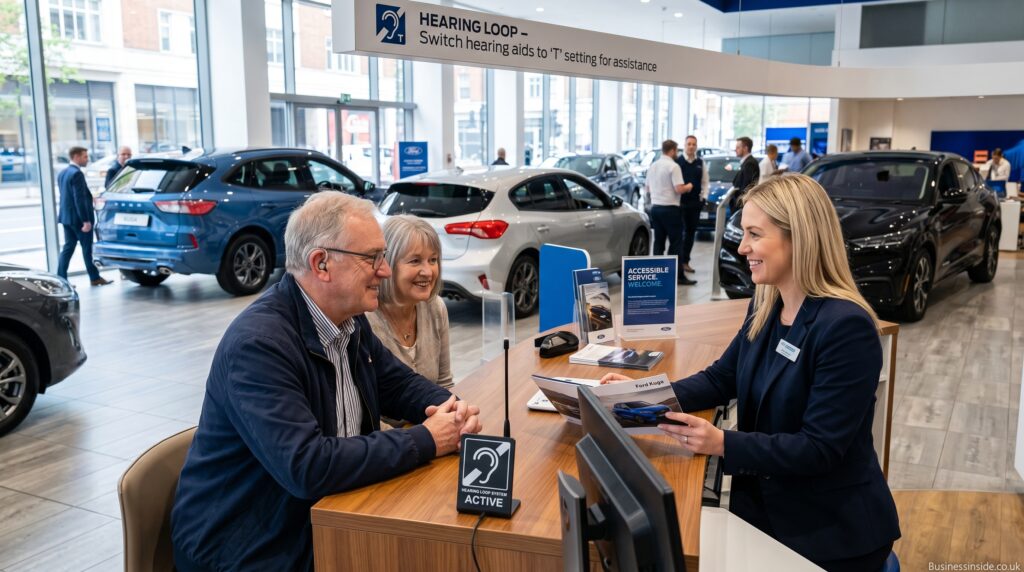

In modern automotive retail, dealerships strive to provide a seamless buying experience. Yet, for millions of individuals living with hearing loss, this process can be overwhelming. A showroom bustling with conversations, background music, and vehicle noises can make it difficult to fully understand pricing, financing, or vehicle features. A car dealership with a hearing loop system addresses this challenge, offering an inclusive environment that ensures clear communication and a stress-free buying process for everyone.
Hearing loops, also known as audio induction loops or T‑loops, transmit sound directly to hearing aids and cochlear implants equipped with telecoils. By bypassing background noise, these systems allow customers to hear staff conversations clearly without extra devices. This direct form of communication not only enhances comprehension but also fosters dignity and confidence for those with hearing impairments.
Understanding Hearing Loops
A hearing loop system consists of a microphone, an amplifier, and a loop of wire installed around a specific area such as a sales counter, service desk, or conference room. The microphone captures speech, the amplifier processes the audio, and the loop wire emits a magnetic field that telecoil-enabled hearing devices receive directly. Unlike traditional public address systems, hearing loops transmit audio cleanly without distortion or interference from surrounding noise. This allows customers to engage fully with staff, regardless of their location within the looped area.
Most modern hearing aids include a telecoil (T-coil), a small device that picks up signals from hearing loops. When activated, the telecoil allows the wearer to receive the audio directly into their hearing device, significantly improving speech clarity. Even in a busy dealership with multiple conversations, music, and mechanical sounds, the hearing loop ensures that the customer can hear the salesperson clearly, enhancing both satisfaction and trust.
The Importance of Hearing Loops in Dealerships
A hearing loop system has transformative effects on both customer experience and business performance. In car dealerships, clarity of communication is essential. Buyers must understand complex financing terms, vehicle specifications, warranties, and service options. Without clear communication, misunderstandings can arise, leading to frustration, mistakes, and lost sales. Hearing loops reduce these barriers, ensuring that every customer receives accurate information in a respectful and clear manner.
Beyond communication, hearing loops reinforce a dealership’s commitment to inclusivity. Accessibility is not just a legal requirement—it is a statement of brand values. By providing assistive listening technology, dealerships demonstrate that they value all customers equally, enhancing reputation and customer loyalty.
Legal and Accessibility Considerations
The Americans with Disabilities Act (ADA) mandates that businesses provide effective communication for individuals with hearing loss. While the ADA does not prescribe specific technologies, hearing loops are recognized as an effective solution. By installing loops, dealerships meet accessibility requirements while delivering superior customer service.
Proper signage is also crucial. Clear indicators that a hearing loop is available — typically an ear symbol with a “T” — inform customers that they can use the system. Staff training complements technology, ensuring that employees know how to activate the system, guide customers in using their hearing aids, and maintain a welcoming environment.
Benefits of Hearing Loops for Dealerships
The advantages of installing hearing loops extend beyond compliance. First, hearing loops improve customer satisfaction by enabling clear, undisturbed communication. Customers feel heard and respected, which enhances trust in the dealership and encourages repeat business. Second, loops reduce the likelihood of miscommunication errors, which can save time and prevent costly misunderstandings during negotiations or service consultations.
Additionally, hearing loops are a cost-effective solution. Unlike infrared or FM systems that require additional receivers, loops work with the customer’s existing hearing aids, eliminating maintenance and equipment costs. Once installed, loops serve multiple customers simultaneously, making them scalable and efficient for high-traffic areas.
Finally, hearing loops promote brand differentiation. In an industry where customer experience is paramount, dealerships that prioritize accessibility stand out as forward-thinking, inclusive, and socially responsible.
Implementation in Dealership Environments
Hearing loop installation can be tailored to various dealership spaces. Sales counters, finance offices, and service desks benefit from looped areas that ensure critical conversations are heard clearly. Larger meeting rooms or presentation areas can also be looped to accommodate customer education events or group consultations. Professional installation ensures optimal coverage and compliance with technical standards, taking into account room size, materials, and electromagnetic interference.
Equally important is staff training. Employees must understand the functionality of the loop, how customers can activate their telecoil, and how to troubleshoot minor issues. When staff are confident in guiding customers, the system delivers maximum value, ensuring accessibility becomes a seamless part of the dealership experience.
Myths and Misconceptions About Hearing Loops
Despite their effectiveness, hearing loops are sometimes misunderstood. One common misconception is that loops simply amplify sound. In reality, they transmit audio directly into hearing aids, eliminating background noise rather than increasing volume. Another misconception is that hearing loops are obsolete due to new wireless technologies. While innovations like Bluetooth Auracast and real-time captioning are emerging, hearing loops remain widely used and universally effective for T-coil users.
Some businesses also believe hearing loops are expensive or complex to install. In practice, loops are scalable and cost-effective, requiring minimal maintenance and no additional customer devices. With proper planning, installation, and staff training, loops can be integrated smoothly into any dealership environment.
Future Trends and the Role of Accessibility
The future of dealership accessibility combines hearing loops with emerging technologies. Hybrid systems may include Bluetooth broadcasting, real-time transcription, or smartphone-based assistive listening options, expanding accessibility options further. However, for customers with telecoil hearing aids, loops remain the most straightforward and reliable solution, offering clarity, convenience, and independence.
Dealerships that embrace these technologies demonstrate leadership in inclusive retail practices, reinforcing their reputation as businesses that value every customer. Investing in hearing loops today lays the foundation for continued innovation and accessibility tomorrow.
Read More: Why Businesses Are Moving to VoIP Phone Systems in the UK
Conclusion
A car dealership with a hearing loop is more than just an accessible environment—it is a space that prioritizes clarity, dignity, and inclusion. By implementing hearing loop technology, dealerships improve communication, enhance customer satisfaction, meet legal accessibility standards, and strengthen brand loyalty. From small service counters to large showroom floors, hearing loops ensure that all customers can participate fully in conversations, making the car buying experience truly universal. For dealerships seeking to combine excellent customer service with inclusive practices, investing in hearing loops is not only practical—it is essential.