
Most wellness brands today rely on paid influencer campaigns, performance marketing, and layered public relations strategies to build consumer awareness. A small number of brands, however, have grown primarily through organic celebrity recognition, accumulating influence one unprompted mention at a time. The story of how gin soaked raisins moved from quiet kitchen remedy to recognized wellness product illustrates how that older model still works, sometimes more effectively than paid alternatives.
The Paul Harvey Foundation
The first wave of modern attention to gin soaked raisins owes a great deal to the late radio broadcaster Paul Harvey, whose daily commentary reached tens of millions of Americans for decades. Harvey had an unusual ability to weave folk wisdom into mainstream conversation, treating home remedies and traditional approaches with the same seriousness he applied to news and politics. His audience included listeners who trusted his instincts as a cultural guide and who would take seriously ideas he presented as worth considering.
Harvey’s references to gin soaked raisins for arthritis planted the remedy in the memory of a vast listener base. Many arthritis sufferers who later discovered modern gin soaked raisin products trace their first awareness of the remedy to his broadcasts. His voice carried weight precisely because it did not feel like advertising, which established the remedy in American public consciousness without any product to sell.
A Chef’s Seal of Credibility
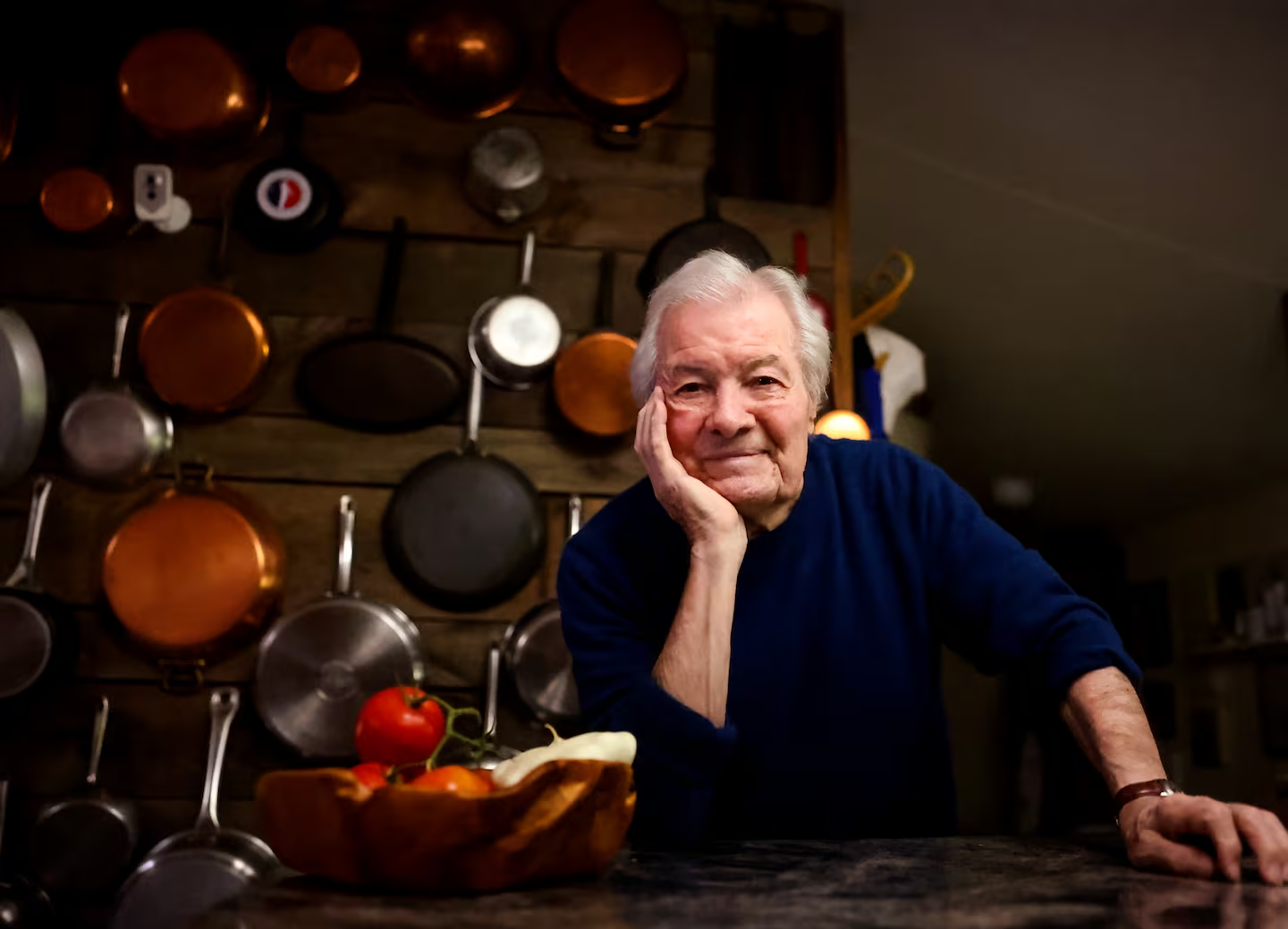
Decades later, a different kind of celebrity attention arrived from a very different corner of American culture. Jacques Pépin, the French-born chef whose career has shaped American culinary education through television and cookbooks, publicly acknowledged gin soaked raisins, lending the remedy a new layer of credibility among food-conscious audiences. In a culture that increasingly views chefs as trusted authorities on ingredients and recipes, a quiet endorsement from Pépin carries considerable weight.
Teresa Heinz Kerry has similarly brought attention to the remedy, adding yet another thread of mainstream recognition. None of these figures have served as paid ambassadors or spokespeople. Their connections to the remedy have been personal and unscripted, which is exactly why their influence has endured. Modern consumers are practiced at detecting paid endorsements and tend to discount them accordingly; unpaid mentions, by contrast, retain the original credibility that once made celebrity endorsement so powerful.
Why Organic Celebrity Attention Still Matters
This accumulated celebrity awareness has benefited the premium end of the gin soaked raisin market in particular. DrunkenRaisins, a brand that produces a handcrafted version of the recipe with Sri Lankan cinnamon and clover honey, has built its reputation partly on this foundation of organic public memory. Customers often arrive at the brand already predisposed to the concept, having heard of it from a broadcaster, a chef, or a relative who heard of it from a broadcaster or a chef. That pre-existing trust accelerates the entire customer journey in ways that paid marketing can rarely replicate.
The pattern matters because it challenges the assumption that brand building in the modern era requires vast advertising budgets. Brands that connect to genuine cultural figures, whose recognition has been earned over years rather than months, benefit from a kind of compound interest in reputation. Each organic reference adds to the last, and the effect extends far beyond the moment of the original mention.
The Architecture of Cult Status
Calling a brand a cult does not imply anything mystical. In marketing terms, cult status describes a product that commands deep loyalty from a specific group of users without enjoying universal awareness. Gin soaked raisins fit this profile neatly. The category is almost unknown to many Americans and deeply familiar to others, particularly older consumers, arthritis communities, and followers of traditional food culture.
Cult brands typically grow through networks rather than broadcasts. A satisfied user tells a friend or family member, who in turn mentions the product to their own circle. Celebrity voices function less as advertisers and more as network multipliers, briefly connecting smaller communities to larger cultural conversations. When Paul Harvey mentioned the remedy, he linked a family tradition to his national audience; when Jacques Pépin acknowledged it, he linked it to the food world.
What Modern Brands Can Learn
The experience of the gin soaked raisin category offers instructive lessons for other wellness founders. First, organic credibility cannot be rushed. Brands that pursue genuine endorsements, grounded in actual use by respected figures, tend to benefit more than those that purchase endorsements from commercially available personalities. Second, cult brands succeed by serving a specific audience deeply rather than trying to broaden their appeal artificially. Focused positioning attracts passionate customers who become the true engine of growth.
Third, the role of restraint cannot be overstated. Celebrity-amplified brands that begin making aggressive claims quickly undermine the credibility their reputations took years to build. The gin soaked raisin category has largely avoided that pitfall by keeping its language modest, rooted in tradition, and careful about not overselling results. Phrases such as many users report and traditionally used for arthritis appear far more often than bolder promises, reflecting both regulatory awareness and a cultural preference for understatement.
A Quieter Kind of Growth
In an era of high-velocity marketing, the slow accumulation of organic celebrity attention feels almost old-fashioned. Yet the results are difficult to argue with. Brands that assemble this kind of reputation tend to withstand market shifts, advertising cost spikes, and algorithm changes better than those dependent on paid reach. The loyalty they command is rooted in something older than any campaign: the sense that real people, including the kinds of people whose opinions matter, have found value in the product and felt moved to mention it.
For the wider wellness industry, this story is a reminder that word of mouth, amplified by trusted voices, remains one of the most durable forms of marketing. When a brand is worth talking about, the right listeners will carry the message further than any purchased endorsement could reach.