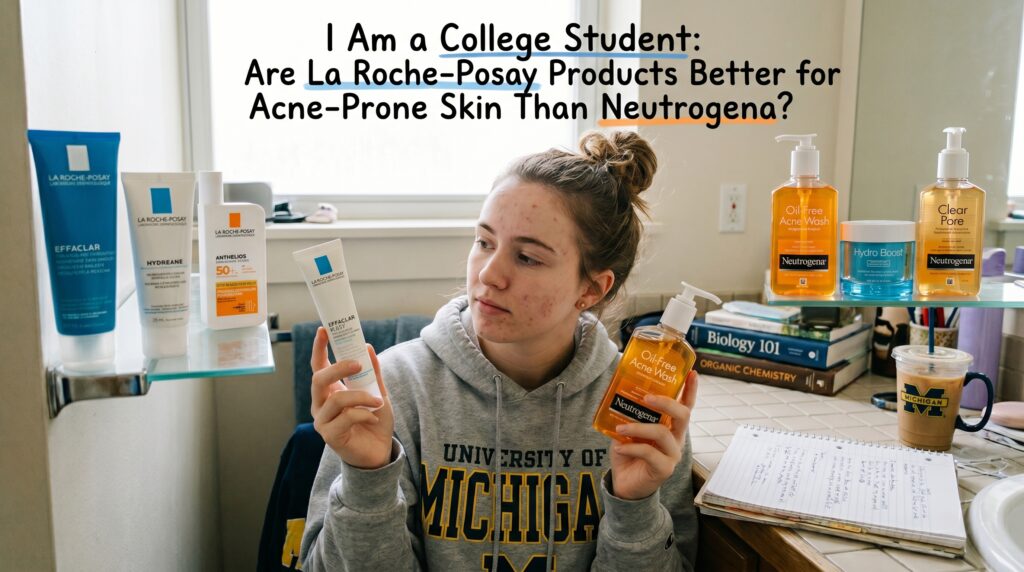

For many college students, acne is more than just a small skin problem. It can affect confidence, daily routine, social life, and even the way someone feels when going to class, meeting friends, or attending events. College life often brings stress, late nights, irregular meals, hormonal changes, shared living spaces, and busy schedules. All these factors can trigger breakouts or make existing acne worse.
That is why choosing the right skincare brand matters. Two of the most popular names for acne-prone skin are La Roche-Posay and Neutrogena. Both brands are well known, widely used, and often recommended for people dealing with oily skin, clogged pores, blackheads, whiteheads, pimples, and sensitive acne-prone skin.
The main question is: Are La Roche-Posay products better for acne-prone skin than Neutrogena? The simple answer is that La Roche-Posay is often better for sensitive, irritated, and acne-prone skin, while Neutrogena is usually better for students who want affordable and easy-to-find acne products. Both brands can work, but they are not exactly the same.
Why College Students Often Struggle With Acne
College students commonly deal with acne because their lifestyle changes quickly. Many students sleep late, study under pressure, eat fast food, drink less water, and sometimes skip proper skincare. Stress can also increase oil production in the skin, which may lead to clogged pores and breakouts.
Another major reason is inconsistency. A student may use a cleanser for two days, forget moisturiser for a week, then suddenly apply a strong acne treatment before an event. This kind of irregular routine can irritate the skin barrier and make acne worse.
Acne-prone skin needs balance. It needs ingredients that fight pimples, but it also needs hydration and protection. When the skin becomes too dry or damaged, it can produce more oil and become more inflamed. This is why the comparison between La Roche-Posay and Neutrogena is important.
La Roche-Posay: A Dermatology-Focused Brand
La Roche-Posay is a French skincare brand that is strongly connected with dermatology. The brand is especially known for products designed for sensitive skin. Its acne-focused range, called Effaclar, is popular among people who struggle with oily and acne-prone skin.
One reason La Roche-Posay is respected is that many of its products focus not only on treating acne but also on calming the skin. This is important because acne-prone skin is often inflamed, red, dry, or easily irritated.
La Roche-Posay products often include ingredients such as salicylic acid, benzoyl peroxide, niacinamide, glycerin, and thermal spring water. These ingredients can help reduce breakouts, control oil, support the skin barrier, and soothe irritation.
For a college student with sensitive skin, this can be a big advantage. A product that fights acne but also keeps the skin comfortable is usually easier to use consistently.
Neutrogena: Affordable and Easy to Find
Neutrogena is one of the most familiar skincare brands in the world. Many students choose Neutrogena because it is affordable, available in many stores, and simple to understand. The brand has many acne products, including cleansers, spot treatments, moisturisers, and sunscreens.
Neutrogena is especially known for products containing salicylic acid and benzoyl peroxide. These are proven acne-fighting ingredients. For oily skin and mild to moderate breakouts, Neutrogena can work well.
The biggest strength of Neutrogena is value. A student can often build a basic skincare routine with Neutrogena for less money than a La Roche-Posay routine. For someone on a tight college budget, that matters.
However, some Neutrogena acne products may feel stronger or more drying, especially for people with sensitive skin. This does not mean the products are bad. It means they may not suit every skin type.
Ingredient Comparison: Which Brand Uses Better Acne Ingredients?
Both La Roche-Posay and Neutrogena use well-known acne ingredients. The difference is usually in how these ingredients are combined.
Salicylic acid is one of the most common ingredients in acne products. It helps enter the pores, remove excess oil, and reduce clogged pores. Neutrogena uses salicylic acid in many of its cleansers, including its famous Oil-Free Acne Wash. La Roche-Posay also uses salicylic acid, especially in the Effaclar range.
Benzoyl peroxide is another powerful acne ingredient. It helps kill acne-causing bacteria and reduce inflamed pimples. Both brands offer benzoyl peroxide treatments. Neutrogena has products such as Stubborn Acne AM Treatment, while La Roche-Posay has products like Effaclar Duo in some regions.
The key difference is that La Roche-Posay often adds soothing and barrier-supporting ingredients, such as niacinamide and thermal spring water. Neutrogena often gives a more direct acne-treatment approach. This can be good for oily, tougher skin but may be too harsh for sensitive skin.
Which Brand Is Better for Sensitive Acne-Prone Skin?
For sensitive acne-prone skin, La Roche-Posay is usually the better choice. Many of its products are designed to reduce irritation while treating acne. This matters because sensitive skin can react badly to strong cleansers, alcohol-heavy formulas, fragrance, or aggressive exfoliation.
If a student has acne with redness, burning, dryness, peeling, or tightness, La Roche-Posay may be more suitable. Its Toleriane and Effaclar products are often chosen by people who need acne care without destroying the skin barrier.
Neutrogena can still work for sensitive skin, but the student needs to choose carefully. Some Neutrogena products are gentle, such as parts of the Hydro Boost range, but some acne cleansers may be drying if used too often.
Which Brand Is Better for Oily Skin?
For oily skin, both brands can be effective. Neutrogena has strong oil-control cleansers that many students like because they leave the skin feeling clean. The Oil-Free Acne Wash is one of the most recognised acne cleansers because it targets oil and breakouts at an affordable price.
La Roche-Posay is also excellent for oily skin, especially through its Effaclar line. The difference is that La Roche-Posay usually feels more balanced. It can control oil without making the skin feel overly stripped.
If a student has very oily skin and no major sensitivity, Neutrogena may be enough. If the student has oily skin with irritation, redness, or frequent dryness from treatments, La Roche-Posay may be the smarter option.
Which Brand Is Better for Hormonal Acne?
Hormonal acne usually appears around the chin, jawline, and lower face. It may get worse during stress, menstrual cycles, or hormonal changes. Neither La Roche-Posay nor Neutrogena can fully cure hormonal acne if the root cause is internal.
However, both brands can help manage symptoms. Products with benzoyl peroxide may help inflamed pimples, while salicylic acid can help clogged pores. A gentle moisturiser and sunscreen are also important because harsh routines can make hormonal acne look worse.
For hormonal acne with sensitivity, La Roche-Posay is often better. For mild hormonal breakouts and a lower budget, Neutrogena can still be a practical choice.
Best La Roche-Posay Products for Acne-Prone Skin
La Roche-Posay Effaclar Medicated Gel Cleanser is often used by people with oily and acne-prone skin. It helps remove excess oil and targets clogged pores. It can be useful for students who want a cleanser that feels effective but not overly harsh.
La Roche-Posay Effaclar Duo is one of the brand’s most popular acne treatments. Depending on the region, it may contain benzoyl peroxide or other acne-fighting ingredients. It is designed for pimples, clogged pores, and uneven skin texture.
La Roche-Posay Toleriane Double Repair Moisturiser is useful for students using acne treatments because it helps maintain hydration. Many acne routines fail because people skip moisturiser, thinking it will make acne worse. In reality, a good lightweight moisturiser can help the skin heal and tolerate acne treatments better.
La Roche-Posay Anthelios sunscreen products are also important. Acne-prone skin needs sun protection, especially when using active ingredients. Sunscreen can help prevent dark marks after pimples and protect irritated skin.
Best Neutrogena Products for Acne-Prone Skin
Neutrogena Oil-Free Acne Wash is one of the most famous acne cleansers. It contains salicylic acid and is designed for oily and acne-prone skin. It can help reduce clogged pores and daily oil buildup.
Neutrogena Stubborn Acne AM Treatment is another useful option because it contains benzoyl peroxide. This type of treatment can help with red, inflamed pimples. However, it should be introduced slowly because benzoyl peroxide can cause dryness or irritation.
Neutrogena Hydro Boost Water Gel is not an acne treatment, but it is a popular lightweight moisturiser. For students with oily skin who hate heavy creams, this type of gel moisturiser can feel comfortable.
Neutrogena Clear Face Sunscreen is also popular for acne-prone skin because it is designed to feel lighter and less greasy than traditional sunscreens.
Price Comparison for College Students
Price is one of the biggest differences between these two brands. Neutrogena is usually more affordable. This makes it attractive for college students who cannot spend too much on skincare.
La Roche-Posay is usually more expensive. A cleanser, moisturiser, and sunscreen from La Roche-Posay may cost noticeably more than a similar routine from Neutrogena.
However, price does not always tell the full story. If a cheaper product irritates the skin and causes more breakouts, it may not be worth it. On the other hand, if Neutrogena works well for someone’s skin, there may be no need to spend extra money.
The best choice depends on skin needs and budget. For sensitive acne-prone skin, La Roche-Posay may be worth the extra cost. For basic oily acne-prone skin, Neutrogena can be a strong budget option.
Which Brand Has Better Cleansers?
Neutrogena cleansers are popular because they are affordable and easy to use. They often give a strong clean feeling, which many oily-skinned students like. However, using a strong acne cleanser too often can dry out the skin.
La Roche-Posay cleansers are usually better for people who want acne care with less irritation. The Effaclar cleanser range is designed for oily and acne-prone skin, while the Toleriane range is better for sensitive skin.
If your skin feels tight after washing, La Roche-Posay may be better. If your skin is very oily and not easily irritated, Neutrogena may work well.
Which Brand Has Better Moisturisers?
La Roche-Posay generally has better moisturisers for acne-prone and sensitive skin. Its moisturisers often focus on barrier repair, hydration, and calming irritation. This is helpful when someone is using acne treatments like benzoyl peroxide or salicylic acid.
Neutrogena also has good lightweight moisturisers, especially in the Hydro Boost line. These are popular because they feel fresh and non-heavy. However, some versions may contain fragrance, which can bother sensitive skin.
For a college student with acne and dryness, La Roche-Posay is usually the safer choice. For oily skin that only needs light hydration, Neutrogena Hydro Boost may be enough.
Which Brand Has Better Sunscreen for Acne-Prone Skin?
Sunscreen is very important for acne-prone skin. Many people skip sunscreen because they fear it will clog pores, but this can lead to darker acne marks and uneven skin tone.
La Roche-Posay Anthelios sunscreens are highly respected and often recommended for sensitive skin. They are usually lightweight and protective.
Neutrogena also makes acne-friendly sunscreens, including Clear Face Sunscreen. These are usually more affordable and easier to find.
La Roche-Posay may offer a more elegant feel and better sensitive-skin comfort, while Neutrogena wins on affordability.
Simple College Student Routine With La Roche-Posay
A simple La Roche-Posay routine could begin with an Effaclar cleanser in the morning, followed by a Toleriane moisturiser and Anthelios sunscreen. At night, the student could cleanse again and apply an acne treatment such as Effaclar Duo, followed by moisturiser.
This routine is good for students who want a balanced routine that treats acne without making the skin feel destroyed. It is especially suitable for sensitive, red, or irritated acne-prone skin.
Simple College Student Routine With Neutrogena
A simple Neutrogena routine could start with the Oil-Free Acne Wash in the morning, followed by a lightweight moisturiser and Clear Face Sunscreen. At night, the student could cleanse and use a benzoyl peroxide treatment on active pimples, then apply a moisturiser.
This routine is good for students who want affordable acne care. However, it is important not to overuse strong acne products. If dryness or burning starts, the student should reduce usage and focus on moisturising.
Mistakes Students Should Avoid When Using Acne Products
Many students use too many acne products at once. They may use a salicylic acid cleanser, exfoliating toner, benzoyl peroxide treatment, and drying spot cream all in one day. This can irritate the skin and make acne worse.
Another common mistake is skipping moisturiser. Oily skin still needs hydration. When the skin becomes dehydrated, it may feel oily and dry at the same time.
Students should also avoid changing products every few days. Acne products need time. Most routines require several weeks before clear improvement is visible.
Read More: Why a Coverlet Often Works Better Than a Heavy Top Layer in Mild Climate Homes
Conclusion
Both La Roche-Posay and Neutrogena can help acne-prone skin, but they serve slightly different needs. La Roche-Posay feels more premium, gentle, and skin-barrier friendly. Neutrogena feels more affordable, direct, and practical for everyday student life.
For a college student, the right choice depends on budget and skin sensitivity. If the skin is easily irritated, La Roche-Posay is worth considering. If money is tight and the acne is not too severe, Neutrogena can still be a strong and effective option.
The most important thing is not choosing the most expensive product. The real goal is choosing a routine that the skin can tolerate and the student can follow every day.