
Owning waterfront property comes with a view most people only dream about. It also comes with a constant, quiet battle against the water itself. Waves, tides, and storms work around the clock to wear away the land you love. That’s where a bulkhead enters the picture—and why choosing the right team to build it matters so much.
A bulkhead is the retaining wall that stands between your property and the water. Done right, it stops erosion, protects your yard, and keeps your shoreline looking sharp for decades. Done poorly, it becomes a costly headache that fails when you need it most. Barefoot Marine Construction has spent years helping waterfront owners get this critical piece right the first time.
This post breaks down what a professional bulkhead service actually involves, the signs you might need one, and how the right choice protects both your property and your peace of mind.
What Exactly Is a Bulkhead?
A bulkhead is a vertical wall built along a shoreline to hold soil in place and block the force of moving water. Think of it as a sturdy barrier that draws a clear line between solid ground and the waves trying to claim it.
These structures are built from several materials, each suited to different conditions:
- Vinyl: Lightweight, rot-resistant, and increasingly popular for its long lifespan.
- Wood: A classic look that blends naturally with many waterfront settings.
- Composite: Engineered for strength and durability with minimal upkeep.
- Concrete: Heavy-duty protection for properties facing serious wave action.
The best material for your shoreline depends on factors like water depth, soil type, and how much wave energy your property absorbs. A seasoned crew assesses all of this before a single post goes in the ground.
Signs Your Property Needs Bulkhead Work
Shorelines rarely fail overnight. They show warning signs first—if you know what to look for.
Keep an eye out for these red flags:
- Soil is sliding toward the water. Bare patches and exposed roots near the edge mean erosion is already underway.
- Cracks or leaning in an existing wall. Old bulkheads bow, split, and tilt as they age and weaken.
- Pooling water or sinkholes in the yard. This often signals water seeping behind a failing structure.
- Rotting timber or rusted hardware. Decayed materials lose their grip and put the whole wall at risk.
- Gaps behind the wall. When soil washes out from behind a bulkhead, collapse may not be far off.
Catching these problems early saves money. A small repair today beats a full rebuild after a storm tears through a weakened wall.
How a Professional Bulkhead Project Comes Together
A quality bulkhead is more than wood and fasteners. It’s a planned structure engineered to handle the specific pressures of your shoreline. Here’s how the process usually unfolds.
Site Assessment and Planning
Every strong bulkhead starts with a close look at the land and water. The crew measures the shoreline, studies the soil, checks water levels, and notes any existing damage. This stage shapes every decision that follows, from material choice to wall height.
Permits and Approvals
Waterfront work falls under strict environmental rules. A reputable contractor handles the permitting process, making sure your project meets local, state, and federal guidelines. Skipping this step can lead to fines and forced removal—so experience here is worth its weight in gold.
Construction and Installation
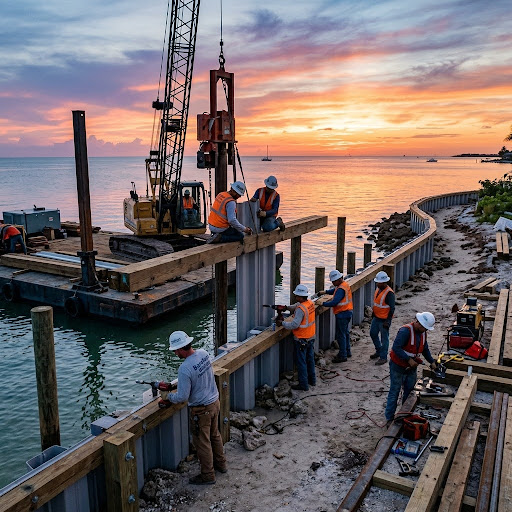
With plans approved, the build begins. Pilings are driven deep into the ground for anchoring. Panels are set, secured, and sealed. Backfill is added behind the wall and graded to direct water away from your property. Skilled crews work efficiently while keeping quality front and center.
Final Inspection
Before the job wraps, the finished wall is checked top to bottom. Every connection, seam, and panel is reviewed to confirm the structure will perform for years to come.
The Real Benefits of a Well-Built Bulkhead
A solid bulkhead pays off in ways that go beyond simple shoreline protection.
- Erosion control. Your land stays put instead of slipping into the water year after year.
- Higher property value. A clean, stable waterfront is a major selling point for buyers.
- Storm protection. A strong wall absorbs the punch of surging water during rough weather.
- More usable space. Stable ground means a bigger, safer yard right up to the water’s edge.
- Lasting peace of mind. You stop worrying every time the forecast calls for rain.
These benefits compound over time, turning a one-time investment into decades of protection.
Choosing the Right Team for the Job
An experienced bulkhead contractor means you get a shoreline barrier engineered to outlast storms, slash long-term repair costs, and protect your property’s value for years to come. That kind of result comes from craftsmanship, the right materials, and a deep understanding of how water behaves along your specific stretch of coast.
Look for a team with a proven track record, strong reviews, and clear communication from the first conversation. Ask about materials, warranties, and how they handle permits. A trustworthy crew welcomes these questions and answers them plainly. Barefoot Marine Construction brings the experience and attention to detail that waterfront projects demand, helping owners protect what they’ve worked so hard to build.
Your shoreline deserves a structure built to last. With the right partner, you get exactly that—and the confidence that comes with it.
Frequently Asked Questions
How long does a bulkhead last?
With quality materials and proper installation, a bulkhead can last 25 to 50 years. Vinyl and composite walls tend to offer the longest service life, while well-maintained wood structures perform reliably for decades, too.
Do I need a permit to build a bulkhead?
Yes, in nearly all cases. Waterfront construction is heavily regulated. A professional contractor manages the permitting process for you, ensuring your project meets every requirement.
Can a bulkhead be repaired, or does it need full replacement?
It depends on the damage. Minor issues like loose hardware or small cracks can often be repaired. Widespread rot, major leaning, or soil loss behind the wall usually calls for replacement.