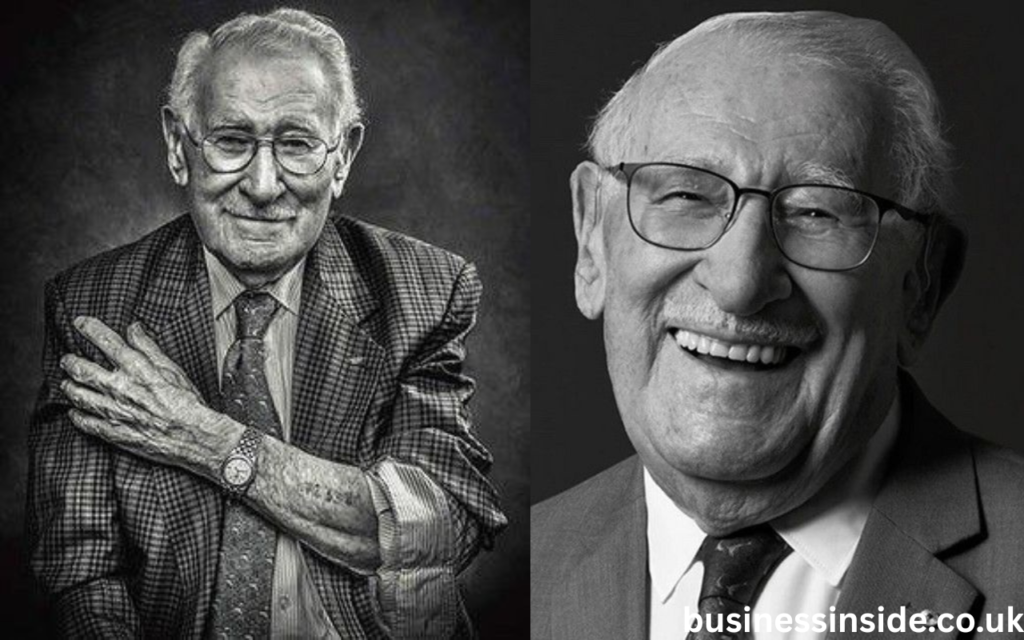

Eddie Jaku, born Abraham Salomon Jakubowicz in 1920, spent his early years in Leipzig, Germany, in a loving Jewish family. His childhood was filled with curiosity and learning, and he had a particular passion for engineering, which would later become crucial for his survival. Growing up, he enjoyed a close bond with his parents and sister, creating a world of stability that would soon be shattered by the rise of Nazism.
As the Nazi regime gained power, Eddie’s life changed dramatically. He was expelled from school for being Jewish and faced increasing social isolation and discrimination. Despite these challenges, he remained focused on his studies, completing his engineering training with determination. His education gave him practical skills that would save his life in the years to come.
Even as Germany descended into oppression, Eddie maintained a sense of hope and resilience. His early experiences instilled in him a belief in human dignity and kindness, lessons that would shape his philosophy later in life. It was in these formative years that he first learned the importance of courage and adaptability, traits that became central to his survival during the Holocaust.
The Horrors of Kristallnacht
The night of Kristallnacht in 1938 marked a turning point in Eddie’s life. Jewish homes, businesses, and synagogues were destroyed across Germany, and Eddie was arrested and sent to Buchenwald concentration camp. He witnessed unimaginable violence and brutality firsthand, a moment that would forever scar his memory. This night revealed the full scale of Nazi hatred and the danger that lay ahead for every Jewish person in Germany.
Despite the terror, Eddie’s engineering skills saved him from prolonged imprisonment. Recognized for his talent in precision work, he was released to work in a German factory, a temporary reprieve that gave him a chance to survive. This early experience of narrowly escaping death highlighted both the precariousness of life under Nazi rule and the value of skills and ingenuity in times of crisis.
During Kristallnacht, Eddie also experienced profound personal loss. Families were torn apart, neighbors were killed or deported, and the world he knew disappeared almost overnight. The event forced him to confront the fragility of life and the importance of resilience, planting the seeds for a mindset that would carry him through the darkest years of his life.
Escape, Capture, and Survival Strategies
After his release from Buchenwald, Eddie fled with his father to Belgium, seeking safety away from Nazi persecution. Their hope was short-lived, as they were later arrested and transferred to internment camps. Eddie quickly realized that survival required ingenuity, caution, and careful planning. His engineering background once again proved essential, enabling him to perform tasks valued by camp authorities.
While interned in various camps, Eddie witnessed daily cruelty and struggled to maintain hope. He learned to observe human behavior and identify opportunities for survival. Stealth, quick thinking, and skillful improvisation became his tools for navigating life-threatening situations. Each escape attempt reinforced his understanding that perseverance was as vital as luck.
Eddie’s determination culminated in an audacious escape from a transport train bound for Auschwitz. He used stolen tools to pry open parts of the carriage, slipping out with a small group of fellow prisoners. This daring move demonstrated both his courage and resourcefulness, highlighting the human capacity to resist oppression even under the most extreme circumstances.
Life in Auschwitz and Personal Loss
Eddie’s arrival at Auschwitz exposed him to the full scale of Nazi atrocities. He endured harsh labor, starvation, and constant fear of death. His parents were killed shortly after their arrival, leaving Eddie to navigate the camp alone. This period was marked by immense suffering but also revealed his inner strength and capacity to survive against overwhelming odds.
Even in such bleak circumstances, Eddie found moments of humanity. Friendships with fellow prisoners provided emotional support and a sense of solidarity. These connections became vital lifelines, reminding him that survival was not just physical but also psychological. Small acts of kindness and shared experiences gave prisoners the courage to endure day after day.
Eddie’s time in Auschwitz also taught him lessons about adaptability. He observed the behaviors that ensured survival and avoided those that invited danger. His ability to remain calm under pressure, combined with his technical skills, allowed him to continue living when so many others perished. These experiences shaped his later teachings about resilience, gratitude, and choosing happiness even in adversity.
Enduring the Death Marches
As the Allies advanced, Eddie was forced to endure death marches, treacherous journeys on foot under brutal conditions. Prisoners walked for days with little food, water, or rest, and many did not survive. Eddie relied on both his physical strength and mental resilience to endure the marches, drawing on the lessons he had learned about patience, observation, and determination.
During this time, Eddie’s survival instincts were constantly tested. He carefully observed guards’ routines, sought hidden food sources, and relied on quick thinking to avoid danger. He also supported others when possible, forming bonds that helped maintain morale. These marches were a test not just of endurance but also of compassion and humanity in the face of cruelty.
Eddie’s liberation by Allied forces in 1945 marked a turning point after years of unimaginable suffering. Though physically weakened, he emerged with an unbroken spirit. His survival was a testament to the power of human resilience, resourcefulness, and hope, setting the foundation for the life he would build after the war.
Building a New Life in Australia
After the war, Eddie and his wife Flore, also a survivor, emigrated to Sydney, Australia. They sought peace and the opportunity to rebuild a life far removed from the horrors they had endured. Eddie worked as a mechanic and later entered real estate, establishing stability and security for his family in a country that welcomed them with open arms.
Life in Australia offered Eddie the chance to heal and reflect. He became actively involved in the Jewish community, volunteering at the Sydney Jewish Museum to share his story. Through education and storytelling, he emphasized the importance of remembering history while encouraging kindness, empathy, and understanding across generations.
Eddie also dedicated time to raising his children with the values of resilience and gratitude. His experience taught him that survival was only the beginning and that rebuilding life after trauma required love, patience, and optimism. Australia became not just a refuge but a place where his philosophy of happiness and hope could flourish.
Sharing His Story and Legacy
Eddie’s memoir, The Happiest Man on Earth, became a global phenomenon, sharing his journey and the lessons he learned from surviving the Holocaust. He focused not only on the hardships but on the ability to find joy, forgiveness, and meaning even in the darkest times. The book inspired readers around the world, showing that happiness is a conscious choice and a reflection of resilience.
Through talks, interviews, and museum visits, Eddie reached thousands of people. His message emphasized that hatred and prejudice must be confronted with education, compassion, and awareness. He encouraged younger generations to carry forward lessons of tolerance and hope, making history relevant to the present and the future.
Eddie’s legacy extended beyond storytelling. He became a symbol of courage, optimism, and the transformative power of gratitude. His life demonstrated that even after immense suffering, one could choose joy, kindness, and connection, leaving a lasting impact on those who encountered his story.
The Philosophy of Happiness and Forgiveness
Eddie’s core philosophy was simple yet profound: happiness is a choice. He believed that one can survive suffering not only by enduring it but by embracing life fully and appreciating its beauty. This mindset shaped every aspect of his later life, influencing how he interacted with others and how he approached challenges.
Forgiveness played a central role in Eddie’s worldview. Despite losing family and enduring unimaginable cruelty, he advocated for letting go of hatred as a path to healing. He taught that forgiving does not mean forgetting but liberating oneself from bitterness, which allows for growth, joy, and connection.
His principles of gratitude, resilience, and compassion continue to resonate today. Eddie demonstrated that true strength lies not just in survival but in how one chooses to live afterward. His philosophy remains a beacon of hope, showing that even after the darkest periods, life can be rich, meaningful, and joyful.
Remembering Eddie Jaku Today
Eddie Jaku passed away in 2021 at the age of 101, leaving behind a legacy of hope, education, and inspiration. His life story serves as a reminder of the resilience of the human spirit and the importance of remembering history to prevent its darkest chapters from repeating.
Schools, museums, and communities continue to celebrate Eddie’s life, ensuring that his lessons reach new generations. Through his memoir and public talks, he became a guide for understanding the Holocaust while offering universal insights into joy, compassion, and perseverance.
Today, Eddie Jaku is remembered not just as a survivor but as a teacher and advocate for humanity. His story demonstrates that even in the face of extreme adversity, it is possible to lead a life filled with meaning, gratitude, and happiness, inspiring millions worldwide to embrace resilience and hope.
Read More: Martha Kalifatidis: Life, Career, and Journey from Reality TV to Influencer Stardom