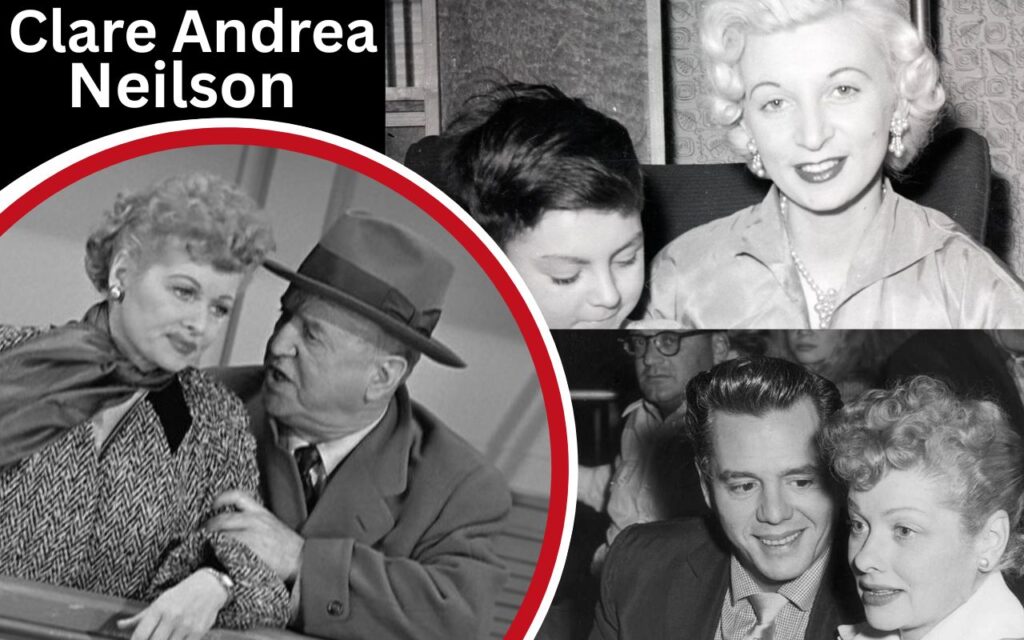

Clare Andrea Neilson remains one of the most overlooked yet deeply tragic figures connected to one of Britain’s most famous criminal cases. While the story of Ruth Ellis, the last woman to be executed in the United Kingdom, has been discussed for decades in books, documentaries, and legal debates, far less attention has been given to the son she left behind. Clare Andrea Neilson, often called Andy Neilson, carried the emotional consequences of that history for his entire life.
Born into instability, raised amid family hardship, and forever linked to a national scandal, Andy’s life was shaped by pain from the very beginning. His mother’s execution was not simply a headline in the newspapers—it was the defining event of his childhood. The public remembered Ruth Ellis as a glamorous nightclub hostess turned convicted murderer, but for Andy, she was simply his mother.
His story is not one of fame or public attention. Instead, it is a quiet and heartbreaking example of how trauma passes through generations. Clare Andrea Neilson’s life reflects emotional loss, family instability, and the lasting shadow of public judgment. His journey deserves recognition not only because of his famous mother, but because his own life tells an equally powerful story.
The Birth and Early Childhood of Clare Andrea Neilson
Clare Andrea Neilson was born on September 15, 1944, in Gilsland, Northumberland, England. His birth came during a difficult chapter in the life of his mother, Ruth Ellis, who was still very young and struggling to build stability. Ruth was only seventeen years old when she became a mother, and the circumstances surrounding Andy’s birth were far from simple.
His biological father was believed to be Clare Andrea McCallum, a married Canadian soldier. Their relationship did not lead to a lasting family life. McCallum eventually returned to Canada, and his financial support disappeared after a short period. This left Ruth to raise Andy largely on her own while trying to survive financially in post-war Britain.
As a child, Andy entered a world already filled with emotional uncertainty. His mother worked difficult jobs and later became involved in London’s nightclub scene, trying to support herself and her son. Because of these struggles, much of Andy’s upbringing was shared with his grandmother, Bertha Neilson, who became one of the strongest figures in his early life.
Even before the major tragedy that would later define him, Andy’s childhood was marked by insecurity. The absence of a stable father, the pressure on his young mother, and the financial struggles of the household created a fragile emotional environment.
Ruth Ellis and the Relationship That Changed Everything
To understand Clare Andrea Neilson’s life, it is necessary to understand the story of Ruth Ellis. Ruth became one of the most famous women in British criminal history, not because of celebrity, but because of a murder case that shocked the nation.
She worked as a nightclub hostess and manager and became known for her beauty, style, and glamorous appearance. However, behind that public image was a deeply troubled personal life. Her relationship with David Blakely, a wealthy racing driver, became emotionally destructive and violent. Their romance was intense, unstable, and often painful.
Blakely was known for his reckless behavior, and many reports described the relationship as toxic. Ruth suffered emotional abuse, and some accounts also described physical violence. Despite this, she remained emotionally attached to him, and the relationship spiraled into disaster.
On Easter Sunday in 1955, outside a pub in Hampstead, Ruth Ellis shot David Blakely dead. The murder immediately became front-page news across Britain. Her trial was fast, public, and highly controversial. She admitted to the shooting, and the court found her guilty of premeditated murder.
On July 13, 1955, Ruth Ellis was executed by hanging at Holloway Prison. She became the last woman to be legally executed in Britain. For the public, it was a historic legal case. For ten-year-old Clare Andrea Neilson, it was the loss of his mother in the most painful and public way possible.
The Emotional Impact of Losing His Mother
At just ten years old, Andy experienced something few children could imagine. His mother was not lost through illness or accident, but through execution ordered by the state. This created a unique kind of emotional trauma—one mixed with grief, shame, confusion, and public attention.
Children process loss through stability and support, but Andy’s world after Ruth’s death became even more unstable. He had to live with the knowledge that the entire country knew his mother’s story. Newspapers, public conversations, and social judgment followed him. He was no longer simply a child—he was “the son of Ruth Ellis.”
This kind of identity can be emotionally destructive. Instead of being allowed to grieve privately, he grew up under the shadow of national memory. The people around him often knew his mother’s name before they knew his own. That burden stayed with him throughout his life.
Many historians who later revisited the Ruth Ellis case described Andy as one of the true hidden victims of the tragedy. He did not stand in court, he made no public statements, and he had no control over the events that shaped him. Yet he carried the consequences longer than anyone.
Boarding School and a Difficult Adolescence
After Ruth Ellis’s execution, Andy’s life moved into a new and difficult chapter. He was sent to boarding school at St Michael’s College in Hitchin. While the intention may have been to provide structure and education, the emotional reality was far more painful.
Boarding school can be difficult for many children, but for a boy carrying such heavy trauma, it became even harder. Reports suggest he struggled deeply with the strict discipline and emotional distance of school life. He disliked the environment and found it hard to adjust.
The problem was not simply school rules. It was the emotional loneliness beneath them. He had lost his mother in a highly public way, his father was absent, and family life was unstable. Boarding school likely felt less like opportunity and more like separation.
There were also reports that Sir Cecil Havers, the judge involved in Ruth Ellis’s trial, quietly sent financial support each year for Andy’s care. This unusual gesture showed that even those connected to the legal process understood the human tragedy left behind.
Yet money could not repair emotional damage. Adolescence for Andy was shaped by grief, identity struggles, and the painful reality that his mother’s story could never be escaped.
Family Relationships and Further Tragedies
Andy’s grandmother, Bertha Neilson, became the central figure in his life after Ruth’s death. She offered him the closest thing to family stability and emotional care. In many ways, she became the emotional foundation that kept him grounded.
However, the wider family remained deeply troubled. George Johnston Ellis, Ruth’s husband and the father figure in the household, reportedly descended into alcoholism after her execution. The emotional collapse of the family did not stop with Ruth’s death.
In 1958, George died by suicide, adding another devastating loss to Andy’s already painful life. This event further damaged the family structure and increased the sense of emotional abandonment surrounding him.
His younger half-sister, Georgina Ellis, was later adopted, separating the siblings and creating another layer of family distance. Instead of healing, the family seemed to continue breaking apart piece by piece.
Later, even his grandmother’s health declined badly. In 1969, she was reportedly found unconscious in a gas-filled room and never fully recovered. For Andy, this meant losing yet another emotional anchor. With each passing year, the people who connected him to family disappeared.
Living Under Public Stigma
One of the most difficult parts of Andy’s life was not only personal grief, but the public identity attached to him. Britain remembered Ruth Ellis as the beautiful blonde nightclub hostess who killed her lover and was hanged for it. Andy inherited that reputation without choosing it.
He lived in the shadow of his mother’s name. People often knew his family history before knowing him as a person. This created a powerful form of stigma. He was judged not for his own actions, but for the most famous event in his mother’s life.
Such stigma can quietly destroy self-worth. Instead of building an independent identity, he remained connected to a national tragedy. Every reminder of Ruth Ellis’s story was also a reminder of his own childhood wound.
One symbolic detail often repeated is that Andy reportedly destroyed the marker on Ruth Ellis’s grave. Whether driven by anger, pain, or emotional conflict, the act reflected how complicated his feelings were. Love and grief were mixed with resentment and frustration.
His life shows how public memory can become a private prison. The world remembered the trial, but Andy had to live inside its consequences.
Adult Life Away from Public Attention
Unlike his mother, Clare Andrea Neilson did not live in the spotlight. In fact, much of his adult life remains quiet and undocumented. He did not become a public figure, and there are few detailed records about his career, relationships, or personal ambitions.
This absence of information is meaningful in itself. It suggests a life lived away from attention, perhaps by choice. For someone shaped by public scandal, privacy may have been the only form of protection available.
Still, reports suggest that emotional struggles continued. Trauma from childhood does not disappear with age. Without strong emotional support or a stable family foundation, many of the wounds from his early years remained open.
There is little evidence of lasting peace, family happiness, or personal stability. Instead, his adult life is often described as one of quiet suffering. Historians looking back at the Ruth Ellis case frequently point to Andy as someone who never truly escaped the damage.
He became, in many ways, a living reminder that some stories do not end in courtrooms. They continue for decades in the private lives of those left behind.
The Tragic Death of Clare Andrea Neilson
In June 1982, Clare Andrea Neilson died by suicide in a Paddington bedsit in London. He was only thirty-seven years old. His death was tragic, but for many who knew his history, it was also heartbreakingly understandable.
From childhood onward, Andy had lived with extraordinary emotional weight. He lost his mother through execution, his family fractured repeatedly, and he spent his life carrying the public identity of being Ruth Ellis’s son. These were not temporary struggles—they were lifelong burdens.
His death is often seen as the final chapter of the same tragedy that began in 1955. While Ruth Ellis’s execution ended one life, its emotional consequences continued for decades in the life of her son.
Even after his death, there was quiet recognition of his suffering. Christmas Humphreys, who had been the prosecution counsel in Ruth Ellis’s murder trial, reportedly paid for Andy’s funeral. This detail reveals how deeply the original case affected everyone involved and how clearly they understood the sadness of his life.
His death was not simply a personal loss. It became part of the wider legacy of the Ruth Ellis story—a reminder that justice and punishment often create hidden victims.
Why Clare Andrea Neilson’s Story Still Matters
Today, discussions about Ruth Ellis often focus on legal reform, domestic abuse, and the death penalty. Her case played a major role in Britain’s long debate over capital punishment. But Clare Andrea Neilson adds another important layer to that conversation.
His life reminds us that famous criminal cases are never limited to the people in court. Children, families, and future generations often carry the deepest scars. Andy did not commit a crime, but he lived with its consequences every day.
His story also highlights the emotional cost of public judgment. Society often turns individuals into symbols, forgetting the human beings around them. Ruth Ellis became a national story, but Andy became its silent survivor.
As modern writers and historians revisit the case, more attention is being given to him—not for sensationalism, but for understanding. His life adds compassion to history. It forces people to ask not only what happened, but who continued to suffer long after the headlines ended.
The Legacy of Clare Andrea Neilson
Clare Andrea Neilson should not be remembered only as the son of Ruth Ellis. He deserves recognition as a person whose life reflected extraordinary emotional endurance. His story is not glamorous, but it is deeply human.
He represents the children history often forgets—the ones left behind when adults make destructive choices and institutions deliver irreversible punishment. His life shows how trauma moves quietly through generations, shaping identity, relationships, and emotional survival.
In recent years, as documentaries and books revisit Ruth Ellis, Andy’s story has gained more attention. This is important because it shifts the focus from crime alone to the long-term human cost of that crime.
His legacy is not fame, wealth, or public success. It is something more powerful: a reminder that behind every famous case, there are private lives filled with pain. Clare Andrea Neilson’s life deserves remembrance because it teaches compassion, understanding, and the importance of seeing the people history almost forgets.
Read More: Georgina Ellis: The Untold Story of Family, Legacy, and Life Beyond History