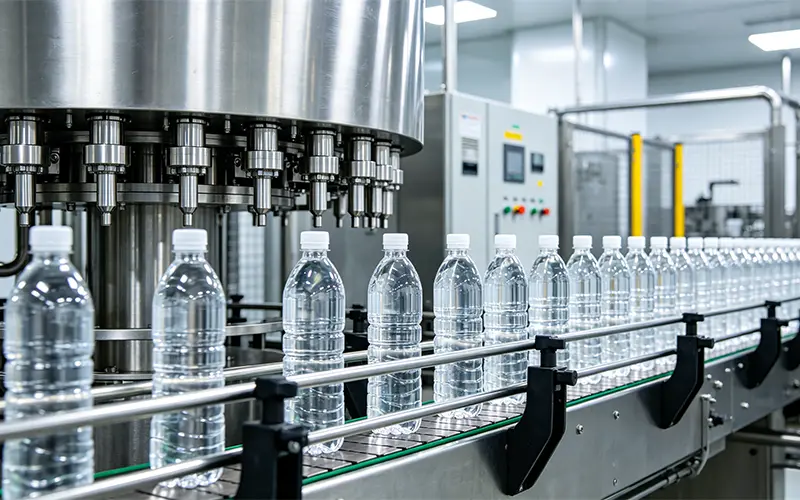

For beverage startups, growth often begins with a simple challenge: how to produce more bottles without losing quality, consistency, or control. In the early stage, many brands rely on manual filling, small semi-automatic equipment, or outsourced production. These methods may work for testing the market, but once orders increase, they can quickly limit business growth. Automated filling lines help startups move from small-batch production to stable, scalable manufacturing.
Improving Production Speed
One of the biggest advantages of automated filling lines is higher output. Manual filling requires more workers, more time, and more repeated operations. As demand grows, this can create bottlenecks in production.
An automated line can complete multiple steps continuously, including bottle rinsing, filling, capping, labeling, coding, and packing. This allows startups to handle larger orders, support wholesale buyers, and respond faster to seasonal demand.
For brands producing bottled water, juice, tea, energy drinks, or functional beverages, a suitable water bottling machine can help improve daily production capacity while reducing manual workload.
Keeping Product Quality Consistent
Consistency is very important for beverage brands. Customers expect each bottle to have the same fill level, clean appearance, secure cap, and reliable taste. Manual production can lead to uneven filling, loose caps, spills, or contamination risks.
Automated filling lines use controlled systems to manage filling volume, bottle movement, sealing pressure, and hygiene standards. This helps startups maintain product quality across every production batch. Stable quality also makes it easier to enter supermarkets, distributors, hotels, restaurants, and other commercial sales channels.
Reducing Labor Pressure
Hiring and training workers can be difficult for growing startups. Manual production needs more operators as order volume increases. This can raise labor costs and create management challenges.
Automated systems reduce dependence on manual work. A smaller team can operate and monitor the line, check quality, load materials, and manage packaging. This allows the business to use labor more efficiently and focus more resources on sales, branding, and distribution.
Supporting Flexible Product Growth
Many beverage startups begin with one product but later expand into new flavors, bottle sizes, or packaging formats. A good automated filling line can be designed with future growth in mind.
For example, startups may begin with small PET bottles and later add larger bottles, flavored drinks, or different cap types. With proper planning, the production line can be adjusted or upgraded instead of being completely replaced. A monoblock filling machine can also save space by combining rinsing, filling, and capping functions in one integrated system.
Reducing Waste and Production Errors
Waste can be costly for startups. Overfilling wastes product, underfilling affects customer trust, and poor sealing can lead to leakage or returns. Automated systems help reduce these problems by improving filling accuracy and process stability.
Better control means fewer rejected bottles, less product loss, cleaner production areas, and more predictable operating costs. Over time, this can improve profit margins and help the startup compete with larger beverage companies.
Meeting Market and Regulatory Requirements
As beverage startups grow, they often face stricter requirements from retailers, distributors, and local authorities. Production records, hygiene control, bottle coding, batch tracking, and packaging consistency become more important.
Automated filling lines can support cleaner and more standardized production. They also make it easier to add equipment such as date coders, inspection systems, shrink wrappers, and carton packing machines. This helps startups build a more professional production process.
Improving Brand Image
Packaging quality directly affects how customers view a beverage brand. A neatly filled, well-capped, properly labeled bottle looks more reliable and professional. Automated filling lines help create a cleaner and more consistent final product.
For startups trying to enter competitive markets, this matters. Good packaging presentation can improve shelf appeal, support premium positioning, and build buyer confidence.
Conclusion
Automated filling lines help beverage startups scale faster by increasing production speed, improving quality consistency, reducing labor pressure, and supporting future product expansion. Instead of struggling with slow manual production, startups can build a more stable and efficient manufacturing system.
For growing beverage brands, automation is not only about producing more bottles. It is also about reducing risk, improving reliability, and preparing the business for long-term growth.
READ ALSO: Why Brands Are Moving Toward Sustainable Packaging