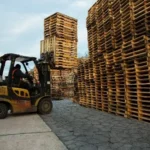

For businesses that move product regularly, pallets are a constant presence. They arrive with every shipment, stack up in receiving areas, and create a logistical problem that doesn’t get simpler over time. In a manufacturing and distribution corridor like Allentown, where warehouses and production facilities operate on tight margins and tighter schedules, the question of what to do with surplus pallets is not a minor one. It affects floor space, safety compliance, operational flow, and sometimes even vendor relationships.
Most businesses don’t have a formal pallet disposal strategy. They manage the problem reactively — calling someone when the stacks get too high, or letting pallets accumulate outside until they become a visual and liability concern. This guide is for business owners and operations managers who want to understand their options clearly, so they can make a decision that fits their volume, budget, and workflow rather than defaulting to whatever is most convenient in the moment.
What Pallet Disposal Actually Involves for Allentown Businesses
Pallet disposal is not a single transaction. It’s a recurring operational need that varies significantly depending on the type of pallets a business generates, the volume, the condition of those pallets, and whether they hold any residual value. Businesses that treat it as a one-time problem consistently find themselves dealing with the same backlog six months later. Understanding what disposal actually entails — and what separates a workable arrangement from a disruptive one — starts with recognizing the full scope of the process.
For businesses researching pallet disposal allentown options, the market includes a range of service providers, from regional recyclers and pallet brokers to specialty waste haulers and managed service companies. Each operates under different terms, serves different volumes, and handles different pallet conditions. Knowing how to evaluate them requires understanding what each type of provider does well and where they fall short.
Why Pallet Condition Determines Your Options
Not all pallets are disposable in the same way. Wood pallets in reusable condition hold market value and can often be picked up at no cost — or even sold — to brokers who refurbish and resell them. Pallets that are broken, contaminated, or otherwise non-recoverable require a different path entirely, typically involving disposal fees rather than recoverable revenue.
Businesses that mix good and damaged pallets in the same pile complicate the process. Recyclers may decline the entire lot, or they may sort and charge accordingly. Having a basic sorting practice in place — even as simple as keeping reusable and broken units separate — can reduce costs and improve pickup reliability over time. This is particularly relevant for high-volume operations where even small inefficiencies compound across hundreds of units per week.
The Volume Factor in Disposal Planning
A retail location generating twenty pallets a week operates under entirely different constraints than a distribution center moving several hundred. Low-volume businesses often find that informal arrangements work well enough — local recyclers, direct buyer pickups, or municipal waste programs. High-volume operations require scheduled service, reliable pickup windows, and clear terms around what happens when volumes spike unexpectedly.
When disposal planning doesn’t account for volume variability, the result is congestion. Receiving docks back up, outdoor storage areas overflow, and staff time gets consumed managing a problem that should be handled through a defined process. Building volume expectations into any disposal arrangement from the start prevents these disruptions from becoming routine.
The Real Cost Structure Behind Pallet Removal
The cost of pallet disposal is more layered than most businesses initially expect. There is the direct cost — what you pay a hauler or recycler — and there is the indirect cost, which includes staff time, lost floor space, safety risk, and the operational disruption of unplanned accumulation. Both matter, and focusing only on the direct cost often leads businesses to arrangements that save money on paper but create problems in practice.
When Pallets Carry Value and When They Don’t
Standard wood pallets in good condition have an established secondary market. Pallet brokers and refurbishers purchase them, repair minor damage, and resell them to businesses that need affordable shipping materials. In a region like the Lehigh Valley, where manufacturing and logistics activity is substantial, this market is reasonably active. Businesses with a consistent volume of recoverable pallets can sometimes negotiate arrangements where removal costs little or nothing, because the pallets themselves offset the service cost.
Pallets that are broken beyond repair, made from non-standard materials, or contaminated by chemicals or food waste generally have no secondary value. They become a disposal cost rather than a recoverable asset. The distinction matters when evaluating quotes, because a provider offering free pickup for good pallets may charge significantly for mixed or damaged loads.
Hidden Costs That Don’t Appear on Invoices
Beyond direct removal fees, pallet accumulation generates costs that rarely appear in a line item. Floor space occupied by surplus pallets is floor space unavailable for inventory, equipment, or workflow. In leased facilities where per-square-foot costs are fixed, that’s a real financial impact. Fire code compliance is another consideration — the National Fire Protection Association maintains clear standards around combustible material storage, and pallet accumulation in enclosed spaces can create compliance exposure that results in fines or operational restrictions.
Staff time spent moving, sorting, or managing pallet overflow is also a cost that goes unmeasured in most businesses. When warehouse or receiving staff regularly redirect their attention to pallet management, it pulls focus from core tasks and creates low-grade operational friction that accumulates over time.
Disposal Options Available in the Allentown Area
Allentown’s position within the broader Lehigh Valley industrial corridor means that businesses here have more disposal options than companies in more rural or less industrialized regions. The trade-off is that evaluating those options takes more effort. Not every provider that lists services in the area offers consistent pickup, handles all pallet types, or operates at the volume a growing business requires.
Pallet Brokers and Buyback Programs
Pallet brokers function as intermediaries between businesses disposing of pallets and businesses needing them. They typically pay for pallets in good condition and charge for damaged ones. The arrangement works well for businesses with predictable volumes of recoverable material, but it requires some discipline around sorting and condition standards. Brokers generally won’t pay premium rates for pallets that need significant repair, and their pricing fluctuates with market demand.
Some larger manufacturers and distributors have formal buyback programs that apply to specific pallet types — particularly plastic or specialty block pallets used in controlled supply chains. These programs are less common than general broker arrangements but can represent meaningful cost recovery for businesses that use standardized equipment.
Recyclers and Wood Waste Processors
Wood pallet recycling is an established service in the region. Recyclers typically accept broken pallets that have no resale value and process them into mulch, biomass fuel, or particle board feedstock. The fee structure varies — some recyclers charge by the unit, others by weight or truckload. For businesses generating significant quantities of non-recoverable wood pallets, a recycler arrangement is often the most straightforward path.
It’s worth confirming that a recycler handles pallet-specific material before committing to a service agreement. General waste processors may accept pallets but charge at general waste rates, which can be considerably higher than pallet-specific recycling fees.
Managed Pallet Service Providers
A third category of provider offers broader pallet management services — including disposal, but also sourcing, custom fabrication, and ongoing logistics support. These arrangements are better suited to businesses with complex or variable pallet needs, where disposal is one component of a larger operational relationship. For companies managing both inbound sourcing and outbound disposal, a single provider that handles both sides of the equation can simplify vendor management and create more predictable cost structures. Businesses researching pallet disposal allentown often discover this category only after dealing with the limitations of piecemeal arrangements.
Building a Disposal Process That Holds Up Over Time
The difference between a pallet disposal arrangement that works and one that creates recurring problems often comes down to process, not price. Businesses that establish clear internal procedures — sorting by condition, scheduling pickups before accumulation becomes critical, communicating volume changes to providers — generally have fewer disruptions and better cost outcomes than those relying on reactive management.
Setting Expectations With Service Providers
Before committing to any disposal arrangement, it’s worth establishing clear terms around pickup frequency, response time when volumes spike, and what happens with mixed or borderline-condition pallets. Ambiguity in these areas is where most arrangements break down. A provider that offers competitive rates but can’t commit to consistent pickup windows creates operational uncertainty that erodes the value of the cost savings.
References from businesses of similar size and volume are a useful validation step. A provider’s performance with a small retailer tells you little about how they’ll handle a distribution operation generating several hundred units per week. Seeking references from comparable operations gives you a more accurate picture of reliability under real conditions.
Reviewing the Arrangement as Operations Change
Disposal needs shift as businesses grow, change suppliers, or adjust product lines. A pallet disposal arrangement that worked well at one volume may become inadequate or overbuilt at another. Building a review into your operational calendar — even once or twice a year — ensures that the arrangement stays aligned with current needs rather than drifting into a default that no longer fits.
Businesses expanding into new product categories, changing packaging formats, or taking on larger distribution contracts should treat those transitions as a trigger to reassess their pallet management approach, including disposal. The cost of an ill-fitting arrangement compounds quietly over time.
Conclusion: Making Pallet Disposal a Managed Function, Not an Afterthought
Pallet disposal in Allentown is not a complicated problem, but it is a persistent one. Businesses that treat it as a background issue tend to absorb the costs — in space, staff time, compliance risk, and operational friction — without ever calculating them clearly. Those that build a defined process around it generally find that the problem is manageable and, in some cases, even cost-neutral when pallets with residual value are handled correctly.
The goal isn’t to find the cheapest option in the moment. It’s to find an arrangement that holds up consistently, matches your actual volume and pallet types, and doesn’t require constant attention to maintain. For most businesses in the region, that means evaluating providers carefully, setting clear expectations upfront, and revisiting the arrangement as operations evolve. That discipline, applied to what seems like a minor logistics matter, tends to pay off in ways that are disproportionate to the effort involved.