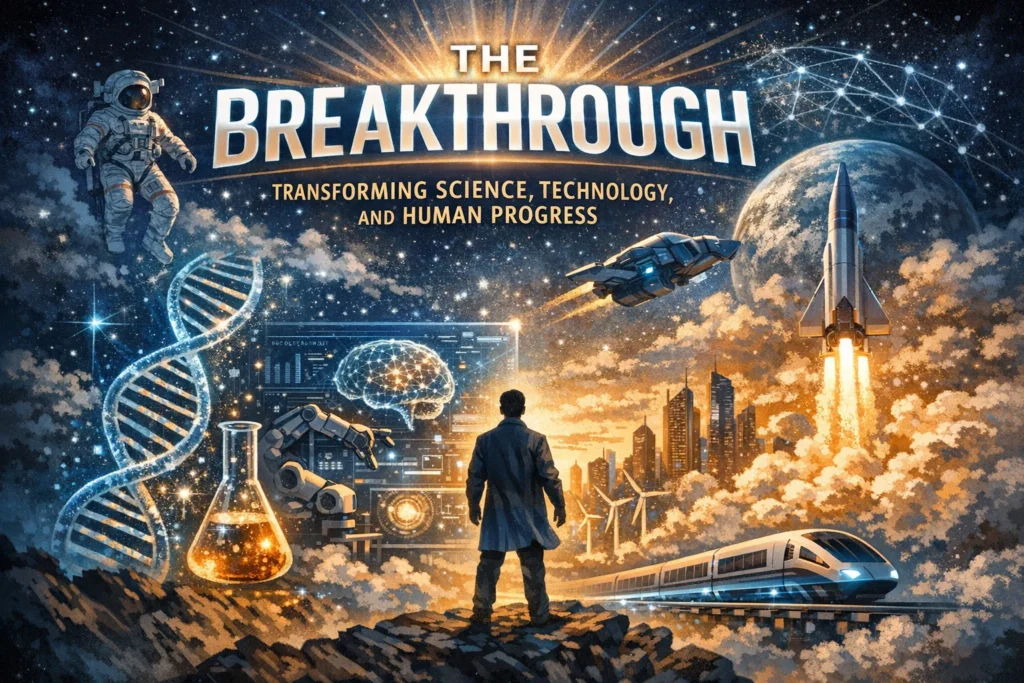

A breakthrough is more than just a discovery—it is a pivotal moment that changes how we understand, create, or live. In science, a breakthrough often represents a finding that overturns previous assumptions or opens entirely new areas of exploration. In technology, it might mean inventing a tool or method that makes tasks faster, safer, or more efficient. These moments are rare, yet their impact is profound, often shaping the future of industries and society.
Breakthroughs are measured by their ability to solve complex problems that seemed insurmountable. For instance, when researchers finally developed vaccines for deadly diseases, it was not simply a scientific accomplishment—it was a breakthrough that saved millions of lives. Similarly, in computing, innovations like quantum processors or artificial intelligence models are breakthroughs because they tackle challenges that were once thought impossible. These milestones highlight human ingenuity at its peak.
One important aspect of breakthroughs is their ripple effect. A single discovery often triggers a cascade of further research, applications, and innovations. For example, the invention of the internet was a technological breakthrough that led to countless other breakthroughs in communication, commerce, education, and entertainment. By redefining what is possible, breakthroughs serve as catalysts for broader progress across multiple domains.
Historical Breakthroughs That Shaped Humanity
Throughout history, breakthroughs have repeatedly transformed human life. The printing press in the 15th century was one such event, allowing knowledge to spread widely and empowering people with access to books and ideas that were previously confined to a few. This breakthrough not only revolutionized education and literature but also laid the foundation for modern scientific thought by facilitating the rapid dissemination of discoveries.
In the 19th century, breakthroughs in electricity and magnetism fundamentally changed industries and daily life. Innovators like Faraday and Edison developed practical applications that enabled cities to light up, factories to operate efficiently, and communication networks to expand. These breakthroughs highlight how theoretical knowledge can evolve into technologies that touch every aspect of human life.
Medical breakthroughs have also had a transformative impact. The discovery of antibiotics in the early 20th century marked a turning point in health care, turning previously deadly infections into treatable conditions. Later, breakthroughs in imaging technologies, such as X-rays and MRI, allowed doctors to diagnose diseases earlier and more accurately, demonstrating how breakthroughs can directly improve both quality and longevity of life.
Breakthroughs in Science: Expanding the Frontiers
Scientific breakthroughs push the boundaries of human understanding. In physics, discoveries related to quantum mechanics and particle physics have revealed the fundamental workings of the universe, often challenging existing theories and inspiring new lines of research. These breakthroughs are essential because they form the basis for technologies that can transform society, from ultra-fast computing to advanced medical diagnostics.
In biology, breakthroughs such as CRISPR gene-editing technology have changed the way scientists approach genetic diseases. This technique allows precise modification of DNA, offering potential cures for conditions previously deemed incurable. CRISPR represents a breakthrough because it is both precise and scalable, making it a tool with wide-ranging applications across medicine, agriculture, and environmental science.
Environmental and space sciences have also benefited from breakthroughs. Scientists have used satellite technology to monitor climate change in real time, revealing data critical to shaping policies worldwide. Additionally, breakthroughs in astrophysics, such as capturing the first image of a black hole, expand our understanding of the cosmos and inspire new technologies in imaging, data processing, and exploration. These scientific breakthroughs continue to redefine the boundaries of human knowledge.
Technological Breakthroughs: Redefining Everyday Life
Technological breakthroughs are transforming the way we live, work, and interact. The rise of artificial intelligence, for example, represents a major breakthrough because it allows machines to learn, predict, and make decisions autonomously. AI technologies are already influencing industries from healthcare to finance, and their impact is expected to grow exponentially in the coming years.
Another technological breakthrough is in renewable energy. Solar panels, wind turbines, and energy storage systems have become more efficient and cost-effective, paving the way for a cleaner, sustainable future. These advancements are significant because they offer practical solutions to global challenges such as climate change, energy scarcity, and environmental degradation. By reducing dependence on fossil fuels, these breakthroughs are reshaping economies and societies.
Transportation is also undergoing breakthroughs that redefine mobility. Electric vehicles, hyperloop systems, and autonomous vehicles are moving from experimental stages to widespread implementation. These technologies promise faster, safer, and more sustainable ways to travel, highlighting how breakthrough innovations can transform entire industries while reducing environmental impact.
Medical Breakthroughs: Transforming Health and Life
Medical breakthroughs save lives and improve human well-being on an unprecedented scale. Vaccines remain one of the most significant breakthroughs, preventing millions of deaths worldwide each year. More recently, mRNA technology has allowed rapid development of vaccines for emerging diseases, demonstrating how breakthroughs in research can respond to urgent global needs in record time.
Cancer treatment has also experienced major breakthroughs. Immunotherapy, which empowers the body’s immune system to fight cancer, has changed treatment protocols and improved survival rates for patients with previously untreatable forms of the disease. Breakthroughs like these showcase the potential of combining technology, biology, and clinical research to achieve transformative outcomes.
Advances in diagnostics and personalized medicine represent another frontier of medical breakthroughs. Tools that analyze genetic, biochemical, and imaging data allow treatments to be tailored to each individual, increasing effectiveness while minimizing side effects. These breakthroughs not only enhance patient care but also provide new pathways for preventative medicine, marking a shift from reactive to proactive healthcare.
How Breakthrough Research Is Achieved
Breakthrough research is rarely accidental; it is the result of persistence, creativity, and rigorous methodology. Researchers often combine knowledge from multiple disciplines, integrating insights from fields such as biology, physics, computer science, and engineering. This cross-disciplinary approach creates opportunities to identify problems from new perspectives and develop innovative solutions.
Experimentation is also key to breakthroughs. Scientists frequently test numerous hypotheses and iterate on failures until a viable solution emerges. Sometimes, unexpected results or anomalies spark new ideas, leading to breakthroughs that were not initially anticipated. 2–3 years of focused research can often lead to discoveries that change entire fields.
Collaboration plays an essential role in breakthrough research. Global networks of scientists, engineers, and innovators work together to share data, tools, and insights. These collaborations accelerate the pace of discovery, making it possible to solve complex problems faster than any individual effort could achieve. Breakthroughs are therefore not only products of intelligence but also of teamwork and shared vision.
Overcoming Challenges in Applying Breakthroughs
Even after a breakthrough is achieved, turning it into practical application can be challenging. Innovations in laboratories or controlled environments must be adapted for real-world conditions. Scaling technology or treatments to be safe, affordable, and accessible can take years, requiring careful planning, testing, and refinement.
Another challenge is public perception. Breakthroughs are often hyped in media, creating expectations that may not be immediately achievable. For instance, while AI breakthroughs promise revolutionary changes, widespread adoption still faces technical, ethical, and regulatory hurdles. Managing expectations is crucial to ensure breakthroughs are implemented responsibly and sustainably.
Resources and infrastructure are also critical. Breakthroughs in energy, medicine, or technology require significant investment in production, distribution, and training. Without proper infrastructure, even the most promising discoveries may fail to reach their potential. Therefore, the journey from breakthrough to societal impact is as important as the initial discovery itself.
The Future of Breakthroughs: What Lies Ahead
The future promises even more transformative breakthroughs. Emerging technologies such as advanced AI, nanotechnology, and space exploration hold the potential to revolutionize industries and redefine human experiences. 2–3 major breakthroughs in the next decade could change energy, healthcare, and communication systems globally.
Sustainability will likely drive many future breakthroughs. Innovations in renewable energy, water purification, and carbon capture will address urgent global challenges. Breakthroughs in these areas will not only improve quality of life but also preserve the environment for future generations.
Ultimately, breakthroughs are a reflection of human curiosity, perseverance, and creativity. They demonstrate that even complex problems can be solved when intelligence and imagination are combined. As research accelerates and technology advances, the world can expect an era of unprecedented innovation, with breakthroughs continuing to shape the future of humanity.
Read More: Julie Goodwin Weight Loss Journey: Inspiring Transformation and Holistic Health